
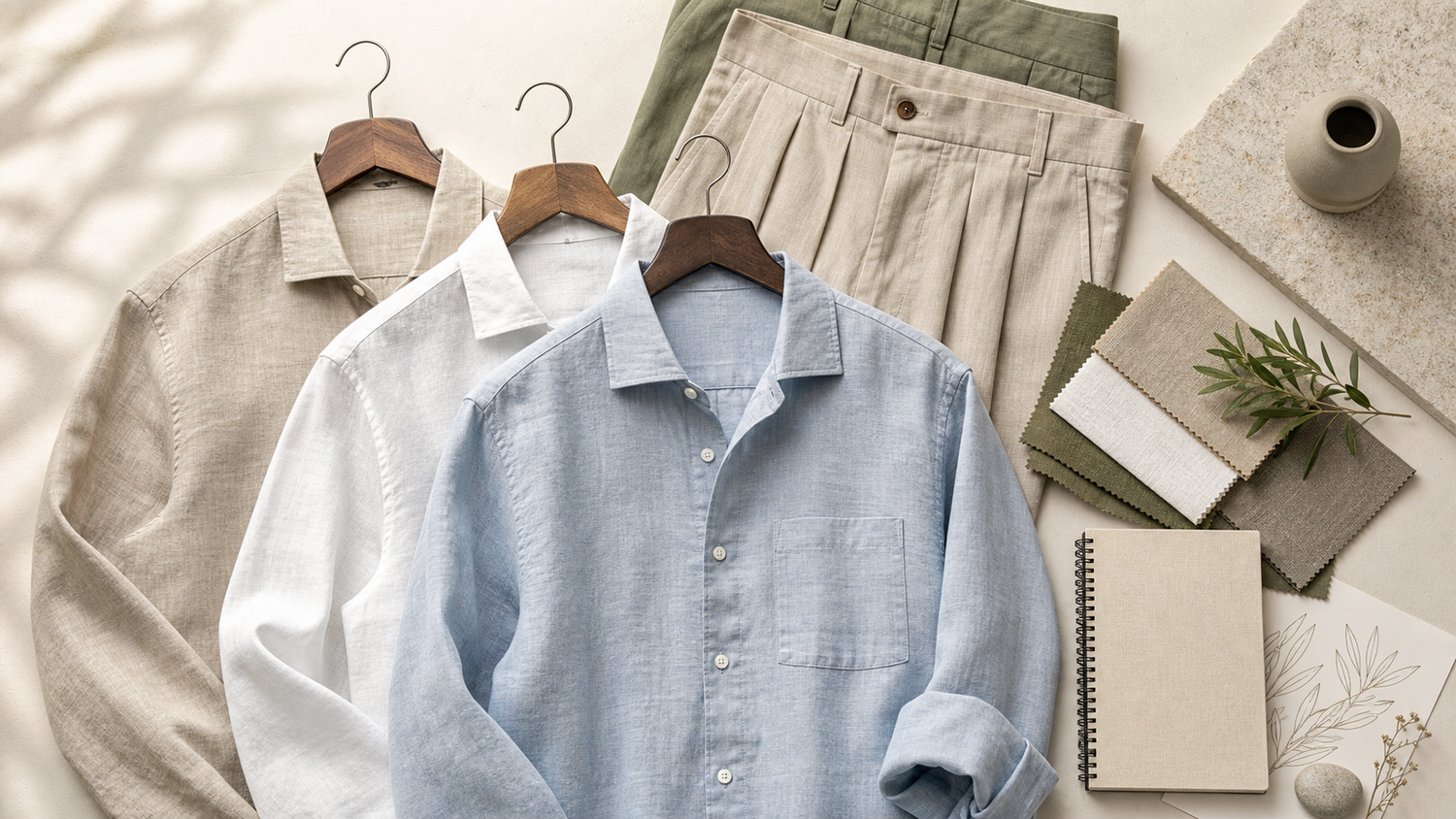
There is a point every Canadian summer when the usual shirt rotation stops making sense. A heavy tee feels flat for dinner. An Oxford cloth button-down feels too structured in the heat. A synthetic blend might look fine at 8 a.m. and feel tired by mid-afternoon. This is usually the moment men start looking for a linen shirt, not because it is trendy, but because it answers a real problem: how to look put together without feeling overdressed or overheated.
A good men’s linen shirt does not need much styling drama. It needs the right fabric, the right amount of ease through the chest and shoulders, and enough versatility to move from a patio lunch to a weekend drive, a cottage dinner, or a casual office day. That is why linen keeps returning every warm season. It carries air well, wears in with character, and suits the quieter kind of wardrobe that IdyllVie tends to build around: fewer pieces, better texture, more repeat wear.
This guide breaks down how to choose a men’s linen shirt in Canada, what fit details matter most, how to read fabric and collar choices without overcomplicating them, and how to style linen so it looks relaxed rather than rumpled.
The Short Answer: What Makes a Good Men’s Linen Shirt?
If you want the fast version, the right shirt usually has five things:
- enough room through the shoulders and chest for airflow and movement
- a fabric weight that feels breathable without turning sheer
- a collar shape that matches how you actually dress
- a hem and sleeve length that still looks intentional untucked
- a care routine you are willing to follow
That sounds simple, but most disappointing linen shirts fail on one of those points. They are either too slim, too transparent, too crisp for casual wear, or too flimsy to earn repeat use.
Why Linen Works So Well in Warm Weather
Linen is made from flax fibre, and that fibre behaves differently from many everyday shirt fabrics. Linen.eu notes that flax fibres are longer and stiffer than cotton fibres, that linen absorbs substantial moisture, and that the fabric actively moves moisture outward rather than trapping it close to the body. That is a big part of why linen feels cooler and drier in hot weather than many dense synthetic-heavy shirts.
The feel is different too. Cotton usually starts softer and more familiar on day one. Linen often begins a little crisper, then softens with wear and washing. The Linen Lounge guide on linen points out that this gradual softening is one of the fabric’s defining qualities. In practice, that means a linen shirt often becomes more like your own shirt over time rather than less.
That does not make linen automatically better than cotton in every situation. Cotton still wins when you want a smoother surface, less visible wrinkling, or a softer jersey-like handfeel. CottonWorks continues to frame cotton around softness, breathability, and comfort, which is why cotton tees and cotton-rich warm-weather layers remain useful. The point is not that linen replaces cotton. The point is that linen solves a different summer dressing problem.
Start with Fit Before You Start with Colour
Men usually shop linen shirts by colour first: white, blue, sand, olive. That is understandable, but it is the wrong first filter. Fit decides whether the shirt feels effortless or awkward.
Shoulders and upper chest
The shoulder seam should sit close to the natural shoulder point or drop only slightly if the shirt is designed as a relaxed fit. Too narrow and the shirt pulls across the upper back when you reach forward. Too wide and the shirt starts looking borrowed instead of breezy.
If you have broader shoulders, a classic or relaxed fit is usually more dependable than a sharply tapered silhouette. Linen has less stretch than a knit tee, so a too-clean cut can feel restrictive quickly.
Torso shape
For most men, the best linen shirt fit is straight or gently relaxed through the torso. You want shape, not cling. A shirt that collapses onto the stomach or hips loses the light, airy effect linen does best.
IdyllVie’s existing shirt-sizing content makes a useful distinction here: body measurements and garment measurements are not the same thing. Ease is intentional. If you compare the garment measurements to a shirt you already like, you will usually make a better call than relying on your usual letter size alone.
Sleeve and hem length
Short-sleeve linen shirts should clear the upper to mid-bicep cleanly without flaring too wide. Long-sleeve linen shirts should look good with the cuff down and with a casual roll. For untucked wear, the hem should usually end around the mid-fly area, not much lower. That is long enough to look polished and short enough to avoid nightshirt territory.
How to Read Fabric Without Getting Lost in Textile Language
Not every shirt sold with a breezy summer description will perform the same way. Fabric content matters.
Pure linen
Pure linen gives you the most classic airy texture and the sharpest expression of the fibre. It tends to wrinkle more visibly, but those wrinkles are part of the appeal when the shirt is well made. The fabric reads relaxed and honest rather than messy.
This is usually the best choice if you want:
- the coolest feel in humid weather
- a visible natural texture
- a shirt that gets better with wear
- a more elevated casual look with trousers
Linen blends
Blended shirts can be a smart choice when you want some of linen’s breathability with a slightly softer hand or easier maintenance. That is where IdyllVie’s Cotton Linen Henley T-Shirt is useful as a real product reference. Its fabric composition blends cotton, linen, and nylon, and the product page positions it around warm-weather comfort, airflow, and easier everyday wear.
Even though a henley is not the same garment as a collared linen shirt, it shows an important principle: a summer shirt does not have to be 100 percent linen to be useful. Blends can reduce stiffness, improve durability, and make the piece easier for men who are not used to linen’s natural texture.
Weight and transparency
If a linen shirt feels too gauzy, it may be fine for a beach layer but weak for everyday city wear. If it feels too dense, it can lose the lightness you probably wanted in the first place. The best middle ground is a shirt that allows air movement but still holds a line through the collar, placket, and sleeves.
The Collar, Cuff, and Details That Change the Mood
Small details do more than people expect.
Camp collar
Best for the most relaxed version of linen. Good with shorts, easy trousers, or vacation dressing. Less useful if you want one shirt that can shift into a polished dinner look.
Point or spread collar
This is the safer all-rounder. It works open at the neck, layered over a tee, or lightly tucked into trousers. For most men building a small warm-weather wardrobe, this is the most flexible choice.
Henley or collarless necklines
If you like the breathability and texture story of linen but do not actually wear button-up shirts often, a henley or collarless warm-weather top may serve you better. That is another reason the IdyllVie cotton-linen henley belongs in the conversation. It gives the same breathable, understated summer logic in a lower-maintenance silhouette.
A Practical Comparison: Which Linen Shirt Style Fits Your Life?
| Shirt style | Best for | Watch-outs | Most useful pairing |
|---|---|---|---|
| Short-sleeve pure linen button-up | Heat, travel, patios, casual dinners | Can look too beachy if the fit is oversized and the fabric too sheer | Tailored shorts or easy pleated trousers |
| Long-sleeve linen shirt | Office AC, layering, evenings, sun coverage | Sleeves and body length need to work both rolled and unrolled | Linen trousers, chinos, or lightweight denim |
| Cotton-linen blend shirt | Everyday city wear, first-time linen buyers, repeat laundering | May feel less airy than pure linen | Cotton trousers, relaxed shorts, lightweight jackets |
| Cotton-linen henley | Men who want the comfort story without a collar | Not as dressable as a woven shirt | Linen trousers, drawstring shorts, overshirts |
The Best Colours for a Men’s Linen Shirt
White gets the most attention, but it is not the only good option.
- White or off-white feels crisp and classic, but may show transparency more quickly.
- Sand, stone, or oat often look softer and are easier to repeat casually.
- Light blue reads cooler and slightly more polished.
- Olive, tobacco, or faded charcoal can look more grounded and are often easier for evening wear.
If you only buy one, start with the colour that works with your existing trousers, not the one that looks best in isolation. A shirt earns its place through repetition.
How to Style a Men’s Linen Shirt Without Looking Costume-Like
The easiest mistake with linen is overplaying it. You do not need every part of the outfit to shout summer.
1. Keep one structured element
If the shirt is soft and relaxed, pair it with trousers that have a cleaner line. IdyllVie’s Alexandre Linen Pants are useful here because the pleated front and more tailored structure keep the outfit from drifting too casual. The product page highlights the double pleat front, elastic back waist, and breathable linen construction, which is exactly the kind of balance linen outfits need.
2. Let texture do the work
Linen already has visual interest. That means the rest of the outfit can stay quiet: clean leather sandals, loafers, white sneakers, or simple suede shoes. Avoid adding too many loud prints or complicated accessories.
3. Use layering lightly
A linen shirt worn open over a tee can work well, especially in cottage, travel, or weekend settings. But if you wear it this way, make sure the underlayer is simple and well cut. A bulky graphic tee under a loose linen shirt usually defeats the point.
4. Tuck selectively
A full tuck sharpens linen. A half tuck can work, but only when the shirt and trouser rise genuinely suit it. When in doubt, either leave it cleanly untucked or tuck it fully.
A Five-Point Buying Checklist
Use this before you buy:
- Check the fibre content first. Confirm whether you are buying pure linen or a blend.
- Compare garment measurements to a favourite shirt, especially chest and body length.
- Look at the collar and hem with your real wardrobe in mind, not an imagined holiday version of yourself.
- Read the care instructions before purchase. If you will not line dry or steam it, choose accordingly.
- Make sure the colour works with at least three bottoms you already own.
That checklist is boring in the best possible way. It prevents most regret buys.
Linen Care: How to Keep the Shirt Looking Better, Not More Fragile
Many men avoid linen because they assume it is demanding. Usually it just needs a calmer routine.
IdyllVie’s linen care article recommends cold or lukewarm washing, a gentle cycle, mild detergent, and either low heat or air drying depending on the piece. The FTC’s apparel labeling guidance is also a useful reminder that care labels exist for a reason: they tell you how to clean the garment without guessing.
Here is the practical version:
- wash with similar lightweight items
- avoid overstuffing the machine
- skip harsh bleach
- remove promptly after washing
- smooth by hand and hang or lay flat if needed
- use a warm iron or steamer when you want a cleaner finish
The goal is not to erase every crease. It is to keep the shirt looking intentional.
When a Men’s Linen Shirt Is the Right Buy and When It Isn’t
Buy one if you want a warm-weather shirt that can look relaxed, polished, and breathable with very little effort.
Skip it, or choose a cotton-linen alternative instead, if you strongly dislike visible texture, never wear woven shirts, or want the easiest possible care routine. In that case, a cotton-rich shirt or a cotton-linen henley may be more realistic and more wearable for you.
The right wardrobe choice is not the most aspirational one. It is the one you will actually reach for.
FAQ
Are men’s linen shirts worth it in Canada?
Yes, especially for late spring through early fall. Canadian summer is not uniformly hot, so the most useful linen shirts are the ones that can handle both warm afternoons and cooler evenings through layering.
Should a men’s linen shirt fit loose?
It should fit with ease, not excess. You want room for airflow across the chest and shoulders, but not so much fabric that the shirt loses shape.
Is pure linen better than a linen blend?
Pure linen gives the most classic texture and airy feel. A blend can be better if you want softer handfeel, less stiffness, or lower-maintenance repeat wear.
Do linen shirts always wrinkle badly?
They wrinkle more than smoother cotton shirts, but good-quality linen tends to crease in a natural way. The aim is relaxed structure, not a perfectly pressed business-shirt finish.
What should I wear with a men’s linen shirt?
The easiest pairings are tailored shorts, pleated linen trousers, lightweight chinos, or clean denim. Keep the rest of the outfit simple and let the shirt’s texture carry the look.
Can I wear a linen shirt to dinner or a casual office?
Yes, if the fit is clean and the outfit has one structured element such as smarter trousers, loafers, or a proper tuck. Linen does not have to look beach-specific.
The IdyllVie Approach
At its best, a men’s linen shirt is not about performance language or trend language. It is about dressing with less friction. Better airflow. Better texture. Better repeat wear. That is why it belongs in the same conversation as IdyllVie’s cotton-linen warm-weather tops, shirt fit guidance, and linen care content.
If you choose carefully, one good linen shirt can cover a surprising amount of summer life. It can sit over a tee on a long weekend, button up for dinner, travel easily enough for a carry-on, and still feel right a year from now. That is usually the better test of value than whether it looked impressive for one afternoon online.












0 comments