
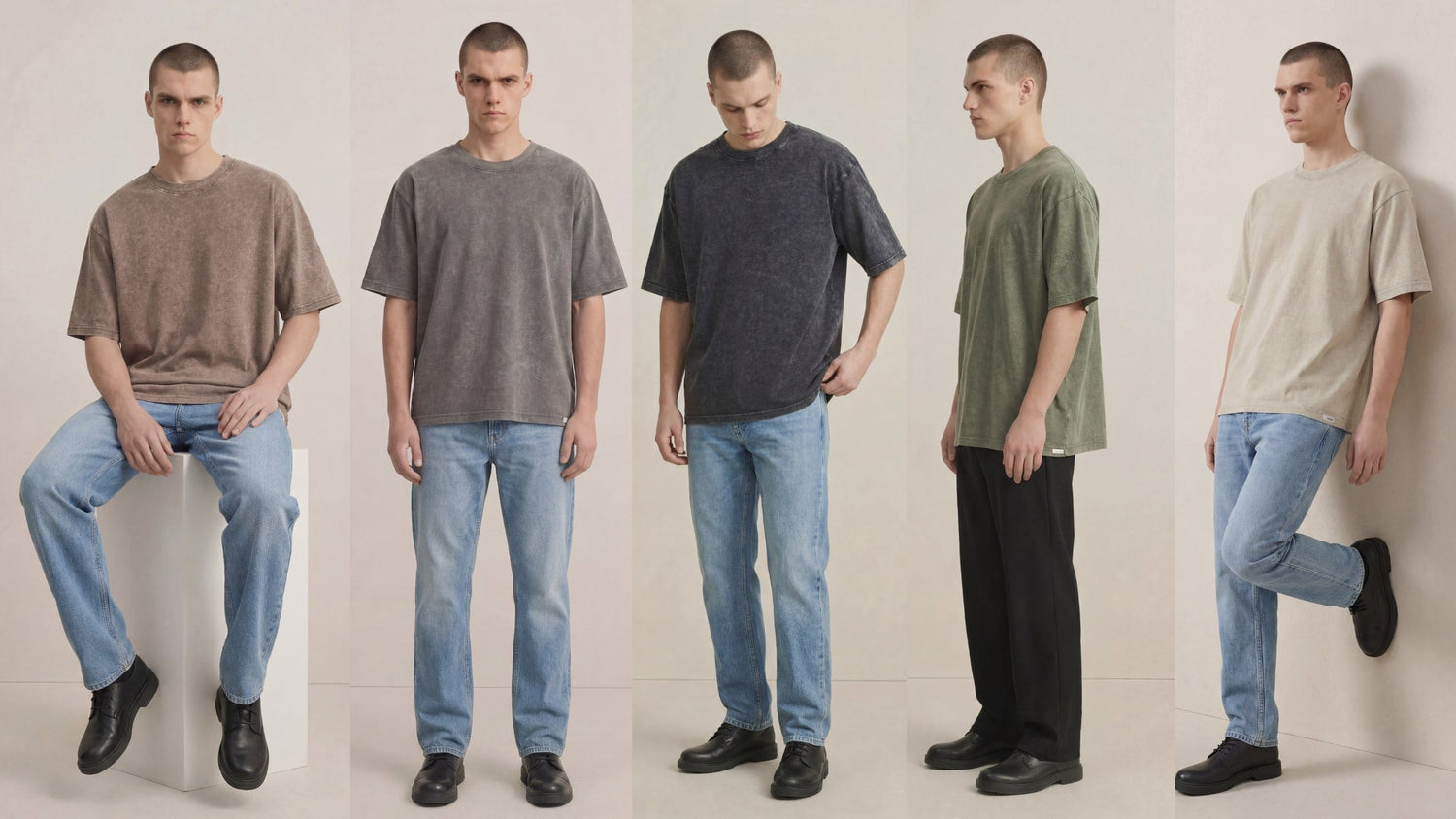
Stonewashed Cotton T-Shirts for a Sustainable Wardrobe by IdyllVie
Stonewashed T shirts have long been associated with lived in comfort and timeless character. The challenge is that the traditional process developed for durability and speed was never designed with environmental stewardship in mind. At IdyllVie the objective is different preserve the softness and patina people love while eliminating the waste, harsh chemistry, and fiber degradation that defined legacy garment washing.
This article explains how a modern eco friendly stonewash process works, why it matters, and how it results in a longer lasting T shirt that aligns with a slower, more intentional wardrobe.
What Stonewashed Actually Means
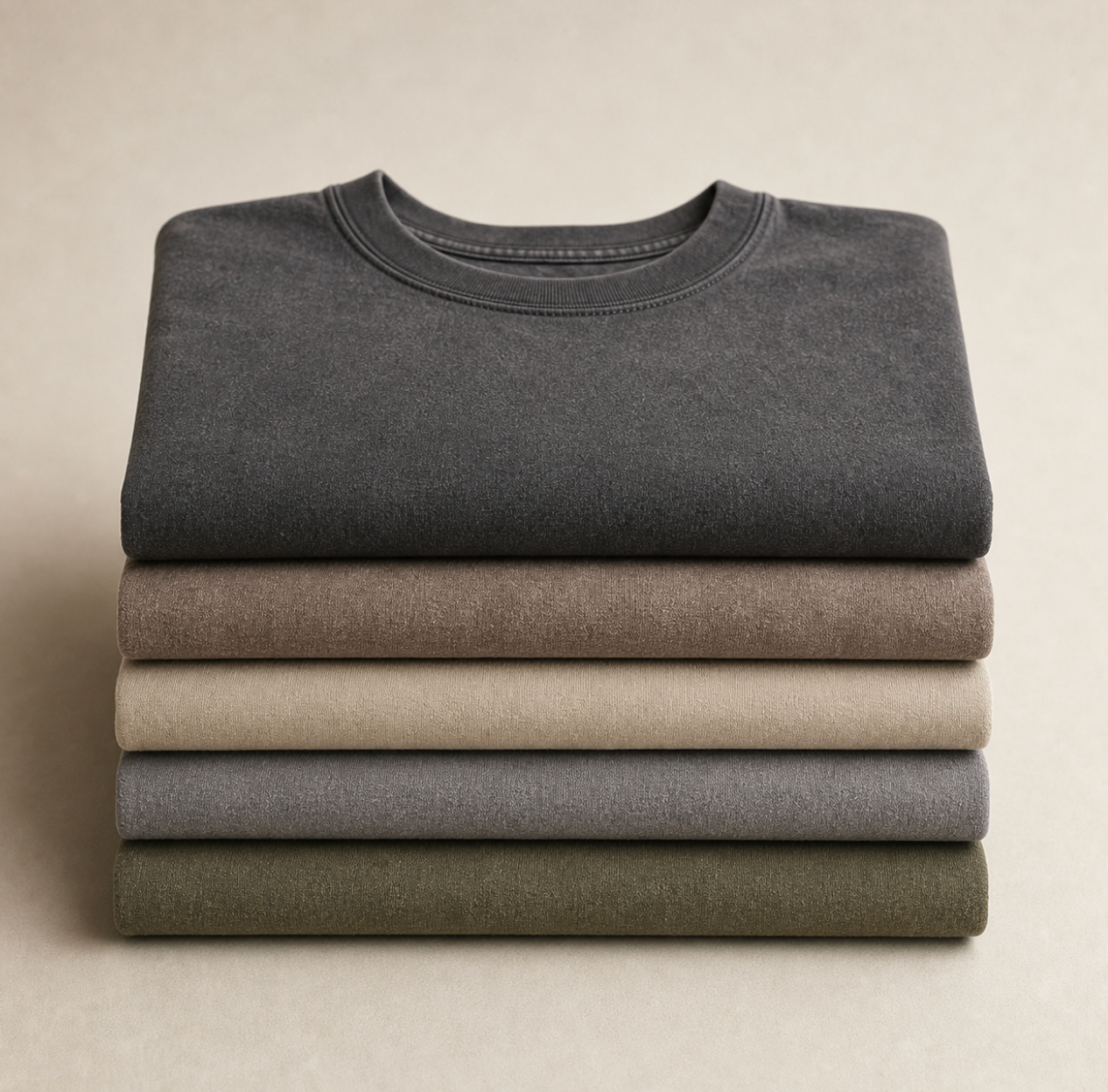
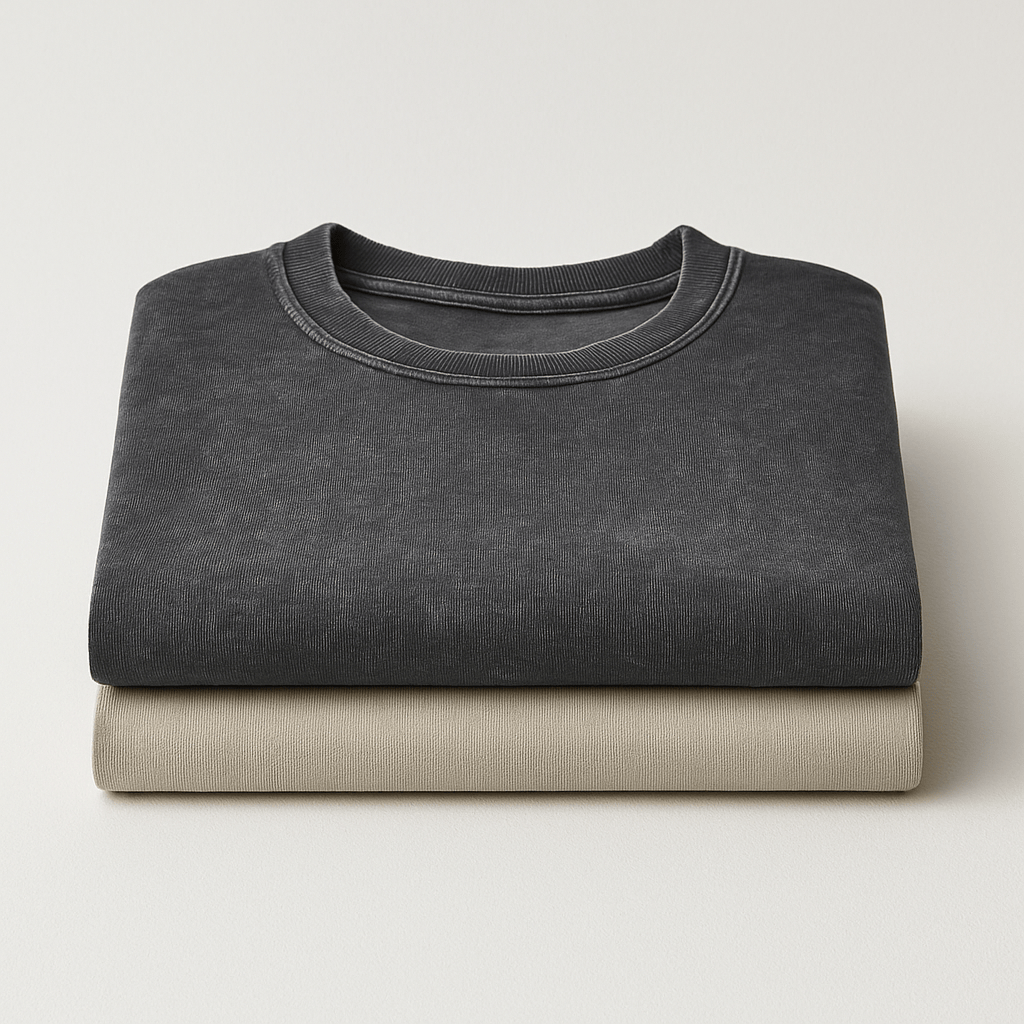
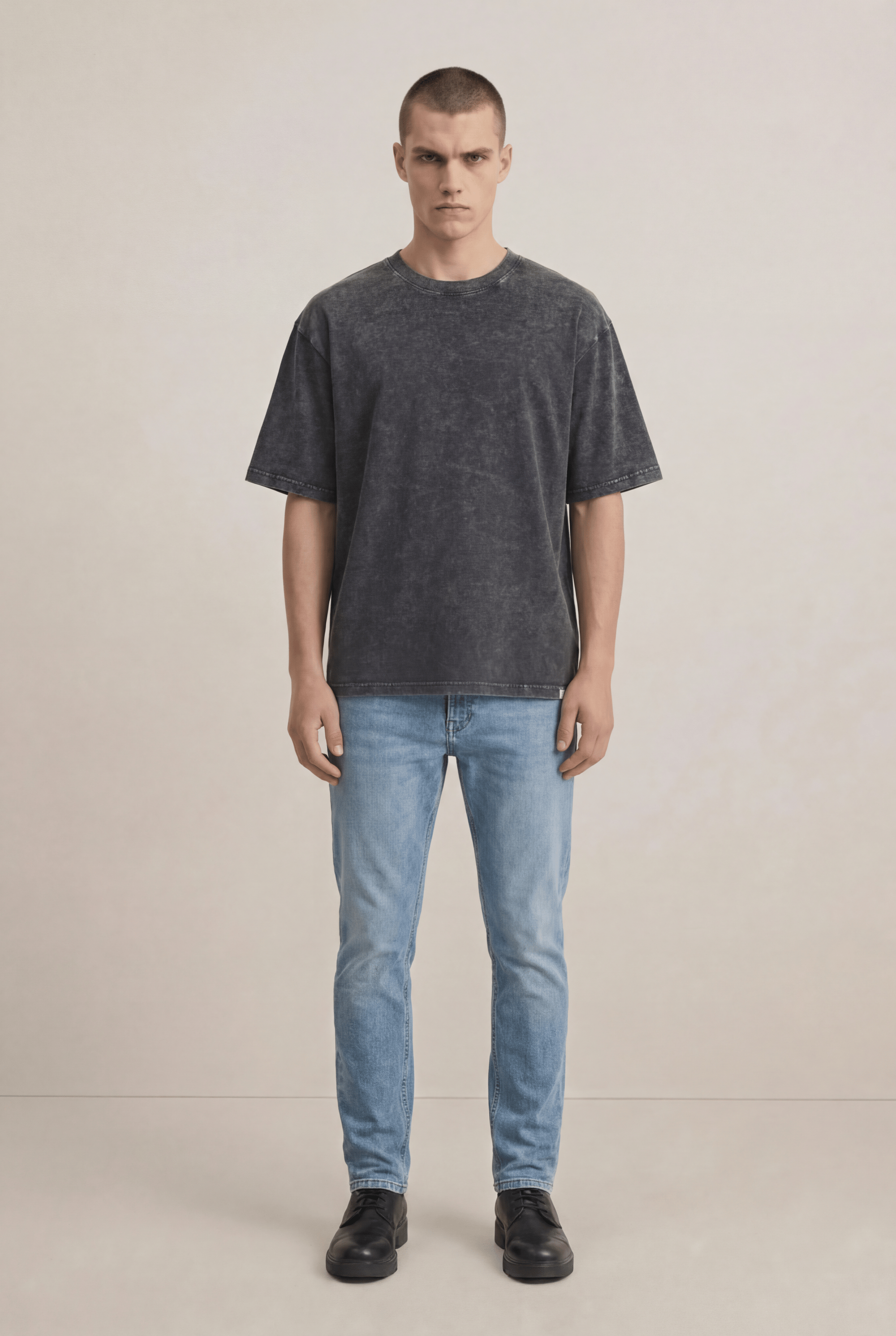
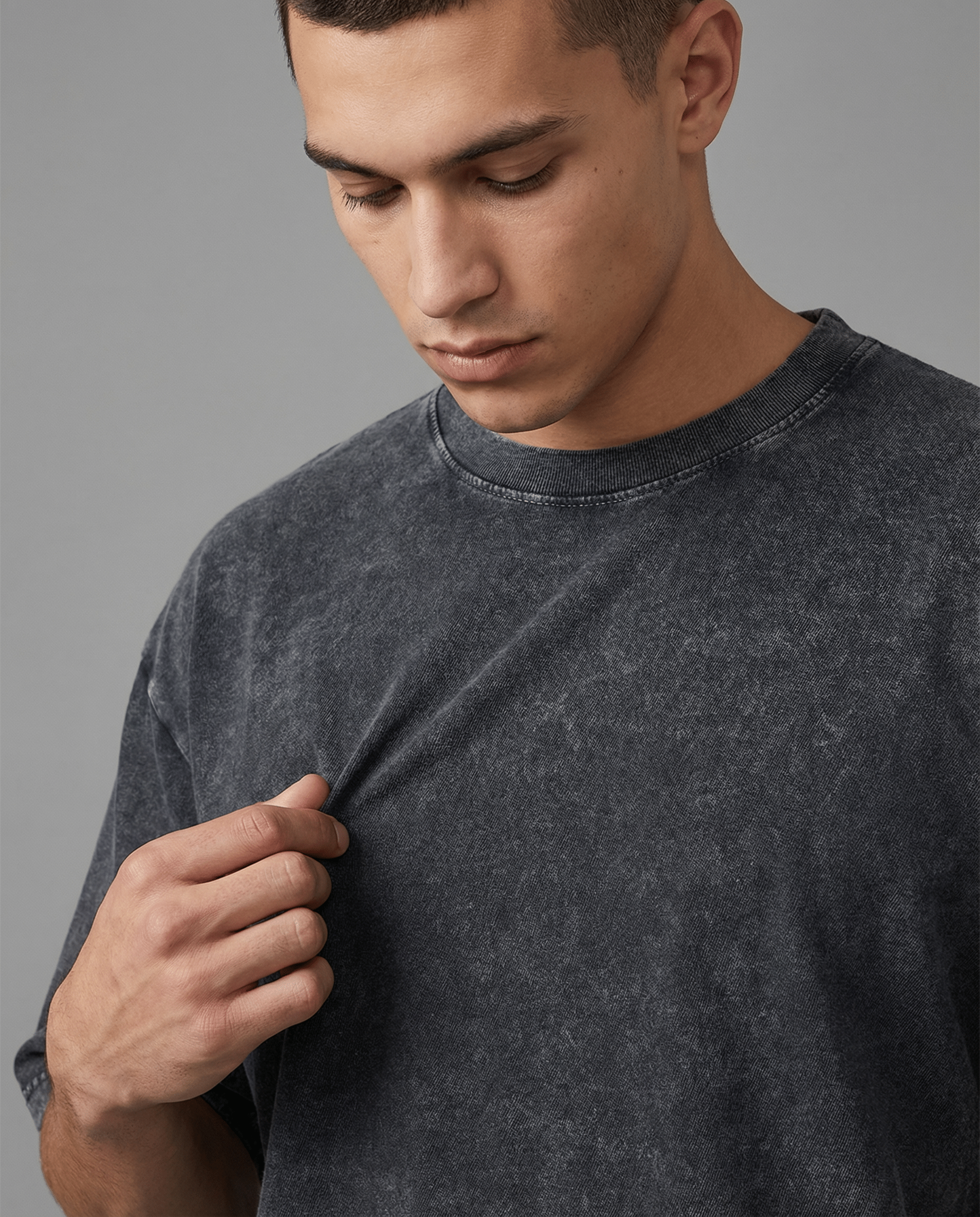
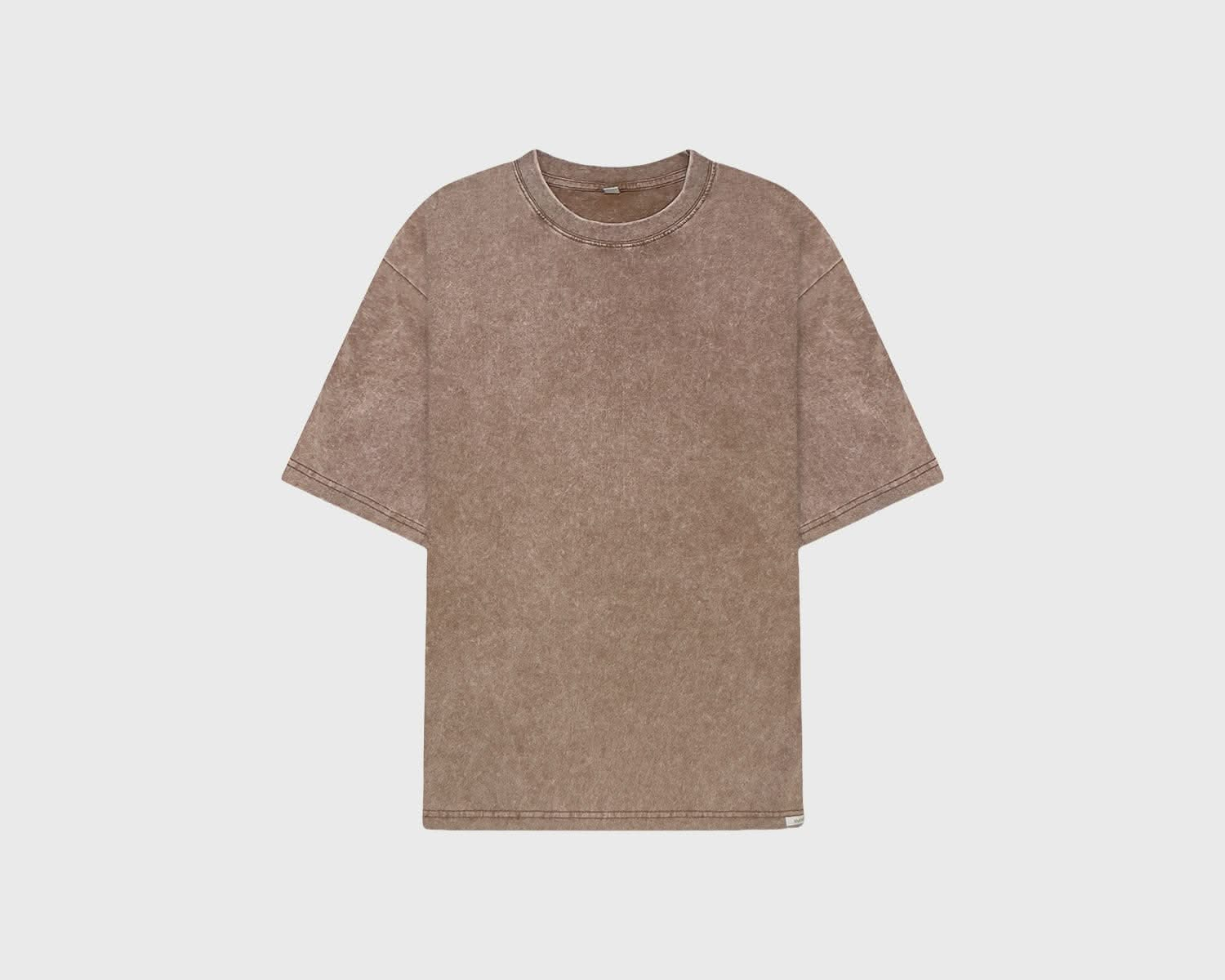
Stonewashing is a controlled abrasion treatment applied after a garment is constructed. Instead of dyeing smooth, uniform fabric, the fabric is deliberately softened and broken in to produce
- A matte low sheen surface
- Subtle tonal highs and lows
- Relaxed drape
- Reduced stiffness
- Immediate wearability
Historically this effect came from pumice stones tumbling against garments in large industrial washers. Effective but resource intensive.
Traditional stone-washing typically causes:
The Eco Stonewash Approach
Modern sustainable finishing replaces brute mechanical abrasion with controlled surface refinement. The goal is micro distressing fibers rather than grinding them down.
1. Enzyme Washing Instead of Pumice Grinding
Natural cellulase enzymes selectively loosen microscopic surface fibrils in cotton.
What this changes
- Removes protruding fibers instead of tearing yarns
- Produces softness without thinning fabric
- Eliminates stone sediment waste
- Requires lower mechanical agitation
Result the shirt feels broken in not worn out.
2. Closed Loop Water Systems
A responsible wash facility recirculates and treats water rather than discharging it.
Typical reduction
- 70 to 90 percent less freshwater consumption
- Near zero dye discharge
- Filtered microfibers captured before release
Water is filtered through sedimentation membrane filtration and biological treatment before reuse in the next wash cycle.
3. Low Impact Pigment and Reactive Dye Stabilization
Instead of post bleaching garments to fade them the color is engineered to age gracefully.
This includes
- Low salt dye baths
- Biodegradable fixing agents
- Reduced rinse cycles
- Temperature optimized curing
Rather than aggressively removing color the process reveals tonal depth already built into the fabric.
4. Ozone and Air Oxidation Finishing
Where traditional processes used chlorine or potassium permanganate modern finishing uses controlled oxygen exposure.
Benefits
- Minimal chemical residue
- Drastically reduced rinse cycles
- Consistent natural fading
- No hazardous discharge
The result mimics years of wear without damaging cellulose structure.

Why This Matters for a T Shirt Lifespan
Sustainability is not only about production impact. It is about how long the garment remains wearable.
Traditional stonewashed shirts often fail early because fibers were physically fractured during finishing.
Eco stone-washing instead improves durability.
A shirt that lasts twice as long effectively halves its environmental footprint.
The Role of Fabric Quality
Sustainable finishing only works if the base textile supports it. IdyllVie garments begin with dense long staple cotton yarns. Longer fibers mean fewer loose ends which means less aggressive finishing is required to achieve softness.
Key characteristics that enable responsible stonewashing
- Combed long staple cotton
- Heavier knit structure
- Low tension spinning
- Pre shrunk construction
- Stable dye penetration
Because the fabric is structurally sound the finishing stage can refine rather than repair.

The Aesthetic Advantage Patina Not Decay
A properly engineered stonewash does not create artificial distressing. Instead it establishes a starting point for natural aging.
Over time the shirt develops
- Soft contrast along seams
- Subtle lightening at fold points
- Uniform fade instead of cracking
- Maintained collar structure
The garment records wear rather than deteriorating from it.
This aligns with a slower wardrobe philosophy fewer pieces worn longer improving with time.
Environmental Impact Reduction Summary

Why Sustainable Stonewashed T Shirts Matter
Fast fashion created the expectation that softness must come from fragility. Responsible manufacturing proves the opposite comfort should come from engineering.
An eco stonewashed T shirt delivers
- Immediate comfort
- Structural longevity
- Lower environmental cost
- Authentic aging
- Season-less wearability
It becomes a permanent layer in a wardrobe rather than a disposable one.
A Different Definition of Vintage
Vintage should describe time not damage.
By combining material integrity with low impact finishing modern stonewashing allows a garment to begin its life already comfortable while still preserving years of future wear.
That balance character without compromise is what defines a sustainable everyday essential.












0 comments