
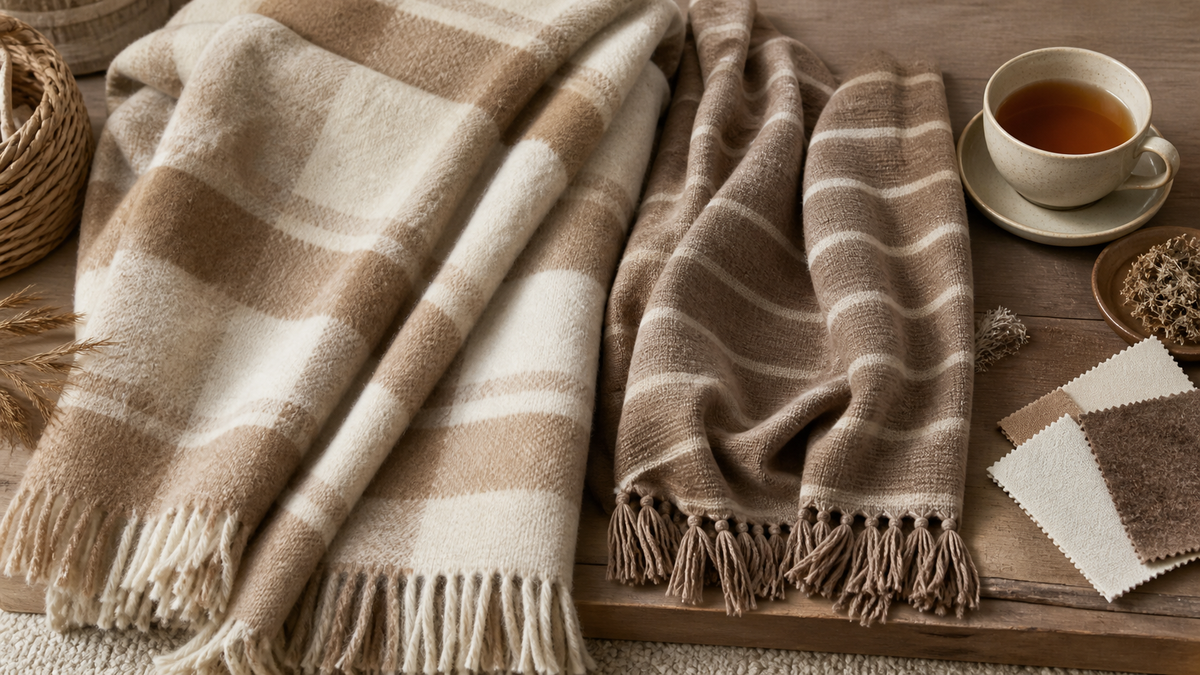
Alpaca vs Merino Wool Throws: Which One Belongs in Your Living Room?
There are some home pieces you buy because they solve a problem, and others you buy because they change the mood of a room. A good throw blanket does both. It can add warmth on a cold evening, soften a sharper sofa, make a reading chair feel intentional, and turn a bedroom from functional into quietly finished.
That is exactly why alpaca and merino are worth comparing. Both belong in the premium natural-fibre category. Both can look elevated in a calm Canadian home. But they do not create the same experience. One usually feels plusher, more cocooning, and more decorative. The other often feels cleaner, lighter, and easier to layer across seasons.
For IdyllVie readers, this is a practical decision rather than a generic fibre debate. The live assortment currently spans the Kawartha Alpaca Throw Blanket, the Primavera Alpaca Wool Plaid Throw Blanket, and the Muskoka Brown Merino Wool Throw Blanket with Cashmere. The brand's existing editorial library also already supports related topics around merino, alpaca, blanket sizing, and styling. That makes this a useful buyer guide for real rooms, real habits, and real Canadian weather.
The Quick Answer
If you want the shortest possible version, choose alpaca when you want a softer-looking, warmer-feeling, more cocooning accent throw with richer texture and more visual presence. Choose merino when you want a smoother, lighter, easier all-season layer that works across beds, sofas, guest rooms, and everyday use.
That broad answer gets clearer when you ask five practical questions:
- do I want this throw mainly for warmth, for styling, or equally for both
- will it live on a sofa, an accent chair, or at the end of a bed
- do I prefer plush texture and weight, or lighter drape and cleaner fold
- how often will I actually use it versus mostly style around it
- am I comfortable with gentler wool-care habits
Once those answers are clear, the choice gets much easier.
What Alpaca and Merino Actually Feel Like at Home
The fastest way to choose the wrong throw is to treat all wool blankets as interchangeable. Fibre affects not just warmth, but also loft, smoothness, drape, breathability, and how a blanket behaves when folded, layered, or left out in the room.
The Alpaca Owners Association's fibre reference describes alpaca as light for its insulation, helped by the fibre structure that traps warmth well without needing dense bulk. In room terms, that usually translates into a throw that feels generous, cozy, and visually rich without acting like a stiff heavy blanket.
Merino behaves differently. Woolmark's fibre guidance consistently describes merino wool as breathable, moisture-managing, and thermoregulating. That makes merino especially appealing when you want warmth without a stuffy or overly weighty feel. In a home setting, merino often reads cleaner, smoother, and more versatile across changing temperatures or mixed-use rooms.
The live IdyllVie assortment reflects that split nicely. The Kawartha and Primavera alpaca throws lean into plaid texture and stronger decorative presence, while the Muskoka merino-cashmere throw reads more refined and streamlined. None of this means one fibre is universally better. It means they are better at different jobs.
The Comparison Table
| Category | Alpaca throw | Merino throw |
|---|---|---|
| Best use case | Cozy reading corners, lounge spaces, statement texture | Year-round layering, guest rooms, sofa and bed versatility |
| Overall feel | Fuller, plusher, more cocooning | Smoother, lighter, cleaner in hand |
| Visual personality | Richer surface texture and stronger decorative presence | More tailored, understated, and polished |
| Warmth style | Better when you want warmth to feel obvious and enveloping | Better when you want balanced comfort without heaviness |
| Drape | Often softer and more relaxed with a brushed finish | Often neater and more structured in folds and end-of-bed styling |
| Care mindset | Best for lower-friction use with more mindful maintenance | Also requires wool care, but can feel easier in regular rotation because of the lighter profile |

Warmth, Loft, and the Kind of Comfort You Want
If your main question is warmth, alpaca usually wins the emotional version of the test. It tends to feel more nest-like. That matters because most people do not only judge warmth by temperature. They also judge it by softness, visual thickness, and how enveloping the blanket feels when it is actually draped over the lap or shoulders.
That is where the live IdyllVie alpaca styles make sense. The Kawartha Alpaca Throw is listed in a 55 percent alpaca and 45 percent wool blend, which supports that plush, textured, elevated-lounge character. The Primavera Alpaca Wool Plaid Throw is positioned as a heavier style as well, making it the kind of blanket that can anchor a sofa arm, reading chair, or cabin-style guest room without disappearing visually.
Merino tends to win a different warmth test: steadier comfort with less visual or physical heaviness. Woolmark's performance guidance around wool blankets points toward strong insulation and moisture handling, which helps explain why merino throws can feel practical for longer stretches of use, especially in transitional seasons or centrally heated homes where you want comfort without a dense cocoon effect.
In a Canadian home, the practical split often looks like this:
- choose alpaca for evening lounging, decorative warmth, and rooms where tactile richness matters
- choose merino for flexible day-to-night use, end-of-bed layering, and homes that already run warm
Weight, Drape, and How the Throw Styles a Room
Throws are not just about comfort. They are also styling tools. The fibre you choose changes how the room reads from across the space.
Alpaca often creates more romance. Because the surface usually looks a bit loftier or brushed, the throw can soften modern furniture and make a room feel more collected. On a chair, it tends to look intentional even when casually dropped. On a bed, it can make the foot of the bed feel warmer and more layered.
Merino usually creates more restraint. A fine merino or merino-cashmere throw tends to fold more neatly, stack more cleanly, and feel more controlled visually. That is helpful if your home already leans minimal, tonal, and calm. Rather than becoming the room's texture statement, it often supports the room quietly.
This is where the IdyllVie product styling is useful. The Muskoka Brown Merino Wool Throw Blanket with Cashmere is presented as a more streamlined premium accent. It is the kind of throw that works well when you want polish without bulk. By contrast, the plaid alpaca styles make more sense when you want the throw to be part comfort object and part visual anchor.
Breathability and Four-Season Use
Warmth is only part of daily usability. Breathability matters too, especially in homes where temperatures shift between bright afternoons, cooler evenings, and overnight air conditioning.
Woolmark's fibre guidance is useful here because it explains why merino performs so well across changing conditions. Merino wool can absorb moisture vapour and release it, which helps keep the fibre feeling more balanced rather than clammy. In a living room or bedroom, that usually shows up as a throw you can keep close by for more of the year.
Alpaca can absolutely still work across seasons, especially in blends, but it often feels most convincing when you want obvious comfort rather than broad flexibility. If your sofa throw gets used every single week from spring through fall, merino often earns more practical points. If your goal is a beautiful, indulgent blanket for slower evenings and colder months, alpaca often feels more special.
The better question is not which fibre is more breathable in theory. It is which one fits how your home is actually heated, cooled, and used.
Care, Pilling, and How Real Owners Should Think About Maintenance
Both fibres deserve gentler treatment than a basic cotton throw, but the right care rhythm is not complicated.
Woolmark's blanket-care guidance is the most practical baseline here. Air the blanket out first, brush it gently when needed, spot clean liquid spills quickly, and only wash more thoroughly if the care label allows it. For washable wool blankets, Woolmark recommends cold water, a wool setting, and a proper wool detergent. Drying flat or with full support matters because hanging a saturated blanket carelessly can distort the shape.
That guidance applies especially well to merino. A merino throw rewards consistency: keep it clean, fold it thoughtfully, and avoid treating it like a casual machine-wash-every-week layer.
Alpaca deserves the same respect, with a bit more caution around friction and decorative use. If you are constantly dragging a brushed alpaca throw across rough upholstery, pet claws, or sharp hardware, it will not keep that serene luxury look for long. A better ownership mindset is:
- style it intentionally rather than tossing it into rough daily friction
- spot clean early instead of letting spills settle
- fold or drape it where the weave can rest rather than snag
- clean it only as often as the label truly requires
Woolmark's pilling guidance also offers a useful reality check: pilling comes from rubbing, not moral failure. Even beautiful natural fibres can pill in high-friction use. The answer is not panic. It is gentler handling and realistic placement.
Which Throw Looks More Expensive?
This depends on the room.
Alpaca often looks more luxurious immediately because the texture reads softer and richer. It can make a plain chair look styled and make neutral upholstery feel more layered. If your room needs warmth, softness, and a little atmosphere, alpaca usually gets there faster.
Merino often looks more expensive in a quieter way. It tends to read refined rather than plush. In tonal bedrooms, minimalist living rooms, or guest spaces where you want everything to feel light and intentional, merino can look more elevated precisely because it does less visually.
The decision often comes down to whether you want your throw to be a decorative statement or a supporting layer.
The Better Choice for Real Canadian Rooms
The simplest way to decide is to match the fibre to the room and the routine.
Choose alpaca first if:
- you want the throw to change the mood of the room, not just warm it
- you love plush texture, plaid character, and a softer visual finish
- your main use case is evening lounging or a styled reading corner
- you want the blanket to feel gift-worthy or especially indulgent
Choose merino first if:
- you want a more versatile year-round throw
- your home already runs warm and you do not want too much blanket weight
- you prefer cleaner folds and understated bedroom or sofa styling
- you expect the throw to move between rooms and get used often
Own both if:
That is the strongest answer for many homes. One alpaca throw for decorative coziness and one merino throw for flexible daily use often covers more real situations than trying to force a single blanket to do everything.

A Five-Point Buyer Checklist
Before choosing either fibre, run through this checklist:
- Check whether the throw's main job is visual styling, practical warmth, or both.
- Check the room temperature you are buying for, not just the season outside.
- Check whether you want the blanket to look plush and cozy or clean and tailored.
- Check how much real-life friction it will face from pets, kids, travel between rooms, or daily lounging.
- Check whether the colour and pattern will still work when the throw is folded, draped, and left out all week.
This is where the current IdyllVie home assortment becomes helpful rather than overwhelming. The alpaca plaid options support softness and visual texture. The merino-cashmere option supports calm layering and versatility. The existing content on merino, alpaca, throw sizing, and pillow styling also gives natural internal-link paths instead of making the reader start from zero.
So Which Throw Should Most People Buy First?
If your home needs atmosphere and softness, buy alpaca first.
If your home needs flexibility and easy elegance, buy merino first.
If you are building a smaller, intentional home-textile rotation, buy the throw that fits your most common evening, not your fantasy room. The best blanket is not the one that wins a material argument. It is the one you actually keep within reach because it feels right in your room, on your furniture, and in your routine.
Internal Links to Add
- Luxurious Softness: Alpaca Wool Plaid Throw Blanket
- The Benefits of Merino Wool: Why It’s the Ultimate Material for Luxury Throws
- Throw Blanket Size Guide: Sofa, Bed, and Reading Chair Proportions
- How to Style Throw Pillows Without Making the Sofa Look Busy
- Canadian Comfort Materials: Down, Wool, Cotton, Linen, and Bamboo Explained
- Home Decor collection
- Blankets collection
FAQ
Is alpaca warmer than merino in a throw blanket?
Alpaca often feels warmer in a more cocooning, plush way, especially in a fuller decorative throw. Merino can still be very warm, but it usually feels lighter and more balanced rather than deeply enveloping.
Is merino better for year-round use?
Often yes. Merino's breathability and cleaner weight profile make it a strong choice for homes where the throw gets used across multiple seasons instead of only in colder weather.
Which throw is softer, alpaca or merino?
Many shoppers experience alpaca as the softer-looking, plusher option, while merino tends to feel smoother and finer. The exact handfeel still depends on the blend, finish, and weave.
Which fibre is easier to style on a sofa?
If you want visible texture and a cozy statement, alpaca is often easier to style. If you want a neater, quieter, more minimal drape, merino usually fits better.
Do alpaca and merino throws need special care?
Yes. Both deserve gentler wool care, including airing out, prompt spot cleaning, careful washing only when the label allows it, and drying with full support rather than rough heat.
Should I buy an alpaca throw or merino throw as a gift?
Choose alpaca when you want the gift to feel plush, decorative, and indulgent. Choose merino when you want a versatile, refined throw that can move easily between sofa, bed, and guest room.












0 comments