
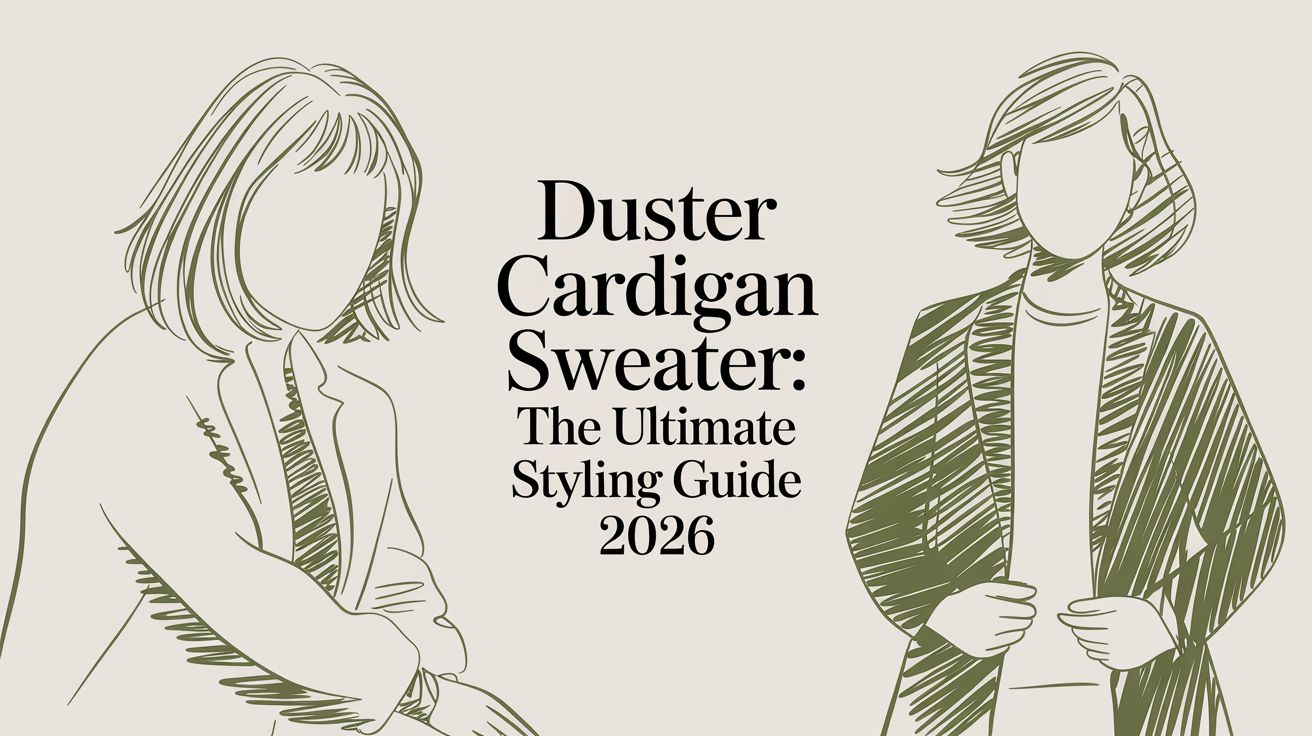
You’re standing in front of your wardrobe on a cool Canadian morning, and the usual question shows up again. A jacket feels too structured. A standard cardigan feels too short. A coat feels like too much for a day that might turn mild by lunch.
That’s exactly where a duster cardigan sweater earns its place.
It’s one of those rare pieces that solves a real dressing problem. You can throw it over a tee and trousers, layer it over a fine knit, or use it to soften a more structured outfit without losing polish. It adds length, movement, and ease, but still feels relaxed enough for daily wear.
For anyone trying to build a wardrobe with fewer, better pieces, the duster stands out. It isn’t only stylish. It’s practical for in-between weather, office air conditioning, weekend errands, and evenings when you want one extra layer without the fuss of outerwear. In a climate where a single day can move from brisk to warm to breezy, that kind of flexibility matters.
A well-chosen duster cardigan sweater also supports a more conscious approach to getting dressed. Instead of buying separate layers for every small temperature shift or occasion, you choose one refined piece that works hard across many settings. That’s not about being minimalist for its own sake. It’s about choosing clothes that feel beautiful, useful, and easy to live in.
The One Layer That Does It All
A reader once described her wardrobe problem perfectly. She had knitwear for winter, light cardigans for spring, and jackets for autumn, yet she still felt underdressed or overdone most days in between. Her outfits were fine, but they didn’t flow. They didn’t carry her from morning coffee to work calls to dinner without some awkward change in the middle.
The duster cardigan sweater sits right in that gap.
It has the comfort of a cardigan, the presence of a light coat, and the ease of something you can leave open and move in all day. That combination is why so many people reach for it once they’ve found the right one. It makes simple outfits feel considered, and it lets dressier outfits feel less rigid.
Why it works in real life
The beauty of a duster isn’t that it transforms your wardrobe overnight. It’s that it helps your existing clothes do more.
- With denim and a tee, it adds length and polish without making the outfit feel fussy.
- Over office basics, it gives softness to trousers, shirting, and fine-gauge knits.
- With dresses or skirts, it can act as a gentle top layer rather than a heavy jacket.
- During seasonal transitions, it bridges the awkward weeks when the weather can’t seem to make up its mind.
Practical rule: If you keep wishing your cardigan had more presence, or your coat had less formality, you’re probably looking for a duster.
There’s also an understated elegance about its shape. A longer line changes the whole silhouette. It draws the eye downward, creates movement as you walk, and gives a sense of balance that shorter layers often can’t.
That’s why the duster cardigan sweater has such staying power. It isn’t a novelty piece. It’s a wardrobe problem-solver disguised as a beautiful knit.
What Exactly Is a Duster Cardigan
At first glance, a duster cardigan sweater can look like a long cardigan, a robe-style wrap, or even a very soft coat. The confusion is understandable. The difference comes down to proportion, not just vibe.
A duster cardigan sweater is defined by its extended length, usually falling somewhere from mid-thigh to ankle. What sets it apart technically is the way the garment is built. For a wearable duster, the body panels are extended by roughly 18 to 22 inches (45 to 55 cm) below the waist compared with a regular cardigan, and that extra length raises fabric yardage by 30 to 40% versus a hip-length cardigan, according to the verified construction guidance provided for this article.

How to picture it clearly
Think of three familiar garments.
A regular cardigan usually stops around the hip or upper thigh. It functions as a mid-layer.
A robe-style wrap has length and softness, but it’s usually designed more for lounging than structured daily wear.
A light coat gives coverage, but often with more stiffness, lining, or tailoring.
The duster sits between them. It hangs like a long cardigan, carries some of the visual presence of a coat, and keeps the softness and ease of knitwear.
The details that make it wearable
Length alone isn’t enough. A good duster needs drape.
That’s why fine-gauge knits matter. The verified data notes that designers often use 7 to 9 gauge knits to offset the added length, helping the garment stay breathable while keeping a stable, elegant fall. If the knit is too bulky, the piece can feel heavy and collapse on the body rather than skim it.
Fit matters too, especially in layering climates. The same verified guidance notes that duster openings should allow enough hip ease to avoid riding up when worn over thicker clothing. That point is easy to miss when shopping online, and it’s one reason some long cardigans look graceful on a hanger but awkward in daily life.
A duster should glide over what you’re wearing, not argue with it.
What length looks most balanced
For the Canadian market, duster lengths are often listed around 38 to 40 inches (96 to 101 cm) from the high point of shoulder, which aligns with mid-calf coverage for the average Canadian female height of 1.63 m, based on the verified data used in this guide. That’s a sweet spot for many wardrobes. It gives the long, elegant line people want without feeling impractical for everyday wear.
If you’re wondering whether a duster cardigan sweater is “just a long cardigan,” the best answer is this. Not quite. It’s a longline knit layer designed to function with more visual impact, more coverage, and more styling range.
How to Choose the Right Duster Cardigan
Shopping for a duster cardigan sweater gets easier when you stop asking only, “Do I like the colour?” and start asking, “How will this behave in my life?” The right choice depends on fibre, feel, drape, care needs, and how you layer through the year.
Start with fibre, not trend
Material affects almost everything you feel when you wear a duster. Warmth, breathability, weight, softness, drying time, and maintenance all begin with fibre choice.
The verified data for this article notes that merino-based dusters offer strong moisture management, with up to about 30% moisture regain by weight, which makes them especially useful in variable climates where you move between cold outdoors and heated interiors. The same data also notes that merino-rich blends can reduce perceived heaviness by 15 to 20% while maintaining thermal resistance comparable to 100% cotton cardigans, because merino’s crimped fibres trap more air per unit weight.
That sounds technical, but the day-to-day meaning is simple. Merino often feels lighter on the body than you’d expect for its warmth.
Cotton has a different appeal. It tends to feel straightforward, easy, and familiar. Many shoppers prefer it because it usually feels less precious and easier to wash. If you want a helpful primer on cotton knitwear, this guide to 100% cotton sweaters is a useful companion read.
Duster Cardigan Fabric Comparison
| Material | Key Benefits | Best For | Care Level |
|---|---|---|---|
| Merino wool | Breathable feel, moisture management, lighter-feeling warmth | Transitional weather, indoor-outdoor dressing, polished layering | More delicate care |
| Organic cotton | Soft, easygoing feel, often simpler for everyday wear | Mild weather, casual outfits, low-fuss wardrobes | Generally easier care |
| Cotton blend | Balances comfort with practicality | Frequent wear, general layering | Moderate care |
| Merino blend | Combines wool performance with added resilience | Variable climates, repeat wear, lighter-feeling warmth | Moderate to careful care |
Match the knit to your routine
If you commute, move through changing temperatures, or spend long days in layered outfits, a lighter-feeling merino or merino blend often makes sense. If your wardrobe leans casual and you want something easy to throw on with denim, cotton or a cotton blend may fit better.
A few buying cues help:
- For spring and early autumn, look for a knit that moves rather than holds a boxy shape.
- For office wear, choose cleaner lines and a smoother finish so the duster pairs well with trousers or dresses.
- For home and weekend use, a slightly more relaxed texture can feel welcoming and unfussy.
- For frequent wear, check whether the fibre blend supports easier laundering and shape retention.
Don’t ignore shape and opening
The front opening changes how the piece behaves. An open-front duster feels effortless and is often the easiest to style. A belted version can create more definition, but it also asks a little more of the rest of your outfit.
Length matters in a practical way too. Some people love an ankle-skimming silhouette, but many find a mid-calf length more versatile for work, weekends, and everyday movement. If you’re often in flats, boots, or sneakers, that balanced middle length usually works beautifully.
The best duster cardigan sweater is the one that supports your real wardrobe, not an imaginary one.
Styling Your Duster for Every Season and Body Type
Many retailers list long cardigans with only vague notes like “regular fit” or “dropped shoulders.” That doesn’t tell you much when you’re wondering whether the piece will sit neatly over a tee, skim over a sweater, or bunch over a thermal top. The verified guidance for this article highlights that gap, especially for Canadian shoppers trying to layer through changing weather, and that’s exactly where more practical styling advice helps.

Easy outfit formulas that actually work
The strongest styling trick with a duster cardigan sweater is contrast. Because the layer is long and fluid, it pairs well with pieces that feel a little cleaner or closer to the body underneath.
For a weekend look, try a fitted tee, straight-leg denim, ankle boots, and a duster left open. The long line adds ease without making the outfit look oversized.
For work, layer it over a fine knit or simple shell with well-fitting trousers. The result feels more relaxed than a blazer but more polished than a short cardigan.
For evening, wear it over a column dress or a knit top with a slim skirt. A duster can soften the outfit and still keep the silhouette refined.
If the base layer is simple, the duster becomes the statement without shouting.
Dressing for Canadian seasons
Spring dressing is often about flexibility. A duster over a cotton tee or lightweight knit handles cool mornings and milder afternoons with very little effort.
Autumn is where the piece really shines. You can layer it over a thermal base, a mock neck, or a lightweight sweater and still keep movement in the outfit. That’s the practical point many product pages miss. People don’t wear long cardigans in a vacuum. They wear them over real clothes, in real weather, often with boots, scarves, or indoor heating in the mix.
For inspiration on pairing textured knitwear with longer layers, this article on the white cable knit sweater offers helpful ideas.
Small fit shifts make a big difference
Body type advice doesn’t need to be rigid. It helps more to think in terms of proportion.
- If you’re petite, look for a duster that doesn’t overwhelm your frame. A mid-calf version often feels easier than one that falls very close to the ankle.
- If you’re tall, you can often carry extra length beautifully, especially with long trousers, knit dresses, or boots.
- If you’re curvier, pay attention to how the front hangs when left open. You want enough ease for the knit to fall smoothly, not pull across the hip.
- If you prefer more shape, define the waist with a fitted underlayer or a soft belt rather than choosing a stiff silhouette.
This quick styling video can help you visualise how movement and layering change the overall effect of a long knit.
Three common mistakes to avoid
A duster cardigan sweater is easy to wear, but a few habits can throw off the look.
- Going too bulky underneath can make the front pull or bunch.
- Choosing a hemline that competes with the duster can create visual clutter, especially if both layers end at awkward points.
- Adding too many flowing pieces at once can make the outfit lose shape.
A simple formula usually wins. Long layer, clean base, grounded shoe.
Sustainable Care for Lasting Knitwear
When you buy a beautiful duster cardigan sweater, care is part of the investment. Not because knitwear should feel high-maintenance, but because thoughtful habits help it keep its shape, softness, and usefulness over time.

Wash with restraint
Most knitwear doesn’t need constant washing. Often, airing it out after wear is enough, especially if you’ve layered it over a base garment.
When washing is needed, start with the care label and follow it closely. In general, gentler methods protect fibres better than aggressive washing. Cool water, a mild detergent, and minimal agitation are usually the safer path for natural fibres.
Care note: A duster lasts longer when you treat washing as occasional maintenance, not a reflex after every wear.
Dry and store it properly
The biggest mistake people make with knitwear is hanging it when wet or storing it on a hanger long term. Gravity stretches knits, especially longer ones.
Use this simple routine:
- Reshape after washing so the shoulders, hem, and sleeves sit neatly.
- Dry flat on a clean towel or drying surface, away from direct heat.
- Fold instead of hanging once the cardigan is fully dry.
- Store in a clean, dry space where the knit can rest without being compressed too tightly.
Keep the piece looking refined
Pilling doesn’t always mean poor quality. It often happens in areas of friction, like under the arms or where a bag rubs against the knit. Remove pills gently with the right sweater care tool rather than pulling them off by hand.
It also helps to rotate your knitwear. Giving fibres time to recover between wears can help the garment keep its shape and finish.
Conscious care is one of the simplest forms of sustainability. Keeping one duster cardigan sweater in beautiful condition for years is far better than replacing a neglected one every season.
An Investment in Timeless Versatility
A duster cardigan sweater earns its place because it answers more than one need at once. It gives coverage without heaviness, polish without stiffness, and comfort without looking overly casual. Few layers manage that balance so well.
It also supports a smarter wardrobe. Instead of buying several stopgap pieces for changing weather, shifting dress codes, and everyday layering, you can choose one well-made knit that works across those moments with far more grace. That’s the core value of an investment piece. It keeps proving useful.
If you’re building a wardrobe around longevity, versatility matters as much as style. So does fibre choice, fit, and how easily a garment integrates with what you already own. A duster that feels right with jeans, smart trousers, dresses, and simple knit basics won’t sit untouched in the wardrobe. It’ll become part of your routine.
That’s why the duster remains such a compelling piece for thoughtful dressers, especially in climates that ask for flexibility. It doesn’t chase novelty. It delivers ease, elegance, and repeat wear.
If you’re refining your closet around pieces with staying power, this guide to how to build a capsule wardrobe is a smart next step.
If you’re ready to choose layers with more intention, explore IdyllVie for consciously designed essentials that blend comfort, durability, and understated elegance for everyday Canadian living.












0 comments