
There is a familiar moment in Canadian summer when the outfit that worked perfectly at 2 p.m. stops making sense by 8. The patio breeze picks up. The lake air turns cooler than expected. The office air conditioning has already done enough damage, and now the walk home feels sharper than the forecast suggested. You do not need a coat, but you do need something more considered than carrying a random sweatshirt everywhere.
This is where lightweight layering earns its place. The right summer layer should add comfort without trapping heat, polish without stiffness, and enough flexibility to move from bright afternoons to cooler evenings without making the rest of the outfit feel overbuilt. That sounds simple, yet it is where many wardrobes get cluttered. People buy too many emergency layers that only solve one exact scenario. A better approach is to choose a small rotation of breathable pieces that work across patios, travel days, cottage weekends, dinners out, and everyday city life.
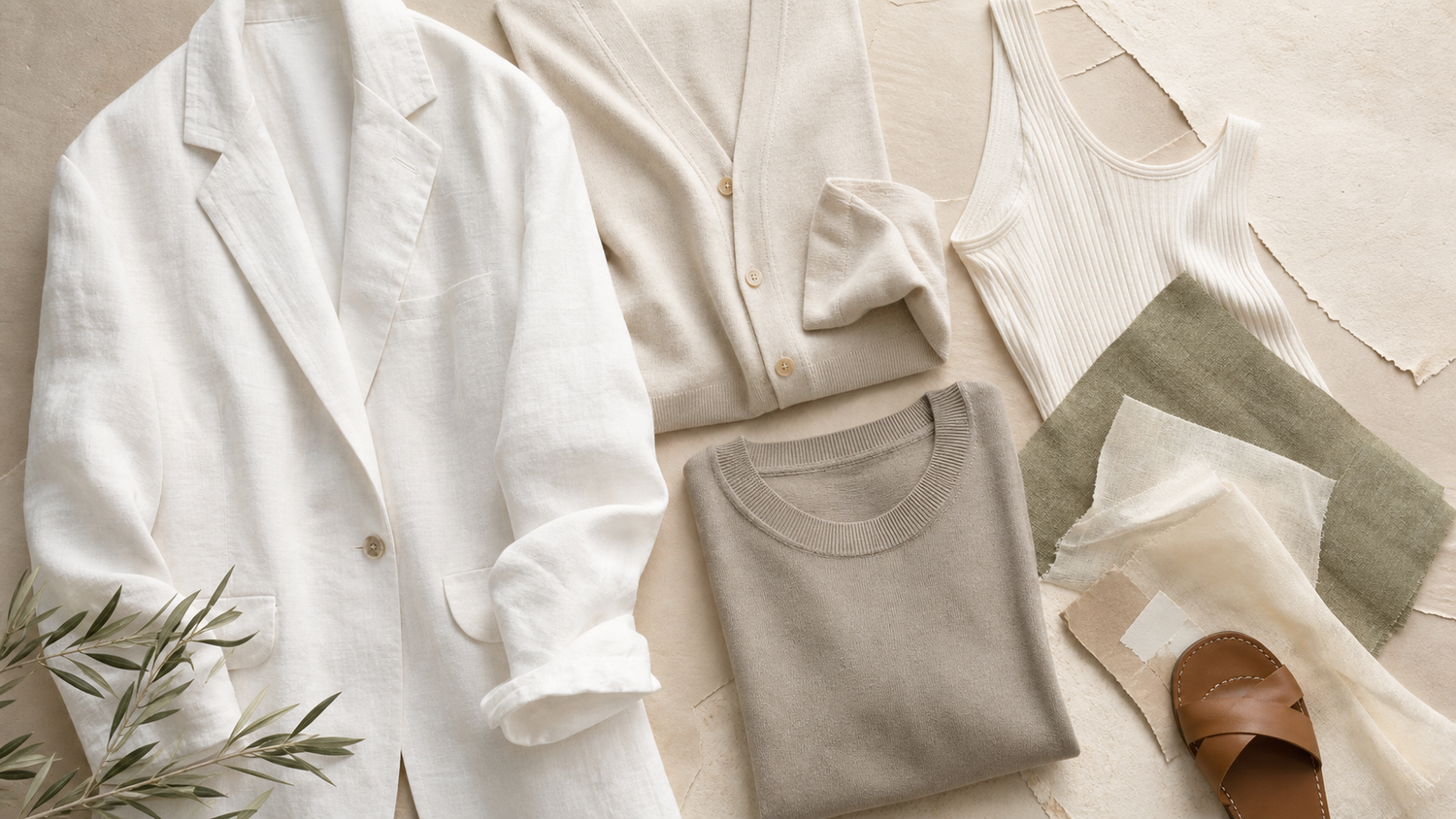
For IdyllVie, that logic fits naturally. Summer style is rarely about dramatic outerwear. It is about quiet usefulness: a linen blazer that slips over a tank, a cotton sweater that softens a sleeveless outfit, or a cardigan that handles shifting temperatures without feeling bulky. This guide breaks down which lightweight layers are worth owning, how to match them to real-life settings, and what fabric details matter if you want repeat wear rather than one-season novelty.
The Quick Answer: What Makes a Good Summer Layer?
The best lightweight summer layers usually do five things well:
- breathe instead of trapping stale heat
- add just enough warmth for evening breezes and indoor air conditioning
- pair easily with tanks, tees, dresses, shorts, or linen trousers
- fold or carry without becoming a burden
- still look intentional once the temperature rises again
If a layer feels heavy in the crook of your arm, bunches awkwardly under a bag strap, or only works with one outfit formula, it is probably not the right summer piece. The better layers earn their keep through range.
Why Layering Matters More in Summer Than People Expect
Many people think of layering as a cold-weather skill, but summer often asks for more nuanced temperature management than winter. Winter dressing is usually obvious: add insulation. Summer dressing is less direct. You may move from direct sun to deep shade, from a hot sidewalk to a heavily air-conditioned restaurant, or from still afternoon heat to breezy water-adjacent evenings in a matter of hours.
That is why fibre behaviour matters. Cotton remains useful because of its familiar softness, breathability, and day-to-day comfort. CottonWorks continues to position cotton around those same practical strengths, which helps explain why cotton sweaters, tees, and easy knit layers stay central in warm-weather wardrobes. Linen solves a slightly different problem. Linen.eu notes that linen absorbs moisture and moves it away from the skin rather than trapping it close to the body, which is part of why linen layers can feel airy even when they provide coverage.
The takeaway is simple: the right summer layer should regulate gently rather than insulate aggressively.
Start with the Three Layers That Do the Most Work
When people search for lightweight summer layers, they often imagine they need a large category. In practice, most wardrobes work better with three dependable options: a linen jacket or blazer, a fine cotton sweater, and a soft cardigan. Each solves a different version of the same problem.
1. Linen blazers and lightweight jackets
This is the most polished summer layer. IdyllVie’s Oversized Linen Blazer product page describes an unlined, breathable linen blazer with a relaxed cut and double-breasted front. Those details matter because they explain why the piece works in summer at all. Unlined construction keeps the layer lighter. Linen adds airflow and texture. The looser cut makes it easy to throw over a tank, tee, or slip dress without feeling restricted.
This kind of layer is strongest when you want:
- a dinner or patio layer that still looks refined
- a top piece for office air conditioning
- something more elevated than a denim jacket
- a warm-evening layer that works with trousers, skirts, or dresses
2. Fine-gauge cotton sweaters
The quiet strength of a cotton sweater is balance. It feels softer and often simpler to wear than many structured jackets, but more intentional than a basic sweatshirt. IdyllVie’s recent cotton-sweater guides repeatedly position cotton knits as foundational because they can bridge outdoor breeze, indoor cooling, and everyday layering without becoming fussy.
For summer evenings, the best cotton sweater is usually:
- fine to medium gauge rather than chunky
- easy through the shoulder and body
- light enough to drape over the shoulders or tie loosely
- neutral enough to repeat often
If a sweater feels bulky indoors, it stops being a summer layer and starts behaving like a colder-season knit.
3. Cardigans and longline knit layers
Cardigans sit between structure and softness. They are usually the easiest to keep nearby because they fold compactly, slip on quickly, and do not ask much of the rest of the outfit. IdyllVie’s duster-cardigan article is useful here because it frames long cardigans as problem-solving pieces for in-between weather, not just decorative styling extras.
For summer, that same logic works best in lighter weights and simpler silhouettes. A cardigan should float over the outfit, not dominate it.
How to Choose the Right Layer for the Setting
The fastest way to buy the wrong layer is to shop by category name alone. Shop by setting instead.
For patios, dinners, and city evenings
Choose a linen blazer or a softly structured summer jacket first. These pieces keep the outfit looking composed if you are already wearing a tank, column dress, or clean tee-and-trouser combination. They also work better if you might stay out later and want to avoid looking too casual once the temperature dips.
For travel, cottages, and long weekends
Reach for the cotton sweater or cardigan. These are lower-maintenance, easier to carry, and often more forgiving if you are moving between a dock, a car, a market stop, and dinner. A cotton knit also layers well over sleeveless tops without feeling too formal for relaxed settings.
For office air conditioning and multi-stop days
This is where range matters most. A lightweight cardigan often wins because it can go on and off quickly. A linen blazer works too if your day includes meetings or you want sharper structure. The deciding factor is whether you want softness or polish to lead.
A Practical Comparison Table
| Layer type | Best for | Main strength | Watch-out | Easiest pairing |
|---|---|---|---|---|
| Linen blazer or jacket | Dinners, patios, office AC, polished travel | Structure without heavy lining | Can feel too formal if the cut is rigid | Tank, trousers, sandals |
| Fine-gauge cotton sweater | Breezy evenings, weekend layering, travel | Softness and breathability | Too-heavy knits lose summer usefulness | Slip skirt, shorts, linen pants |
| Lightweight cardigan | Everyday temperature swings, errands, flights | Fast, easy layering | Can look flat if overly flimsy | Tee, denim, easy dress |
| Longline cardigan or duster | Cooler evenings, elongated silhouettes, indoor-outdoor transitions | Coverage with softness | Too much bulk can overwhelm summer outfits | Column dress, slim tee, straight trousers |
Fit and Fabric Matter More Than the Name on the Label
One reason summer layering feels frustrating is that many pieces are sold with appealing language but weak practical details. A “lightweight jacket” can still feel stiff. A “summer cardigan” can still cling in the wrong places. This is why construction matters.
Look for unlined or lightly constructed outer layers
IdyllVie’s linen blazer description specifically calls out its unlined feel, which is exactly what you want in summer. Full lining adds polish, but it can also add unnecessary heat and weight. A relaxed blazer or light jacket usually works best when the structure is concentrated where it helps, not spread heavily through the whole garment.
Choose sweater weight carefully
A cotton sweater can be a near-perfect summer companion or a closet mistake depending on knit density. The best ones for cool evenings have enough body to skim rather than collapse, but not so much weight that they become hot indoors. IdyllVie’s cotton knit content repeatedly emphasizes hand feel, knit consistency, and shape retention. That is the right lens. Fibre content alone is not enough.
Notice drape through the sleeve and body
Summer layers should leave room for movement and airflow. If sleeves are too narrow, the layer becomes annoying over even a simple tee. If the body is too boxy, the outfit can lose shape. The sweet spot is ease, not excess.
The Best Fabrics for Summer Layers
You do not need a long fabric glossary, but you do need a few clear rules.
Linen
Best for airy structure, visible texture, and evenings when you still want polish. Linen is especially strong in jackets, overshirts, and easy trousers because it creates shape without feeling dense.
Cotton
Best for softer knit layers, travel-friendly basics, and pieces you want to wear casually and often. Cotton remains a dependable choice when you want something breathable and familiar on the skin.
Cotton-linen blends
Often the most forgiving middle ground. These blends can provide some of linen’s texture and some of cotton’s softness, which makes them useful for shoppers who want summer ease without the crispness or wrinkle visibility of pure linen.
What to approach carefully
Acrylic-heavy or dense synthetic-blend layers can still look fine, but they often miss the point of summer layering. If the layer feels clammy, overly static, or difficult to air out between wears, it is less likely to become a reliable warm-weather piece.
Outfit Formulas That Actually Work
The goal of a summer layer is not to become the whole outfit. It should complete what is already there.
Formula 1: Tank plus linen blazer plus easy trousers
This is one of the most useful warm-evening combinations because it handles temperature change without losing polish. A light tank keeps the base cool. The blazer adds shape once the air shifts. Easy trousers or linen pants keep the outfit grounded.
Formula 2: Simple dress plus cardigan plus flat sandal
This formula works because the base remains very uncomplicated. The cardigan adds comfort without competing with the dress. It is a strong answer for patios, cottage dinners, or any evening when you expect a breeze but not a cold snap.
Formula 3: Tee plus cotton sweater draped over shoulders or tied loosely
This approach is practical rather than precious. A cotton sweater is there when you need it, but it does not overheat you while the day is still warm. It also makes a plain tee-and-shorts outfit look more considered with almost no effort.
Formula 4: Sleeveless top plus long cardigan plus slim or straight-leg bottom
If you like coverage in the evening, a longer cardigan creates a softer line than a jacket. Keep the base clean and the proportions slightly narrower underneath so the outfit stays balanced.
A Five-Point Buying Checklist
Before adding a lightweight summer layer, ask:
- Can I wear this over at least three outfits I already own?
- Will I actually carry or pack this without resenting it?
- Does the fabric feel breathable enough for indoor use too?
- Is the silhouette easy, not fussy, through the sleeve and body?
- Do the care instructions fit my real habits?
That last question matters more than most people admit. The FTC’s clothing-care guidance remains a useful reminder that garment labels exist to help you care for the item safely and realistically. If a piece needs a maintenance routine you know you will ignore, it is less likely to earn repeat wear.
Care: How to Keep Summer Layers Feeling Light
Good summer layers lose their appeal quickly if they are washed harshly, over-dried, or stored carelessly. IdyllVie’s own care content already leans in the right direction: smaller loads, gentler cycles, and fabric-appropriate drying.
For most linen jackets, cotton sweaters, and light cardigans:
- wash only when needed rather than automatically after each wear
- follow the label first, especially for shape-sensitive knitwear
- avoid over-drying, which can harden cotton and stress fibres
- reshape knits before drying flat if the label calls for it
- hang jackets on supportive hangers so the shoulder line stays clean
The point is not perfection. It is keeping the layer attractive enough to keep choosing it.
When to Choose Polish and When to Choose Softness
The most useful summer layering decision is often this simple: do you want your top layer to sharpen the outfit or soften it?
Choose polish when:
- you are dressing for dinner, travel arrival, or office-to-evening wear
- the base outfit is very minimal and needs structure
- you want the layer to act as the visible style piece
Choose softness when:
- the setting is relaxed
- you need something easy to carry and re-wear
- the outfit already has enough structure
- comfort matters more than edge definition
This distinction keeps shopping clearer. Not every layer needs to do everything.
FAQ
What is the best lightweight layer for a cool summer evening?
A linen blazer, fine cotton sweater, or lightweight cardigan is usually the most useful choice. The best option depends on whether you want more polish, more softness, or easier packability.
Are linen blazers good for summer evenings?
Yes, especially when they are unlined or lightly structured. They add coverage and polish without the heaviness of a traditional jacket.
Is a cotton sweater too warm for summer?
Not if it is lightweight or fine gauge. A dense or chunky cotton knit can feel too heavy, but a breathable cotton sweater is often ideal for breezy evenings and air-conditioned spaces.
What colours work best for summer layers?
Neutral shades like white, oat, sand, stone, navy, olive, and soft black usually repeat most easily. They also work well over tanks, dresses, and warm-weather separates.
Should I choose a cardigan or a blazer?
Choose a cardigan if you want softness, flexibility, and easy carrying. Choose a blazer if you want more structure, shape, and evening polish.
How do I layer in summer without overheating?
Start with a light base such as a tank, tee, or sleeveless dress, then add one breathable outer layer in linen, cotton, or a cotton-linen blend. Skip dense fabrics and overbuilt linings.
The IdyllVie Approach
The best summer layer is rarely the most dramatic one. It is the piece that makes temperature changes feel manageable without disrupting the rest of the outfit. A linen blazer that sharpens a simple base. A cotton sweater that waits on the chair until the breeze arrives. A cardigan that turns a sleeveless dress into an evening outfit in seconds.
That is the kind of usefulness worth building around. Instead of collecting emergency layers that feel random, choose a few breathable, repeatable pieces with calm texture and honest range. In Canadian summer, that is often enough to carry you from bright afternoon heat to cool evening air with far less friction and much better style.












0 comments