
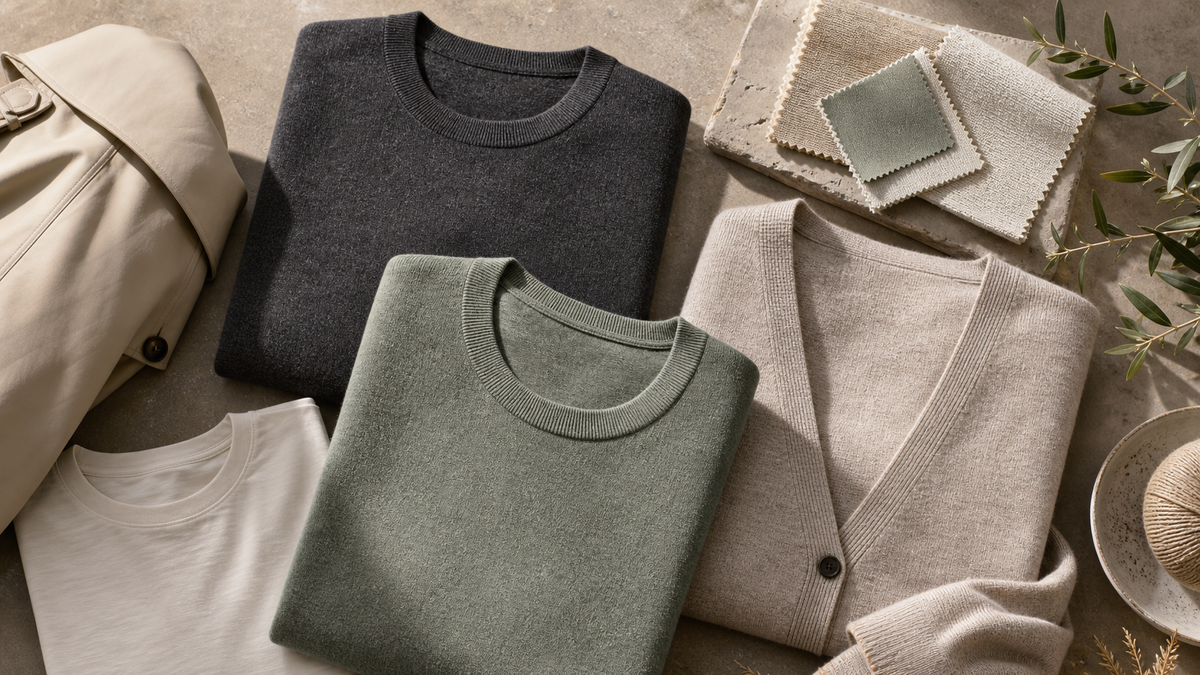
How to Choose a Sweater for Transitional Weather
The hardest days to dress are rarely the coldest ones. They are the ones that start cool, warm up by late morning, then throw you into a subway, office, cafe, or grocery store that feels ten degrees hotter than the sidewalk. That is when a sweater either becomes your smartest layer or the piece you regret by lunch.
This is why choosing a sweater for transitional weather deserves more attention than people give it. You are not looking for maximum insulation. You are looking for balance: enough warmth for the first hour outside, enough breathability for the rest of the day, and enough polish that the outfit still feels intentional when the coat comes off.
For IdyllVie readers, the topic maps neatly onto the current live assortment and editorial base. The men's knitwear collection currently includes a Cotton Corduroy Half-Zip Sweater, a Merino Wool Quarter-Zip Sweater, a Merino Wool Sport Turtleneck, and a Merino Wool Crew Neck Sweater. The women's collection is framed around polished knits, layering pieces, and structured coats made for easy everyday outfits. The brand's existing articles on cotton crew neck sweaters, 100 cotton sweaters, and merino wool outer layers also create a useful foundation for a practical shoulder-season guide.
The Quick Answer
If you want the shortest possible rule, choose your transitional sweater by asking three questions:
- will I wear it mostly on the move outdoors, mostly indoors, or across both
- do I need the knit to breathe more like cotton, regulate more like merino, or open and close easily like a cardigan
- can I layer it over a tee and under a jacket without the outfit becoming bulky
Current style guidance points in the same direction. Esquire's spring 2026 layering guide argues that shoulder-season knitwear works best when it adds texture without heavy bulk. Who What Wear's spring 2026 layering coverage also shows the same pattern from the runway and street style side: the useful pieces are not the thickest ones, but the ones that let you build intentional layers. In other words, a transitional sweater should be a flexible middle layer, not a winter emergency blanket.
What Transitional Weather Actually Demands
Transitional weather is less about one temperature and more about temperature range. A cool morning, a mild afternoon, wind off the lake, indoor heating, and a light evening chill all ask slightly different things from the same garment.
That is why a good sweater for September, early October, April, or a breezy June evening usually has four traits:
- breathable fibre that does not trap stale heat too quickly
- moderate knit weight that layers easily under a trench, chore coat, or light jacket
- enough structure to look polished once the outer layer comes off
- easy care and storage so it remains part of regular rotation rather than a high-maintenance special case
Woolmark's fibre guidance is useful here because it explains that merino wool is highly breathable and reacts to changes in body temperature rather than only insulating in one direction. Its more recent dynamic breathability research makes the same case in a more performance-focused way: wool adapts well in stop-and-go conditions. That matters in ordinary city life too. A commute, errands, office day, and dinner reservation are also stop-and-go conditions.
Cotton plays a different role. IdyllVie's own cotton sweater coverage consistently frames cotton as the calmer, easier indoor-friendly option: soft, breathable, familiar, and less fussy for daily wear. That makes cotton especially useful when you expect warmer interiors or want a cleaner, less technical feel.
The Comparison Table
| Sweater type | Best for | Main strength | Possible drawback | Best outer layer partner |
|---|---|---|---|---|
| Fine-gauge merino crew neck | Cool mornings, commutes, days with big temperature swings | Thermoregulating comfort without much bulk | Can feel too warm indoors if the knit is dense | Trench, wool overshirt, light field jacket |
| Midweight cotton crew neck | Indoor-heavy days, mild afternoons, relaxed office wear | Breathable comfort and easy everyday polish | Less weather protection in wind or drizzle | Denim layer, chore coat, lightweight parka |
| Soft cardigan | Layering over tees or shirts when the forecast keeps shifting | Easy on-off flexibility and softer silhouette | Can lose structure if too slouchy or heavy | Tee, blouse, tank, trench, tailored coat |

Start with Fibre Before You Start with Colour
People often shop sweaters by shade, neckline, or whether the knit looks expensive in a photo. For transitional weather, fibre earns the first decision.
Merino when the day keeps changing
Merino is the most useful answer when you expect movement between outdoor chill and indoor heat. Woolmark describes merino as one of the most breathable fibres and notes that it helps move moisture vapour away as conditions change. That is exactly what makes a fine merino knit so useful on a day that begins at 10 C, warms to 19 C, and still includes wind or rain.
The live IdyllVie men's knitwear collection supports that use case well. A Merino Wool Crew Neck Sweater or Merino Wool Quarter-Zip Sweater makes sense when you want clean structure with more temperature range than cotton alone usually gives. The quarter-zip adds more ventilation control. The crew neck is cleaner under a coat.
Cotton when the day is mild and indoor-heavy
Cotton is usually the easier answer when you expect more time inside, milder air outside, or a softer, more casual silhouette. IdyllVie's live cotton sweater articles repeatedly return to the same idea: cotton sweaters work because they are breathable, easy to layer, and less likely to feel overbearing in regular daily life.
That makes a midweight cotton crew neck especially strong for:
- office days where the heating runs warm
- coffee-shop or travel days when you want one uncomplicated layer
- weekend dressing with denim, chinos, or softer skirts
- early autumn afternoons when you want comfort more than insulation
Cotton is not the wrong choice because it is simpler. Transitional dressing often gets better when it gets simpler.
Cardigans when flexibility matters more than purity
A cardigan is not a separate fibre category, but it is often the smartest shape for weather that changes faster than your schedule. If you are layering over a tee, tank, or blouse and know you will take the sweater off at least once, a cardigan earns its place through convenience alone.
The mistake is choosing one that behaves like a robe. A transitional cardigan should still have enough shape to sit cleanly under a coat and look intentional on its own. Think refined, not oversized for the sake of softness.
Weight, Gauge, and Bulk Matter More Than People Expect
The wrong sweater for transitional weather is often not wrong because of fibre. It is wrong because of weight.
Esquire's 2026 spring layering guide says the quiet part clearly: shoulder-season knitwear should usually lean toward finer materials rather than heavy fisherman-style bulk. That does not mean every sweater must be delicate. It means your transitional sweater should leave room for the rest of the outfit to function.
In practice:
- a fine-gauge knit is easier under trenches, blazers, and field jackets
- a midweight crew neck often feels best as the main visible layer
- a dense chunky knit can still work, but usually only when the rest of the outfit is stripped back and the weather is genuinely cool
IdyllVie's own cotton and merino sweater articles make a similar distinction when they talk about knit density, structure, and how a sweater behaves once you are indoors. The most useful transitional knit is often the one that still feels calm after the jacket comes off.
Match the Shape to Your Day
Once the fibre and weight make sense, the next decision is shape. Shoulder season is where neckline, opening, and silhouette start affecting comfort just as much as style.
Crew neck
A crew neck is the safest all-purpose option. It sits well over a tee, under a coat, and with almost every trouser shape. If you want one sweater that will cover commuting, work, and weekend wear, start here.
Quarter-zip or half-zip
This is the practical option when you want ventilation control. The live IdyllVie assortment currently includes both cotton and merino zip-neck knitwear, which makes sense for transitional dressing because you can adjust the neckline as the day changes.
Cardigan
The cardigan wins on ease. It is ideal when your base layer is part of the outfit and you want the freedom to open the sweater without fully removing it. For many women and some men, it is also the easiest bridge between polished and relaxed dressing.
Turtleneck or higher neck
A higher neckline can still work in transitional weather, especially in fine merino, but it is the least forgiving if you run warm. Treat it as the more specific option, not the default answer.
Practical Outfit Formulas for Transitional Days
The easiest way to judge a sweater is not by the product page. It is by the kind of day it can carry.
Commute plus office
Start with a tee or shirt, add a fine-gauge merino or clean cotton crew neck, then top it with a trench or light jacket. This is where IdyllVie's women collection language around polished knits and structured coats becomes useful. The layer stack should feel smooth, not padded.
Mild afternoon with cool evening
Choose a cotton crew neck or cardigan over a simple base layer, then carry the coat rather than relying on it. This is the day where a cardigan can outperform a pullover because you can open it indoors without losing the whole look.
Rainy shoulder-season city day
Use merino or a tighter cotton knit under a weather-minded outer layer. Who What Wear's 2026 layering coverage shows that trench-based outfits continue to work because they add protection without too much visual weight. A transitional sweater should support that same balance.
Travel or weekend wear
This is where the easiest layer usually wins. A cotton crew neck with straight-leg denim, loafers, and a lightweight coat often does more real work than a more dramatic knit. If you need adaptability, swap the crew neck for a cardigan.

The Transitional Sweater Checklist
Before you buy, run through this short list:
- The knit should fit comfortably over a tee or shirt without pulling.
- The sweater should still sit cleanly under your usual coat or jacket.
- The neckline or opening should suit how warm you run indoors.
- The fabric should match your real weather pattern, not a fantasy version of your life.
- The colour should work with at least three bottom options you already own.
- The sweater should be easy enough to care for that you will actually keep it in rotation.
This is also where the live IdyllVie assortment helps. The men's knitwear page already covers clean neutrals like charcoal, black, hunter green, burgundy, and olive. The women's collection is similarly grounded in wearable layering tones. That kind of palette matters because transitional sweaters work best when they repeat easily across outfits.
Care and Off-Season Storage
A transitional sweater earns more value when it survives the season gracefully. Woolmark's wool-care guidance is practical here: clean garments before storing them and fold rather than hang to help them keep their shape. The American Cleaning Institute's sweater-care guidance points to the same habits more broadly.
That translates into a simple routine:
- wash or clean the sweater before putting it away for a few months
- dry it fully before storing anything
- fold heavier knits instead of hanging them
- keep only the most weather-appropriate sweaters in active rotation and store the rest cleanly
These are small habits, but they make transitional dressing easier next season. A sweater that comes back out looking calm, clean, and shaped correctly is a sweater you will actually wear.
So Which Sweater Should You Choose First?
If you need one default answer, buy a clean midweight crew neck in a breathable fibre that matches how warm you usually run.
If you spend more time commuting or outdoors, that probably means fine-gauge merino.
If you spend more time indoors or want an easier everyday layer, that probably means cotton.
If your schedule changes constantly and you know you will be putting layers on and off, add a cardigan next.
The best transitional sweater is not the most expensive knit or the thickest one in the wardrobe. It is the one that understands the actual day ahead of you. It leaves room for movement, works with your outerwear, and still feels good once the weather changes its mind.
That is the standard worth using. In Canadian dressing, usefulness is usually what ends up looking most refined.
Internal Links to Add
- The Ultimate Cotton Crew Neck Sweater Guide
- 100 Cotton Sweaters: A Guide to Quality, Care & Comfort
- Merino Wool Jacket: A Buyer's Guide to Year-Round Comfort
- How to Build a Capsule Wardrobe That Lasts
- A Weekend Cottage Capsule Wardrobe for Women
- Men's Knitwear collection
- Women's Clothing collection
- Women Coats collection
FAQ
What is the best sweater fibre for transitional weather?
There is no single best answer for everyone. Merino is strongest when temperatures swing and you need better thermoregulation. Cotton is strongest when you want breathable comfort and spend more time indoors. Cardigans are strongest when flexible layering matters most.
Are cotton sweaters good for Canadian transitional weather?
Yes, especially for milder days, warm interiors, and easy everyday layering. They are usually better for comfort than for maximum weather protection, which is why they work well with light outerwear.
Is merino too warm for spring or early autumn?
Not necessarily. Fine-gauge merino often works very well in transitional weather because it regulates temperature better than many heavier knits. The key is choosing the right weight, not assuming all wool is winter-only.
Should a transitional sweater fit loosely or close to the body?
Usually somewhere in between. It should leave room for a base layer without looking oversized under a coat. A little ease is useful. Too much volume often creates bulk and reduces layering flexibility.
Is a cardigan better than a crew neck for changing weather?
Sometimes. A cardigan is more flexible when you expect to open or remove the layer repeatedly. A crew neck is cleaner and simpler when you want a stable all-day shape.
How many transitional sweaters do you actually need?
Most people do well with a small rotation: one cleaner crew neck, one more breathable casual option, and one easy open layer like a cardigan. Beyond that, usefulness matters more than quantity.












0 comentarios