
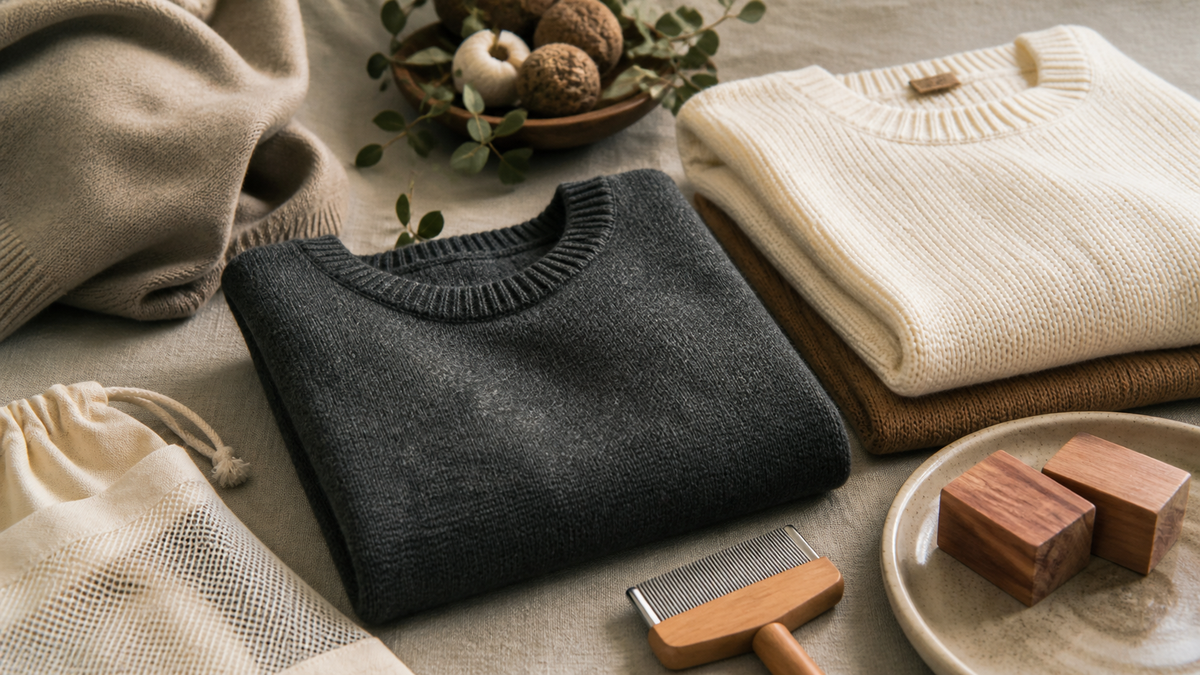
How to Maintain Knitwear: Pilling, Washing, Drying, and Storage
If a sweater stops looking good after one season, the problem is often not the sweater. It is the routine around it. Knitwear usually declines in ordinary ways: pills at the underarm, stretched shoulders from a hanger, a collar that twists after a hot dryer, or a soft knit that feels tired because it was washed too often and dried too aggressively.
That matters for IdyllVie because the brand's knitwear story is built around repeat wear, not one-off trend dressing. As of Sunday, August 16, 2026, the live site shows that clearly. The Men's Knitwear collection includes lighter merino layers alongside a cotton corduroy half-zip, and the product pages are explicit about care. The Merino Wool Quarter-Zip Sweater is described as machine washable on a gentle cold cycle with mild detergent and flat drying. The Cotton Corduroy Half-Zip Sweater allows a cold wash and either low tumble drying or flat drying. The common thread is not complexity. It is gentleness, shape protection, and avoiding unnecessary stress.
Current wool-care guidance from Woolmark supports the same logic. Woolmark's care pages note that pilling is often linked to abrasion, that washable wool sweaters should be turned inside out or placed in a laundry bag, and that knit garments are better folded than hung in storage. Taken together, the message is practical rather than precious: good knitwear lasts longer when you reduce friction, control heat, and store it with intention.
This guide is built around that idea. If you want the short version, wash knitwear less often, treat pills gently, dry flat, and fold it clean before storage. The rest of the article explains how to do that without turning laundry into a project.
The Quick Routine
Use this checklist if you only need the essentials:
- wear the sweater more than once when it is still clean and fresh
- spot-clean small marks before deciding it needs a full wash
- turn it inside out before washing
- use cold or cool water and a gentle detergent
- avoid high heat in the dryer
- reshape while damp and dry flat when possible
- fold knitwear instead of hanging it long-term
- store it clean and fully dry before the season changes
If you do those eight things consistently, you will prevent most avoidable knitwear damage.
What Pilling Actually Means
Pilling makes people panic because it looks like proof that a sweater is low quality. That is not always true. Woolmark's current pilling guidance explains that pills form because loose fibre ends work their way to the surface and felt together through abrasion. In real life, that usually means friction under the arms, along the side body, under crossbody straps, or where a coat rubs against the knit.
IdyllVie's live Fair Isle sweater article makes the same point in shopper language: even good natural-fibre knitwear can pill where friction is repeated. That matters because the right response is gentle maintenance, not punishment. If you attack pills with a razor, rough scraping, or repeated aggressive washing, you usually worsen the surface.
The practical reading is simple:
- a little pilling in high-friction zones is normal
- heavy fuzzing everywhere can signal too much abrasion, too much heat, or poor care
- preventing friction usually matters more than washing more often
The fastest ways to make pilling worse
There are four common mistakes:
- Washing sweaters with heavy denim, towels, or garments with rough trims.
- Using high dryer heat.
- Wearing the same knit day after day without letting the fibres recover.
- Scraping pills off too aggressively.
Woolmark's broader wool-care guidance also recommends giving wool garments time to rest between wears so the fibre can recover its natural spring. That is an easy habit with a big payoff if you rotate between two or three sweaters instead of grinding one favourite into daily overuse.
Before You Wash, Identify What Kind of Knit You Own
Not every sweater wants the same treatment. The easiest way to avoid damage is to stop treating all knitwear as one category.

| Knit type | Best default approach | What to watch for |
|---|---|---|
| Fine merino wool | Cold gentle wash, mild detergent, lay flat to dry | Heat, agitation, shoulder stretch |
| Cotton sweater or cotton-rich knit | Cold wash, gentle cycle, reshape while damp, low heat only if label allows | Shrinkage, twist, surface fuzz from rough loads |
| Loftier wool or textured knit | Minimal washing, hand or delicate care, flat drying | Felting, distortion, friction at raised texture |
| Structured half-zip or denser everyday knit | Gentle machine wash if label allows, zip closed, inside out | Collar distortion, zipper abrasion, over-drying |
On the live IdyllVie site, the Merino Wool Quarter-Zip Sweater and Merino Wool Crew Neck Sweater are both positioned as lightweight, easy-care merino pieces, while the Cotton Corduroy Half-Zip Sweater is a more structured cotton option with some stretch. That is useful because it shows why labels matter. Fibre, knit gauge, and trim construction change the safest routine.
If the label gives you a clear instruction, follow it over generic internet advice. This article is a framework, not a replacement for the garment's own care label.
When a Sweater Needs Washing and When It Does Not
Most knitwear does not need a full wash after every wear. That is especially true for wool. Woolmark's care guidance notes that airing and resting wool can refresh it between wears. A sweater that was worn over a tee for a normal day indoors may only need airing out, not laundering.
A full wash makes sense when:
- the neckline, cuffs, or underarms feel genuinely soiled
- there is visible staining
- the sweater has absorbed cooking, smoke, or travel odour
- the end of the season is coming and you are preparing it for storage
A full wash usually does not make sense when:
- the sweater was worn briefly over a base layer
- it only needs spot-cleaning at one small mark
- you are trying to "freshen" it after one uneventful use
This is one of the quiet economics of better clothing care. The less often you subject a knit to water, agitation, and drying, the longer the shape and surface usually hold.
How to Wash Knitwear Without Roughing It Up
The safest machine-wash pattern is more restrained than most people think. Woolmark's current washable-wool guidance recommends turning wool sweaters inside out or using a laundry bag, washing on a wool setting or delicate cold cycle, and using a wool-friendly detergent. IdyllVie's merino product pages line up well with that advice: cold wash, gentle cycle, mild detergent, flat dry.
For cotton and cotton-rich sweaters, the logic is similar even if the fibre is less delicate than merino:
- zip closures before washing so edges do not snag
- turn the garment inside out
- keep the load small and soft
- use cold water and a gentle cycle
- skip bleach and heavy fragrance-heavy formulas
A simple wash checklist
- Read the care label.
- Close zippers or buttons.
- Turn the knit inside out.
- Wash with similarly soft items only.
- Use mild detergent sparingly.
- Choose cold or cool water and the gentlest cycle that fits the label.
That is enough for most machine-washable knitwear.
Hand washing still makes sense sometimes
If the knit is especially soft, lofty, sentimental, or lightly structured in a way you do not want to risk, hand washing is still the safer answer. You do not need to scrub. Soak briefly in cool water with a mild detergent, press water through gently, rinse carefully, and avoid wringing.
The mistake is thinking that "hand wash" means more force. Usually it means less.
Drying Is Where People Lose the Shape
Washing gets most of the attention, but drying is where many sweaters actually go wrong. IdyllVie's black crew neck, cotton-sweater, and merino-care articles all push the same point: high heat and hanging wet knitwear are the fastest ways to shorten a sweater's life.
Woolmark's care guidance also supports flat storage for knits and generally careful shape protection. That is why flat drying is the safest default for most sweaters even when a product page allows some dryer use.
The safer drying sequence
- press out excess water with a towel instead of wringing
- lay the sweater flat on a dry towel or rack
- smooth the hem, sleeves, collar, and placket back into shape
- keep it away from direct heat and strong sun
- let it dry fully before folding or storing
For the live IdyllVie Cotton Corduroy Half-Zip Sweater, low tumble drying is listed as acceptable, but "acceptable" is not always the same as "best for maximum longevity." If you care most about texture retention and shape consistency, flat drying remains the calmer choice. Low tumble heat may be reasonable when you need convenience, but high heat is where risk rises quickly.
Storage Is Part of Care, Not an Afterthought
Sweaters often survive the wash and then get damaged in the closet. Woolmark's storage guidance is clear on three points: clean the garment before storing it, fold rather than hang it, and check that no moisture or insects have become a problem. Its general wool-care page also says knitted garments should be folded rather than kept on hangers.

IdyllVie's own knitwear articles reinforce the same habits. The merino care article recommends breathable storage, while the cotton and cable-knit articles recommend folding rather than suspending soft knits for long periods.
A storage system that works
Choose this routine at the end of the season:
- wash or properly clean the sweater before storing it
- make sure it is completely dry
- fold it rather than hanging it
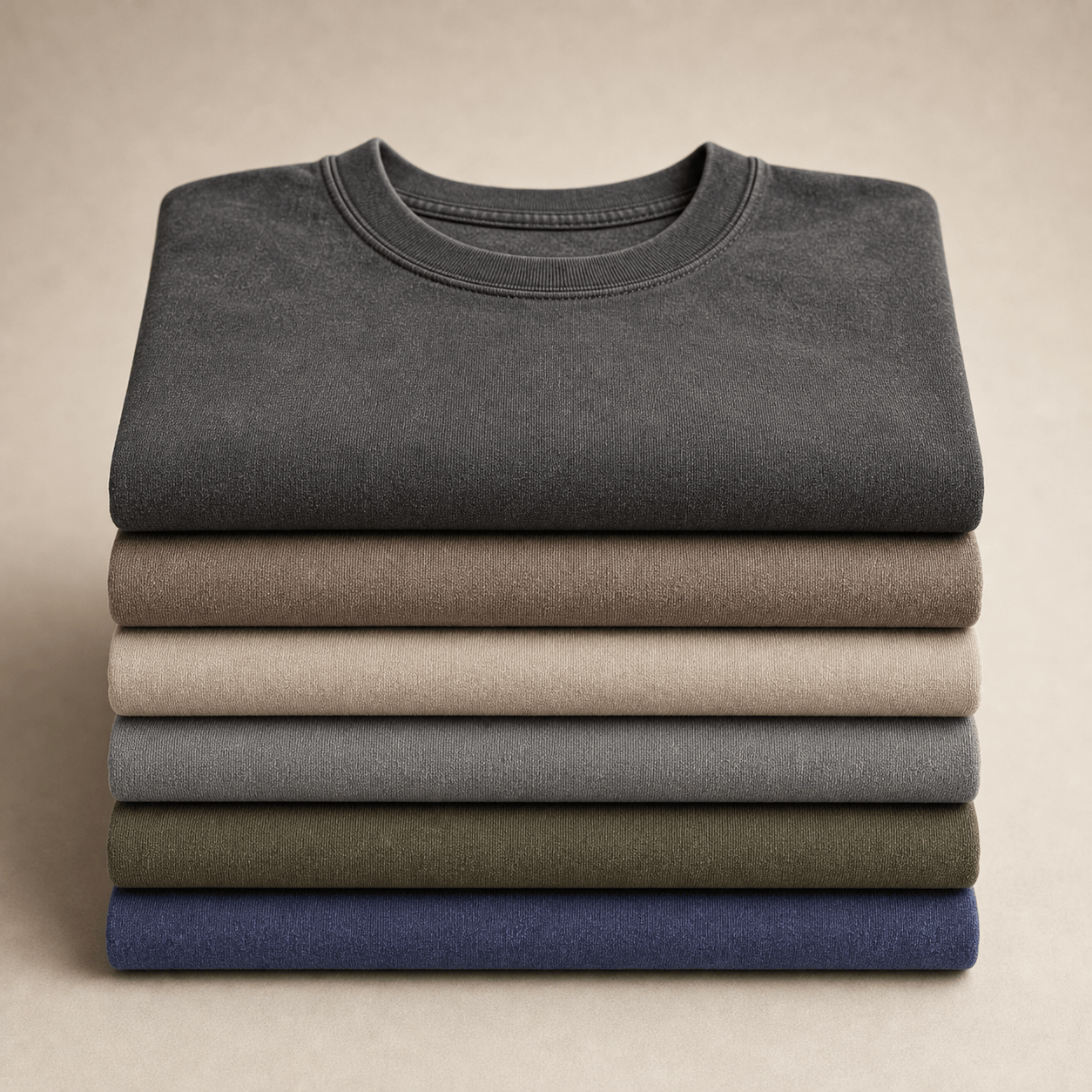
- place heavier knits at the bottom of the stack
- use a breathable drawer, shelf, or cotton bag
- keep wool away from damp basements or overheated storage spots
If you are storing wool for a long stretch, natural deterrents like cedar or lavender can be sensible additions, but they do not replace cleanliness and dryness. Dirt, oils, and moisture are the bigger problems.
How to De-Pill Without Making Things Worse
The goal of de-pilling is surface cleanup, not fibre removal for its own sake. If the knit still looks sound and the pills are concentrated in friction zones, a sweater comb or fabric shaver made for knitwear is usually enough.
Use a light hand:
- work on a clean, dry sweater
- lay it flat
- move gently and stop once the surface looks cleaner
- avoid repeatedly shaving the same spot until it thins
This is especially important with finer merino and softer brushed textures. You are improving appearance, not resurfacing the garment.
The Most Useful Knitwear Checklist Before You Buy Again
Good care extends life, but smarter buying helps too. If you are adding knitwear to your wardrobe, ask:
- Does the fibre fit my real climate and routine?
- Is the care instruction realistic for how I live?
- Will I actually rotate this with other knits, or overuse one piece?
- Does the knit feel dense and stable enough to recover after wear?
- Can I style it with what I already own so it earns repeat use?
That mindset fits IdyllVie's current knitwear assortment well. The live merino styles are positioned as lighter, polished layers for repeated wear and travel, while the cotton corduroy half-zip leans more textured and casual. The better purchase is the one whose maintenance needs and day-to-day role make sense for you, not just the one that looks best in isolation.
Internal Links to Add
- Merino Wool Washing Instructions: A Simple Guide
- 100 Cotton Sweaters: A Guide to Quality, Care & Comfort
- The Ultimate Cotton Crew Neck Sweater Guide
- Fair Isle Sweater: A Guide to Timeless Knitwear
- Men's Knitwear Collection
- Merino Wool Quarter-Zip Sweater
- Merino Wool Crew Neck Sweater
- Cotton Corduroy Half-Zip Sweater
FAQ
Does pilling always mean the sweater is poor quality?
No. Some pilling is normal where knitwear faces repeated friction, especially with natural fibres. The pattern and severity matter more than the mere presence of a few pills.
Should I wash a sweater after every wear?
Usually no. Spot-cleaning, airing, and rotating sweaters often make more sense than automatic washing after each use.
Is it better to hang or fold knitwear?
For most sweaters, fold. Hanging soft or heavy knits for long periods can stretch the shoulders and length out of shape.
Can I put cotton sweaters in the dryer?
Only if the care label allows it, and even then low heat is safer than high. Flat drying is usually gentler when you want the best long-term shape retention.
How do I stop knitwear from shrinking?
Control heat and agitation. Cold or cool water, mild detergent, gentle cycles, and flat drying do more to prevent shrinkage than any after-the-fact fix.
What should I do before storing wool for the season?
Clean it first, make sure it is fully dry, fold it rather than hang it, and store it in a breathable, dry place.












0 comentarios