
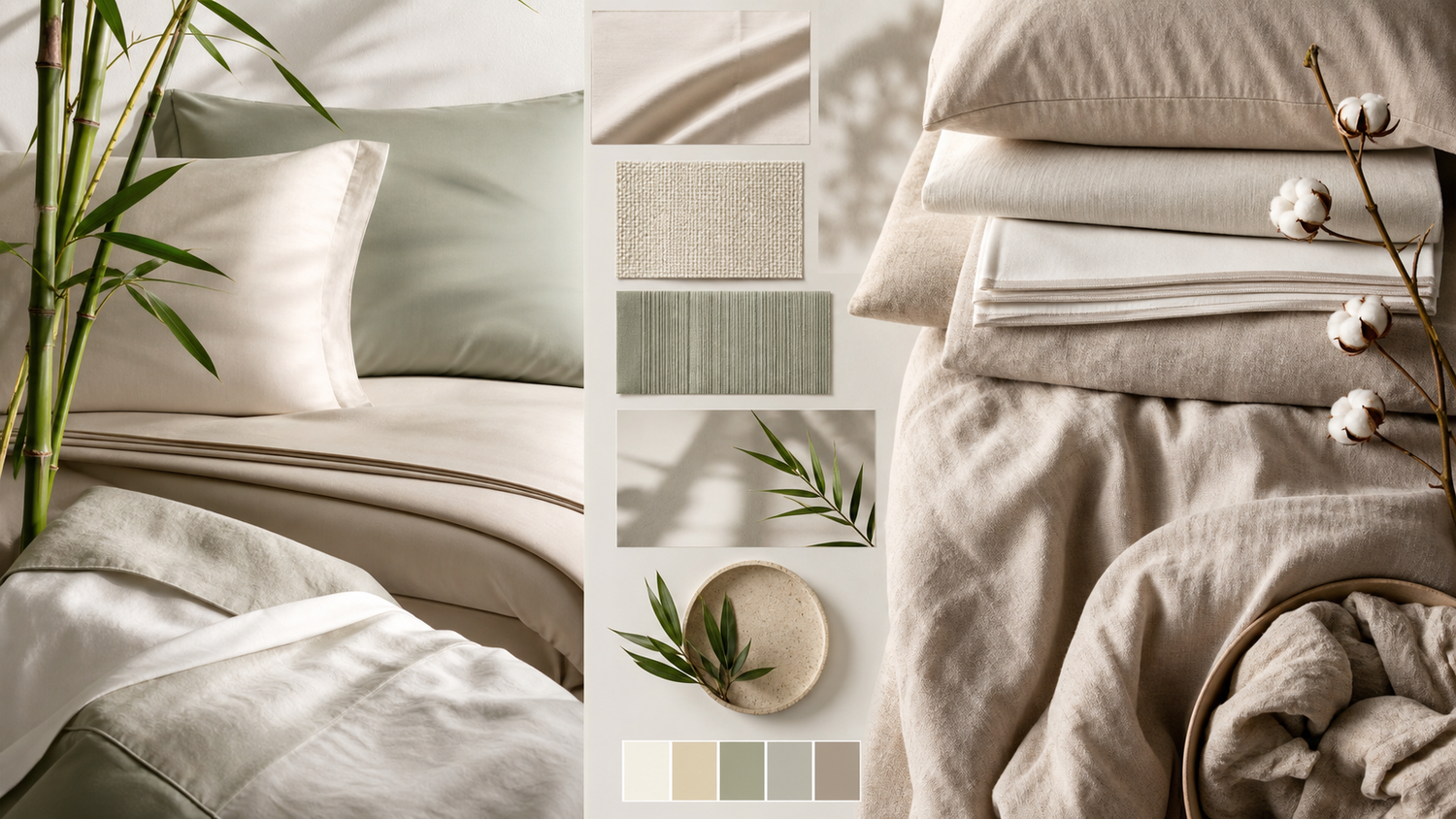
Bamboo Bedding vs Cotton Bedding: Which Feels Better for Your Sleep?
The bedding you love usually announces itself in a quiet way. It is the set you notice when the room feels calmer, when your body settles faster, and when you stop thinking about your sheets halfway through the night. That is why the bamboo-versus-cotton question matters. These two families can feel very different, and the right choice depends less on trend language than on how you actually sleep, wash, and live.
For IdyllVie, that distinction fits the broader home story. The brand’s current home decor assortment leans toward elevated everyday pieces, natural textures, and understated comfort rather than flashy claims. The same mindset should guide bedding. You are not looking for the sheet set with the loudest marketing. You are looking for the one that feels right at 11 p.m., still looks good after repeated laundering, and makes sense inside a slower, better-built home.
The first useful clarification is this: many products sold as bamboo bedding are not woven from raw bamboo fibre in the way shoppers often imagine. The FTC notes that most textile products marketed as bamboo are actually rayon or viscose derived from bamboo, and that distinction matters for labeling and expectations. Cotton is simpler to read, but cotton bedding still varies widely by weave, staple length, finishing, and whether you care about third-party certification such as GOTS.
The Quick Answer: Which One Feels Better?
If you want a smoother, silkier hand feel, bamboo-derived bedding often wins the first-touch test. If you want a crisper, more familiar, easier-to-read bedding experience with more weave options, cotton usually wins on versatility.

Neither is automatically better. A hot sleeper may prefer crisp cotton percale or a smoother bamboo-derived set depending on how they define “cool.” Someone who wants hotel-like structure may like cotton more. Someone who wants fluid drape and a softer glide against skin may lean bamboo-derived. The best choice comes from matching the material to your sleep temperature, texture preference, care tolerance, and trust requirements around fibre labeling.
Start with the Label: What “Bamboo” Usually Means
This is the most important section because it prevents the most common misunderstanding.
When a bedding product is marketed as bamboo, the finished textile is often rayon made from bamboo, viscose made from bamboo, or a similar regenerated cellulose fibre. The FTC’s guidance is explicit: unless the fibre is truly mechanically processed bamboo fibre, sellers should not present it simply as bamboo. The Spruce’s current bedding guidance makes the same practical point for shoppers, noting that rayon and viscose made from bamboo are more common than textiles made from actual bamboo fibre.
That does not make bamboo-derived bedding bad. It simply means the appeal should be judged honestly. The usual draw is the feel: smooth, drapey, often cool-to-the-touch, and sometimes slightly more slippery than cotton. The main takeaway is that you should read the fibre content line carefully instead of relying on the front-of-package story.
What Cotton Gives You That Bamboo-Derived Bedding Often Does Not
Cotton remains the easier benchmark for many sleepers because it comes with a broad range of feels under one fibre family.

CottonWorks describes cotton as soft, breathable, comfortable, and durable across both clothing and home goods. That flexibility shows up clearly in bedding. Cotton can feel crisp in percale, smoother in sateen, airy in lighter constructions, or denser and more cocooning in heavier ones. It also becomes easier to compare because the language around cotton bedding is usually more transparent: weave, thread count, staple length, brushed finish, organic certification, and laundering guidance.
That does not mean all cotton bedding feels the same. It means the shopper usually has more obvious levers to pull.
Feel on the Bed: Silky Versus Crisp
For many people, the decision starts and ends with hand feel.
Bamboo-derived bedding usually feels smoother first
Bamboo-derived rayon or viscose often has the smoother, softer, more fluid feel right out of the package. It can read as sleek, drapey, and slightly glossy depending on finishing. If you dislike the papery crispness some percale sets can have at first, bamboo-derived sheets may feel more inviting immediately.
This is one reason the category performs well with shoppers chasing a “luxury hotel but softer” feeling. The fabric often has less visual stiffness and more glide against the skin.
Cotton gives you more texture choice
Cotton is better when you want to choose your feel rather than accept one dominant mood. Percale can feel cool, clean, and lightly structured. Sateen can feel smoother and fuller. Brushed cotton can feel softer and cozier. Long-staple cotton tends to feel more refined over time, especially after repeated washing.
The Spruce’s sheet testing still frames this well: many of the best cotton sheets balance softness and breathability through weave choice, not through marketing language alone. That matters because some people think they dislike cotton when what they really dislike is one specific cotton weave.
Cooling, Breathability, and Nightly Comfort
Sleep comfort is usually the real issue hiding under the material debate.
Bamboo-derived bedding can feel cool-to-the-touch
Many bamboo-derived sets feel cool when you first get into bed. That sensation can be appealing if you run warm or like a smoother surface with less friction. The fabric also tends to drape closely, which some sleepers love and others find too clingy depending on humidity and personal preference.
Cotton can feel cooler in a different way
Crisp cotton percale often feels cooler through airflow and structure rather than silkiness. It can sit a little cleaner on the mattress, create less cling, and feel fresher for sleepers who want the bed to feel dry and light. Sateen cotton may feel smoother and slightly warmer than percale while still staying breathable.
This is where shoppers should stop looking for a universal winner. If “cool” means slick, soft, and fluid to you, bamboo-derived bedding may feel better. If “cool” means crisp, airy, and less close to the body, cotton percale may feel better.
Durability and Long-Term Use
The sheet set that wins on night one does not always win after six months of laundering.
Cotton has a strong practical advantage here because the category is mature and easier to compare for durability. Better cotton sheets often soften over time without losing their identity. The Spruce’s cotton-sheet testing repeatedly highlights long-term wear, breathability, and improvement through washing as meaningful advantages in strong sets.
Bamboo-derived bedding can feel beautiful early, but it often asks for gentler expectations. Smoother regenerated cellulose fabrics may be more prone to showing wear if they are washed roughly, dried too hard, or constantly dragged against rougher surfaces. That does not mean they fail quickly. It means they reward gentler care more than many cotton shoppers expect.
If you want the bedding equivalent of lower-maintenance reliability, cotton usually has the edge.
Care and Laundry Reality
This category often decides the purchase more than aesthetics do.
Choose the fabric you will actually maintain well
If you are the kind of person who sorts loads carefully, uses gentler cycles, and prefers lower-heat drying, bamboo-derived bedding may fit easily into your routine. If you want less babysitting and more straightforward weekly laundering, cotton often feels simpler.
The FTC care-label rule is the right anchor here: follow the label for the exact product you bought rather than assuming all sheets in the same material family behave identically. Finishing, blends, and weave structure all matter.
Wrinkling is a preference issue, not just a defect issue
Cotton percale may wrinkle more visibly but still look crisp and intentional. Cotton sateen can appear smoother and fuller. Bamboo-derived bedding may come out softer-looking but can also show a fluid, rumpled drape that some people interpret as elegant and others interpret as messy. None of those outcomes is objectively wrong. The question is whether your bed should feel tailored, relaxed, or glossy-soft.
Sustainability and Claim Discipline
This is where shoppers need the most skepticism.
The easiest mistake is assuming bamboo bedding is automatically the greener choice because bamboo as a plant grows quickly. The FTC explicitly warns that this logic does not transfer cleanly to the finished textile, because most so-called bamboo fabrics are rayon made through chemical processing and should be labeled accordingly.
Cotton also should not receive a free pass. If sustainability matters to you, look past broad material romance and verify the actual standard or sourcing information. GOTS remains one of the clearest benchmarks when a brand is claiming an organic textile story, and the standard covers organic fibres plus environmental criteria, processing stages, and third-party certification.
In practical terms, that means:
- verify whether “bamboo” means bamboo fibre or rayon/viscose made from bamboo
- look for certification details instead of vague eco language
- value longevity, washability, and repeat use as part of the sustainability equation
- choose the set you are most likely to keep, care for, and use for years
A Comparison Table Before You Buy
| Category | Bamboo-derived bedding | Cotton bedding | Best for |
|---|---|---|---|
| First-touch feel | Smooth, silky, fluid | Varies by weave: crisp, smooth, brushed, or airy | Choosing by texture preference |
| Cooling style | Cool-to-touch, drapey | Percale feels airy and crisp; sateen feels smoother | Matching how you define “cool” |
| Care routine | Often benefits from gentler handling | Usually easier to understand and maintain | Matching your laundry habits |
| Durability feel | Can stay lovely with careful washing | Often stronger on long-term everyday use | Repeat laundering and practical ownership |
| Transparency of fibre story | Can be confusing if front label says only “bamboo” | Usually easier to interpret | Shoppers who want clearer material reading |
| Certification route | Must be checked product by product | GOTS and other cotton-related standards are easier to find | Trust-focused buying |
Which One Fits Different Sleepers Best?
Choose bamboo-derived bedding if:
- you care most about a smooth, silky hand feel
- you want sheets that feel soft immediately
- you prefer a drapier bed with less crispness
- you do not mind gentler care
- you are willing to read the fibre label closely
Choose cotton bedding if:
- you want more choice in feel and weave
- you like crisp, hotel-style sheets or breathable percale
- you want easier product comparison across brands
- you value straightforward laundering
- you care about tracking organic certification clearly
The IdyllVie Lens: Buy for the Room You Want to Live In
IdyllVie’s current home assortment is useful here because it reinforces a calmer idea of comfort. The Home Decor collection is built around understated throws, pillows, linens, and natural-looking textures rather than flashy bedroom styling. The same principle works for sheets. The best bedding choice is the one that supports the atmosphere you want your room to have.
If your bedroom should feel airy, tailored, and lightly structured, cotton percale may make more sense. If you want a softer, fluid, almost silk-adjacent experience, bamboo-derived bedding may feel better. If you want the safer long-term middle ground, organic cotton with a verified certification is often the most dependable answer.
That is also why this comparison should not end at sheets alone. Think about the whole bed. A crisp cotton base may pair beautifully with a softer throw or decorative layer. A smoother bamboo-derived sheet set may benefit from more texture elsewhere in the room, such as a cotton blanket or artisanal pillow. Better sleep and better styling usually come from contrast, not sameness.
A Buying Checklist for Bamboo vs Cotton Bedding
Before you add a set to cart, ask:
- what does the fibre label actually say?
- do I want crispness or silkiness more?
- do I sleep hot, or do I just like a cool first touch?
- am I willing to wash this gently and dry it carefully?
- do I want third-party certification, and is it clearly shown?
- do I prefer my bed to look tailored, relaxed, or softly draped?
- can I picture this material working with the rest of my bedding layers?
These questions remove most expensive mistakes.
The Better Decision for Most Shoppers
For most shoppers who want the easiest blend of clarity, variety, and long-term value, cotton bedding is still the safer recommendation. It gives you more weave choices, a more readable product page, and a clearer path to verified organic options.
For shoppers who care most about a silky, cool-to-the-touch, drapey feel and are comfortable reading labels carefully, bamboo-derived bedding can absolutely be the better-feeling option.
So the final answer is not really bamboo versus cotton. It is silky versus crisp, fluid versus structured, care-sensitive versus straightforward, and mood-driven versus weave-driven. Once you define those preferences honestly, the right set becomes much easier to choose.
FAQ
Is bamboo bedding actually made from bamboo?
Sometimes, but often not in the way shoppers assume. Many products are rayon or viscose made from bamboo rather than mechanically processed bamboo fibre, so the fibre label matters.
Is bamboo bedding cooler than cotton bedding?
It can feel cooler to the touch, but cotton percale can feel cooler through airflow and crispness. The better choice depends on what kind of coolness you prefer.
Which bedding is easier to wash?
Cotton is usually easier for most households because it tends to be more straightforward to launder. Bamboo-derived bedding often benefits from gentler care.
Is cotton bedding always less soft than bamboo bedding?
No. Some cotton sateen and long-staple cotton sets feel extremely soft. Cotton just gives you a wider range of textures, while bamboo-derived bedding more often starts from a smoother, silkier feel.
What should I look for if I want organic bedding?
Look for a clear fibre breakdown and a recognized certification such as GOTS instead of relying only on soft sustainability wording.
Which option usually lasts longer?
Quality cotton often has the easier case for long-term durability, especially under regular household laundering, though exact performance still depends on construction and care.












0 comments