
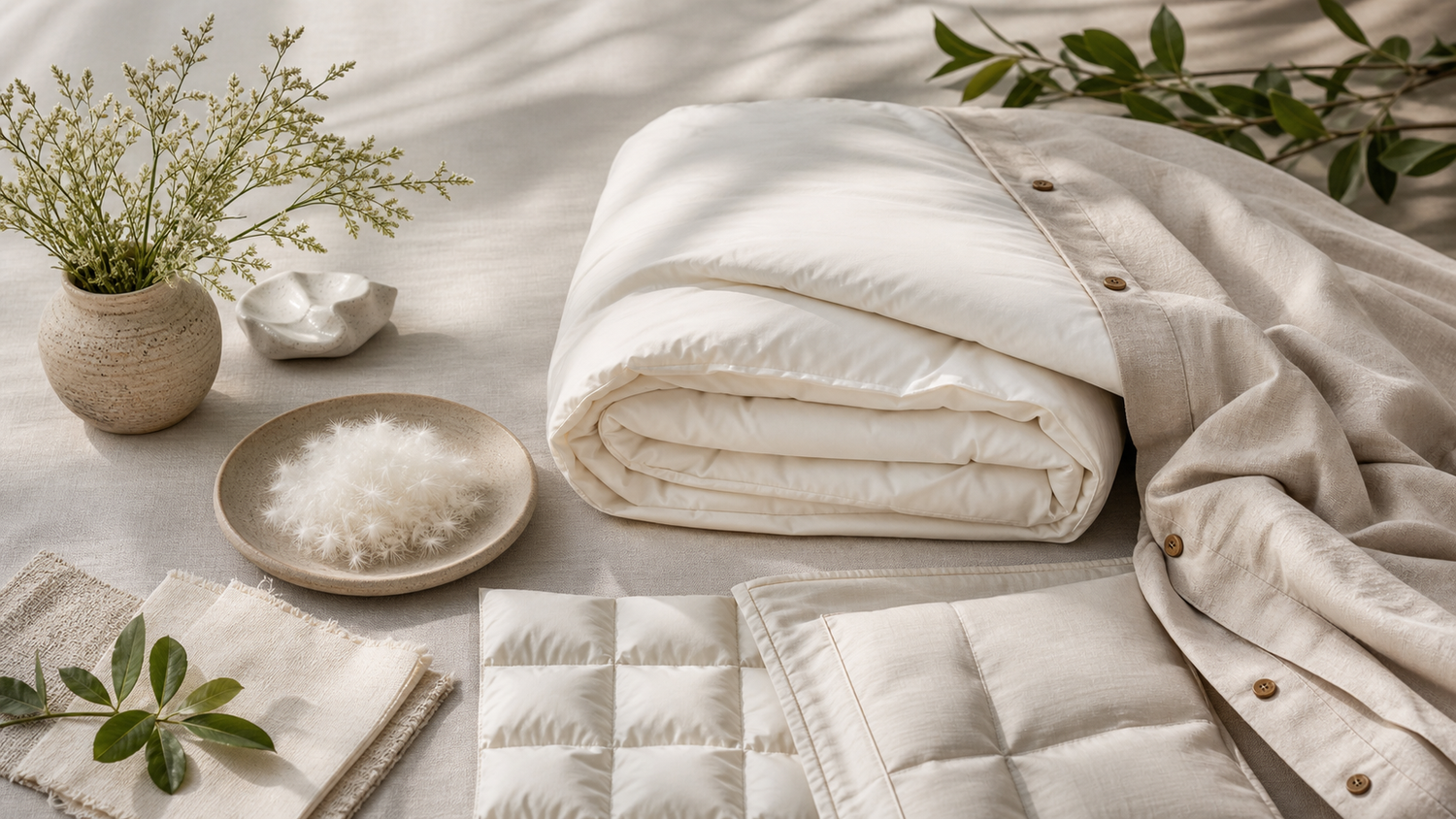
How to Choose the Right Duvet Insert for Your Sleep Style
The best duvet insert is not the puffiest one, the most expensive one, or the one with the most dramatic product copy. It is the insert that disappears once the lights go out. It keeps you comfortable without trapping too much heat, it sits properly inside your duvet cover, and it matches the way you actually sleep instead of the way a catalogue says you should sleep.
That is why choosing a duvet insert is less about chasing one perfect material and more about reading the whole system: fill, shell, construction, warmth level, bedroom temperature, and the layering you already use. In a Canadian home, that matters even more. Your sleep setup in July may need a very different feel from your setup in January, and your ideal insert depends on whether you run warm, sleep with the window cracked, or like the cocooned feeling of a fuller bed.
IdyllVie already speaks to that quieter kind of comfort. The live brand story and home assortment lean toward thoughtful materials, practical beauty, and relaxed luxury rather than overbuilt trends. A duvet insert should follow the same logic. The right one should feel calm, useful, and easy to live with for years.
The Quick Answer
If you sleep warm, start by looking at lighter warmth levels, breathable cotton shells, and an insert that does not feel overly dense on the body. If you sleep cool, prefer a fuller insert with a warmth rating that suits your room rather than automatically buying the heaviest option available.

For most shoppers, the smartest path is:
- choose the warmth level before you choose the fill
- confirm the shell fabric and construction before you compare marketing claims
- size the insert to your bed and duvet cover carefully
- buy for your real bedroom conditions, not just the season on the calendar
Once those four decisions are right, the rest gets much easier.
Start with Sleep Style, Not Product Hype
Before you compare down and down-alternative inserts, ask how you actually sleep.
Hot sleepers need breathability more than bulk
If you wake up pushing the duvet away, your problem is usually not that you need a softer insert. You probably need less insulation, a lighter fill weight, or a shell that feels less stifling. Sleep Foundation's current sleep-environment guidance continues to recommend a cool bedroom, often around 60 to 67 degrees Fahrenheit, which reinforces the same point: your insert has to work with the rest of the room, not against it.
Cold sleepers should think in layers
If you get cold easily, it is tempting to buy the warmest insert you can find. That can work, but it often leads to an overly heavy bed for part of the year. A better approach is to decide whether you want one true winter insert, one lighter all-season insert, or a flexible setup that can be layered with a quilt, blanket, or throw when needed.
Restless sleepers often prefer a lighter feel
Even if you are not especially warm, some people simply sleep better under a duvet that feels airy rather than weighty. A lofty insert can still feel light if the fill and construction are balanced well. That is why "warm" and "heavy" should not be treated as the same thing.
What Fill Actually Changes
The fill is the part most shoppers focus on first, but it only makes sense once you know the comfort profile you want.
Down inserts
Down is prized for loft, insulation, and a lighter feel relative to the warmth it can provide. Good Housekeeping's current duvet-insert testing still treats down as the premium benchmark for shoppers who want a cloudlike bed with strong warmth and softness. That does not mean every down insert is automatically better. You still need to look at fill power, shell quality, and construction.
For shoppers who care about animal-welfare standards, certification matters more than vague language. Textile Exchange's Responsible Down Standard remains one of the clearest third-party frameworks to look for when a brand is making responsible down claims.
Down-alternative inserts
Down-alternative fills can be a practical choice when you want easier care, lower cost, or a feel that is less premium-lofty and more straightforward. Architectural Digest's current comforter guidance still treats down-alternative options as useful for sleepers who want a simpler routine or who prefer to avoid down.
The tradeoff is that some down-alternative inserts can feel denser or less breathable than a good down insert at a similar warmth level. That does not make them wrong. It just means you should judge them by comfort, drape, and airflow rather than by price alone.
Wool or specialty fills
Some sleepers also consider wool or other specialty fills. These can work well, especially when moisture management or temperature moderation matters to you, but the same buying rule still applies: ignore romance language and verify the actual construction, shell, and care instructions.
Warmth Level Matters More Than Most Product Names
One of the biggest shopping mistakes is assuming "all season" means the same thing everywhere. It does not. Warmth labels are useful only when you connect them to your room and your habits.
Lightweight
Best for hot sleepers, warmer months, heated condos, or anyone who likes a less bulky bed. A lightweight insert can still feel luxurious if the shell is crisp and the fill is distributed well.
All season
Often the safest starting point for Canadian shoppers, especially if your bedroom temperature is fairly stable year-round. An all-season insert works best when you are willing to adjust the rest of the bed with sheets, blankets, or an open window instead of expecting the insert to solve everything alone.
Winter or extra-warm
Useful if your room runs cool, you keep the thermostat low, or you genuinely like a cocooned feeling. This is the category where overbuying is common. If you sleep warm, an extra-warm insert can become a regret purchase quickly.
Shell Fabric and Construction Are Not Minor Details
The shell is what your body feels through the duvet cover, and the construction is what keeps the fill from shifting into cold or lumpy zones.
Cotton shells tend to be the easiest choice
CottonWorks continues to position cotton as soft, breathable, and durable across home textiles, which is why cotton shells remain such a dependable option for duvet inserts. A cotton shell generally feels easier to trust because it is breathable, familiar, and usually more comfortable for sleepers who do not want a slick or synthetic feel.
If you are already leaning toward an insert for everyday use, a cotton shell is usually the clearest default unless the brand provides a very specific reason to choose something else.
Box stitch vs baffle box
Good Housekeeping and other current bedding guides still treat construction as a meaningful quality signal. Box stitching can keep fill distributed fairly well in many inserts. Baffle-box construction usually allows more loft and expansion, which can help premium down inserts feel fuller and more evenly warm.
For many shoppers, the simple rule is:
- choose box stitch for a practical everyday insert
- choose baffle box when loft and even distribution matter enough to justify the upgrade
Corner loops and duvet-cover compatibility
This sounds small until your insert starts sliding around. Corner loops help keep the insert aligned inside the cover, and exact size compatibility matters more than people expect. An insert that is too small can bunch and migrate. One that is too large can strain the cover and look messy.
A Comparison Table Before You Buy
| Decision point | What to look for | Why it matters |
|---|---|---|
| Sleep temperature | Warm, neutral, or cool sleeper | Prevents buying an insert that traps too much heat or feels too thin |
| Warmth level | Lightweight, all season, or winter | Sets the comfort direction before material marketing takes over |
| Fill type | Down, down alternative, wool, or specialty fill | Changes loft, feel, care routine, and price |
| Shell fabric | Preferably breathable cotton for most sleepers | Affects airflow and overall comfort |
| Construction | Box stitch or baffle box | Helps control fill distribution and loft |
| Size | Match the bed and duvet cover carefully | Reduces shifting, bunching, and poor drape |
| Certifications | RDS, GOTS-adjacent shell claims, or clear brand standards | Makes trust easier when sustainability or sourcing matters |
How to Match the Insert to Different Sleepers
If you sleep hot
Choose a lighter warmth level, prioritize a breathable shell, and avoid assuming extra loft equals better comfort. You are usually looking for airflow and easy layering, not maximum insulation.
If you sleep cool
Choose a fuller insert, but still check whether your room temperature is part of the issue. Sometimes a modest insert plus better sheets or an added blanket works better than a single very warm duvet.
If you want the hotel-bed look
Focus on loft, even construction, and a size that fills the cover properly. This is where a well-made down insert or a premium alternative with strong structure can earn its price.

If you want simpler care
Down-alternative options often make sense here, but read the washing instructions closely. The FTC care-label rule is still the right baseline: follow the label for the exact product rather than relying on generic assumptions about the category.
Sustainability and Trust Questions to Ask
This is where a calm buying process matters most.
The easiest trap is believing whichever material story sounds most comforting. Better bedding decisions usually come from verifying standards, not from reacting to broad luxury language. If a product uses down, look for a disclosed standard such as RDS when responsible sourcing matters to you. If the shell or cover story leans on organic claims, GOTS remains one of the clearest textile benchmarks because it addresses certified organic fibres and processing requirements through the supply chain.
You can also ask simpler practical questions:
- Will I keep this insert for years?
- Can I care for it properly in my real routine?
- Does the brand explain shell, fill, and construction clearly?
- Is the warmth level described in a way that matches how I sleep?
That kind of clarity is more valuable than a long list of adjectives.
The IdyllVie Way to Build the Bed Around It
The current IdyllVie home direction is useful because it favors an understated, layered interior mood. That means the duvet insert should not be treated as a standalone hero purchase. It should work with the full bed.
If you choose a lighter insert, you can build softness visually with a textured throw or quilted layer. If you choose a fuller insert, keep the rest of the bed cleaner so the room still feels calm rather than crowded. If you want the most flexible setup, an all-season insert paired with natural-fibre layers often gives you the easiest year-round range.
This is also where quality sizing pays off. A properly fitted duvet insert makes the whole bed look more polished, even when the styling is minimal. Quiet luxury in bedding usually comes from proportion, texture, and restraint, not from stacking too many heavy pieces at once.
A Buying Checklist
Before you buy, check the following:
- your bedroom temperature and whether you run warm or cool
- the insert warmth level, not just the material name
- the exact fill type and any sourcing or certification notes
- the shell fabric and whether it is breathable enough for everyday use
- whether the construction is box stitch or baffle box
- the dimensions of your bed, cover, and insert
- the care label and whether it fits your routine
- whether you are buying for one season or the full year
If you can answer those eight points clearly, you are unlikely to buy the wrong insert.
The Best Default for Most Shoppers
For most people, the safest recommendation is an all-season duvet insert with a breathable cotton shell, clear construction details, and a warmth level that matches their actual room rather than a theoretical winter extreme. If your budget allows it and you want a lighter, loftier feel, down may be worth it. If you want easier care and a simpler price point, a well-made down alternative can still be the right choice.
The best duvet insert should make your bed feel easier to live with. It should not require constant adjustment, overexplain itself, or force you into a climate you do not enjoy. Once you choose for sleep style first, the right material and warmth level tend to reveal themselves quickly.
FAQ
What duvet insert is best for hot sleepers?
A lightweight insert with a breathable shell is usually the best starting point. Hot sleepers often do better with less insulation and better airflow rather than a heavier insert marketed as luxurious.
Is down always better than down alternative?
No. Down often offers better loft and warmth relative to weight, but down alternative can be the better choice when easier care, lower cost, or personal preference matters more.
What is the difference between box stitch and baffle box?
Box stitching keeps fill in place through stitched sections. Baffle-box construction uses internal walls that help preserve loft and can improve even warmth distribution.
How do I know if an all-season duvet is warm enough?
Start with your room temperature and sleep style. If your bedroom is moderate and you do not sleep especially cold, an all-season insert is often the most versatile choice.
Should the duvet insert be the same size as the duvet cover?
Yes, or as close as the brand's sizing allows. A poor size match can lead to bunching, shifting, or a bed that looks flatter than expected.
What certifications should I look for?
If you are buying down and care about sourcing, look for a disclosed standard such as Responsible Down Standard. If organic fibre claims matter, look for a recognized textile certification such as GOTS where relevant.












0 comments