
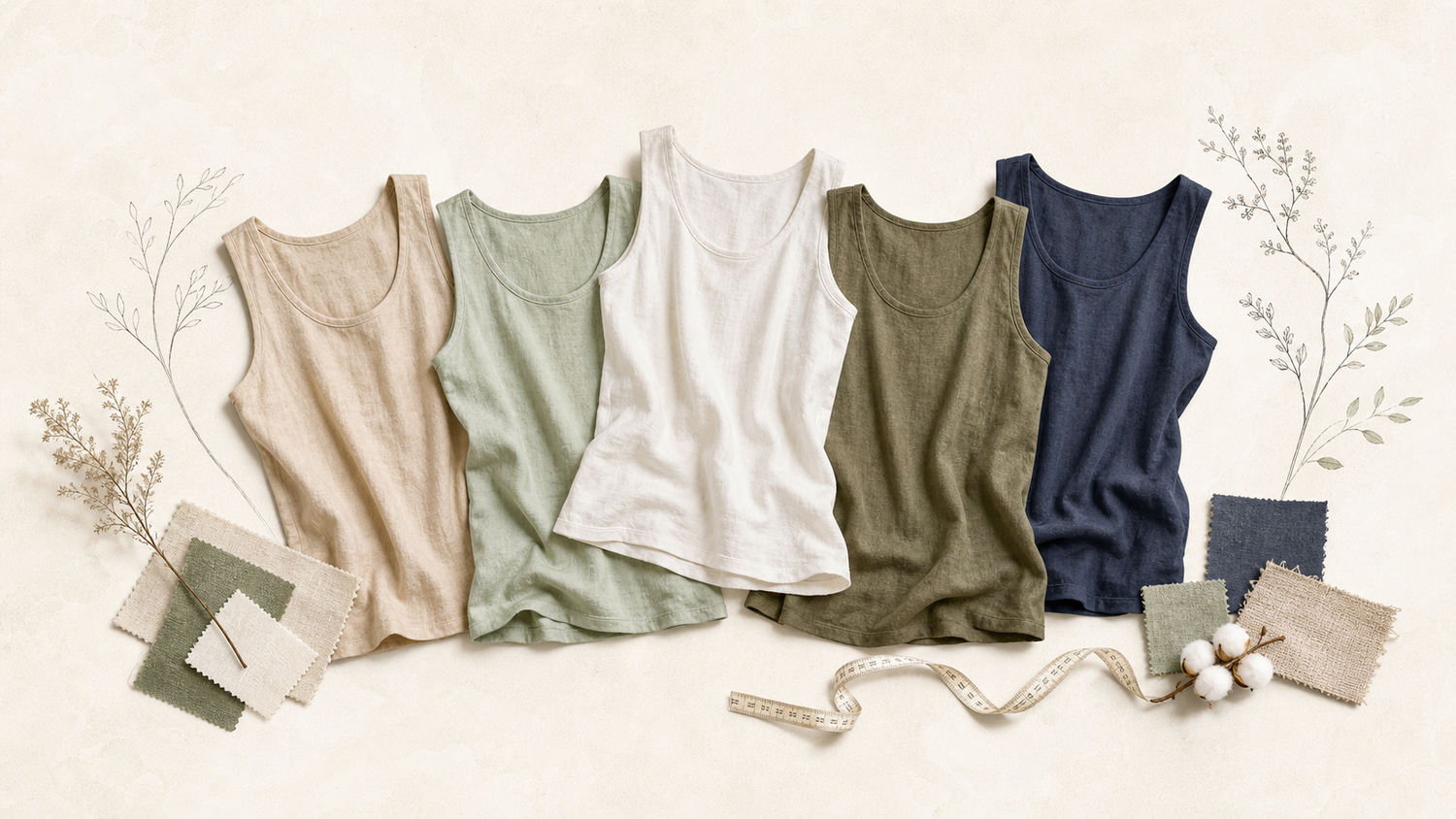
Il y a un type de journée d'été canadienne particulière qui rend l'habillement plus compliqué qu'il ne devrait l'être. La matinée commence suffisamment fraîche pour une légère superposition. À midi, l'air est chaud et lumineux. En fin d'après-midi, l'humidité s'installe. Puis le soir arrive avec une brise qui vous fait chercher la chemise en lin, le cardigan en coton, ou la veste décontractée que vous avez apportée juste au cas où.
C'est exactement le genre de journée pour laquelle un débardeur en coton et lin est fait.
Un bon débardeur ne devrait pas être une réflexion après coup. C'est souvent la première chose qui touche votre peau, la pièce qui décide si le reste d'une tenue est facile ou compliqué. Sous une veste en lin, avec un pantalon ample, rentré dans une jupe longue en coton, ou porté seul au chalet, le bon débardeur donne au corps de l'espace pour respirer tout en ayant l'air réfléchi.
Pour IdyllVie, cet équilibre est important. Les pièces estivales de la marque sont conçues autour d'une élégance discrète, d'une texture naturelle et d'une utilité quotidienne. Un débardeur en coton et lin trouve sa place dans cet univers car il n'a pas besoin d'être bruyant pour être précieux. Il gagne sa place par son toucher, sa coupe et son utilisation répétée.
Ce guide explique ce qu'il faut rechercher avant d'en acheter un, comment le coton et le lin se comportent ensemble, quels détails de coupe sont les plus importants et comment styliser un débardeur en coton et lin pour la vraie vie estivale au Canada.
Qu'est-ce qu'un débardeur en coton et lin ?
Un débardeur en coton et lin est généralement un haut d'été sans manches fabriqué à partir d'un mélange de fibres de coton et de lin. Le coton apporte douceur, familiarité et confort au quotidien. Le lin apporte une texture aérée, un toucher plus sec et un aspect naturellement décontracté. Ensemble, ils créent un tissu qui peut être plus doux que le lin pur et plus texturé qu'un débardeur en jersey de coton standard.
Ce mélange est l'attrait.
Les débardeurs en pur coton peuvent être merveilleusement doux, mais selon le tricot ou le tissage, ils peuvent retenir l'humidité plus longtemps les jours humides. Le lin pur peut être magnifiquement frais et net, mais certaines personnes le trouvent structuré au premier toucher. Un mélange coton-lin se situe entre ces expériences. Il est décontracté mais élégant, respirant mais doux, décontracté mais pas négligé.
Le mélange exact est important. Certaines pièces en coton et lin incluent une petite quantité d'une autre fibre pour la rétention de forme, la durabilité ou un entretien plus facile. Le Henley à manches courtes en coton et lin d'IdyllVie, par exemple, utilise un mélange léger de coton, de lin et de nylon, avec des instructions d'entretien qui recommandent un lavage en machine à froid, un cycle délicat, et un séchage en machine à basse température ou un séchage à l'air libre. La même logique s'applique lors de l'achat d'un débardeur : lisez la composition des fibres, puis évaluez comment le tissu est censé se comporter.
Pourquoi le coton et le lin fonctionnent-ils si bien ensemble ?
Le coton et le lin sont tous deux des fibres végétales, mais ils ne procurent pas la même sensation sur le corps.
Le coton est connu pour sa douceur et son confort sur la peau. Il est largement utilisé pour les vêtements quotidiens car il est familier, se teint bien et convient à de nombreux poids de tissu. Le lin provient de la fibre de lin et est apprécié pour sa sensation aérée, sa texture naturelle et son confort par temps chaud. Il a tendance à être net au début, puis s'adoucit avec l'usage et les lavages.
Lorsqu'ils sont mélangés, chaque fibre aide l'autre.
Le coton peut rendre le lin plus doux dès le premier port. Le lin peut ajouter de la texture et de la circulation d'air au coton. Dans un débardeur, c'est particulièrement utile car le vêtement est proche des zones de mouvement intense : épaules, aisselles, encolure et taille. Le tissu doit être agréable sur la peau, mais il doit aussi avoir suffisamment de structure pour conserver sa forme après une journée complète.
Le meilleur débardeur en coton et lin laisse s'exprimer les deux qualités : le coton pour la douceur, le lin pour la fraîcheur.
Le test de l'été canadien
S'habiller en été au Canada est rarement monotone. Un bon haut d'été doit pouvoir faire face aux après-midi humides, aux intérieurs climatisés, aux matinées au chalet, aux longs trajets et aux soirées fraîches.
Un débardeur utile en coton et lin doit réussir cinq tests.
| Test | Ce qu'il faut rechercher | Pourquoi c'est important |
|---|---|---|
| Respirabilité | Tissu léger à mi-lourd avec un drapé confortable | Aide le haut à être léger par temps chaud et humide |
| Couverture | Emmanchures et encolure qui s'ajustent sans tirer | Rend le débardeur portable seul |
| Forme | Assez de structure pour effleurer plutôt que coller | Donne à la tenue un aspect intentionnel |
| Superposition | Encolure et bretelles qui s'ajustent parfaitement sous les chemises ou les vestes | Prolonge l'utilisation au-delà des après-midi chauds |
| Entretien | Lavage à froid, cycle délicat, basse température ou séchage à l'air libre | Aide à préserver la texture, la couleur et la coupe |
Si un débardeur échoue à l'un de ces tests, il peut quand même être utile. S'il échoue à plusieurs, il deviendra probablement la pièce que vous ajustez constamment au lieu de celle que vous portez régulièrement.
La coupe avant tout : encolure, emmanchures et drapé
Les vêtements les plus simples sont souvent les moins indulgents. Une robe peut compter sur le volume, les coutures ou le mouvement. Une veste peut utiliser la structure. Un débardeur a moins d'endroits pour masquer une mauvaise coupe. Les petits détails comptent.
L'encolure
Pour le quotidien, l'encolure doit encadrer le visage sans que la tenue ne paraisse trop dénudée ou trop couverte. Un col rond ou une encolure montante peut sembler net et moderne, surtout sous une chemise ou une veste en lin ouverte. Une encolure plus basse peut adoucir la ligne et se marie parfaitement avec des jupes, des pantalons décontractés ou des tenues de plage pour le dîner.
La clé est la stabilité. Si l'encolure se déplace chaque fois que vous vous asseyez, vous penchez ou vous étirez, le débardeur sera exigeant.
Les emmanchures
Les emmanchures sont l'endroit où de nombreux débardeurs réussissent ou échouent. Trop basses, le haut devient difficile à porter sans une sous-couche visible. Trop serrées, elles frottent ou restreignent les mouvements. La meilleure emmanchure offre suffisamment d'espace pour la circulation de l'air sans exposer plus que ce que l'on souhaite.
Le même débardeur peut être porté de trois manières différentes en une journée : sous une chemise le matin, seul l'après-midi et sous un cardigan le soir.
Le drapé
Le tissu coton-lin doit effleurer le corps. Il n'a pas besoin d'être surdimensionné, mais il est généralement plus beau avec un peu d'aisance. La texture naturelle du lin peut tirer ou se froisser fortement lorsque la coupe est trop ajustée. Le coton apporte de la douceur, mais si le débardeur est coupé trop près, il risque de perdre l'élégance décontractée qui rend le mélange attrayant.
Une règle utile : si vous voulez un débardeur d'été élégant, choisissez une coupe qui suit le corps sans annoncer chaque mouvement du tissu.
Comment choisir le poids du tissu
Le poids du tissu détermine si un débardeur est aéré, substantiel, transparent, élégant ou décontracté. De nombreux acheteurs ne se concentrent que sur la composition des fibres et manquent cette partie.
Un débardeur en coton-lin très léger peut être magnifique par forte chaleur, mais il peut nécessiter des sous-vêtements appropriés ou une coupe plus ample pour éviter la transparence. Un débardeur de poids moyen offre plus de couvrance et de forme, ce qui le rend plus facile à porter seul. Un débardeur plus lourd peut avoir un aspect plus élégant, mais il risque de perdre une partie du confort aérien que l'on recherche dans le coton et le lin.
Pour la plupart des garde-robes, le poids moyen est l'idéal. Il offre suffisamment de corps pour être rentré, superposé et lavé à plusieurs reprises, tout en restant adapté à l'été.
Posez-vous ces questions avant d'acheter :
- Puis-je le porter seul sans me sentir trop exposé(e) ?
- Le tissu s'affaisse-t-il ou conserve-t-il une forme douce ?
- La couleur laisse-t-elle transparaître trop facilement les ombres ou les sous-vêtements ?
- Se glissera-t-il facilement dans un pantalon ou une jupe ?
- Peut-il se porter sous une veste en lin sans faire de plis ?
Si la réponse est oui à la plupart de ces questions, le débardeur est probablement pratique plutôt que simplement joli.
Couleur : commencez par les chevaux de trait discrets
Un débardeur en coton et lin est souvent une pièce fondamentale, la couleur devrait donc avoir plus d'impact qu'une simple tendance.
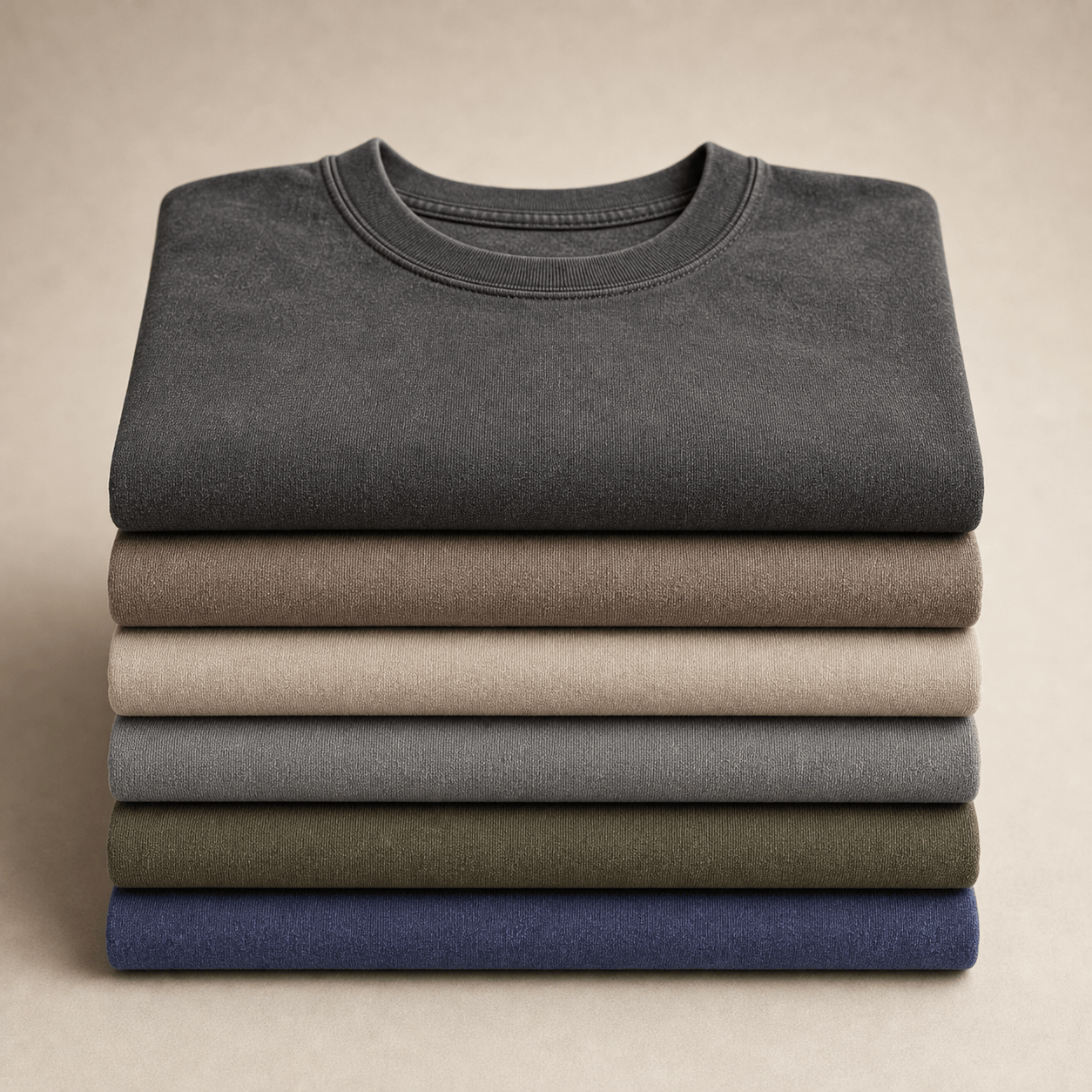
Le blanc et l'ivoire sont frais avec un pantalon en lin, du denim, un short en coton et des jupes estivales. Les tons beige, avoine et lin sont plus doux que le blanc éclatant et se marient naturellement avec l'olive, le marine, le noir, le denim délavé et le marron chaud. Le noir peut être élégant sous une veste ou avec un pantalon large, tandis que l'olive, le sauge, le marine délavé ou l'argile sourde peuvent ajouter de la profondeur sans être trop voyants.
Pour une petite capsule, commencez par deux :
- un neutre clair, tel que l'ivoire, le blanc ou l'avoine
- une teinte de base, telle que le noir, l'olive, le marine ou le brun doux
Cela vous offre une gamme suffisante pour les week-ends au chalet, les courses, les journées de télétravail et le dîner sans transformer un basique en un problème de collection.
Styliser un débardeur en coton et lin
La beauté d'un débardeur en coton et lin réside dans le fait qu'il n'impose pas une seule identité. Il peut être décontracté, raffiné, superposé, minimaliste ou décontracté selon ce qui l'entoure.
Avec un pantalon en lin
C'est la formule estivale la plus simple. Associez un débardeur en coton et lin à un pantalon en lin décontracté ou à un pantalon en coton et lin. Gardez les couleurs proches pour un look monochrome, ou utilisez le contraste si vous souhaitez plus de définition : ivoire avec olive, noir avec lin, blanc avec marine.
L'astuce est la proportion. Si le pantalon est large, rentrez le débardeur ou choisissez-en un qui arrive parfaitement à la hauteur des hanches.
Sous une chemise ouverte
Une chemise ouverte en lin ou en coton par-dessus un débardeur résout plusieurs problèmes estivaux à la fois. Vous bénéficiez d'une bonne circulation de l'air, d'une protection solaire et d'une couche que vous pouvez retirer au fur et à mesure que la journée se réchauffe. Cela fonctionne particulièrement bien pour les voyages, car les pièces peuvent être portées séparément ou ensemble.
Essayez l'ivoire sous un bleu pâle, le blanc sous l'olive, le noir sous le beige ou l'avoine sous le denim délavé.
Avec une jupe longue en coton
Une jupe longue en coton et un débardeur en coton et lin créent un uniforme d'été discret. La jupe ajoute du mouvement ; le débardeur garde le haut net. Ajoutez des sandales, un petit sac en cuir et un pull léger pour le soir.
Si la jupe est ample, un débardeur plus près du corps est généralement plus flatteur. Si la jupe est droite ou en forme de colonne, un débardeur légèrement décontracté peut donner une touche moderne.
Sous une veste en lin
Un débardeur devient plus élégant sous une veste en lin. C'est particulièrement utile lors des changements de temps au Canada, où vous pourriez avoir besoin d'une structure le matin et de quelque chose sans manches l'après-midi. Choisissez une encolure de débardeur qui se positionne clairement à l'intérieur de l'ouverture de la veste. Trop de tissu concurrent au niveau du cou peut donner un aspect trop chargé à la tenue.
C'est là qu'un débardeur en coton et lin devient plus qu'un basique d'été.
Avec du denim
Le denim ancre le débardeur. Un débardeur en coton et lin avec un jean droit, une ceinture tissée et des mocassins ou des sandales est simple, mais rarement inapproprié. Ajoutez un cardigan ou une veste lorsque la température baisse.
Comment prendre soin d'un débardeur en coton et lin
L'entretien est ce qui transforme un bon débardeur en une pièce de garde-robe durable.
Commencez toujours par l'étiquette d'entretien du vêtement, car les mélanges se comportent en fonction de leur teneur exacte en fibres, de leur tricot ou tissage, de leur teinture et de leur confection.
Utilisez de l'eau froide avec des couleurs similaires. Choisissez un cycle délicat lorsque le tissu est léger, texturé ou mélangé. Évitez l'eau de Javel, sauf si l'étiquette d'entretien l'autorise spécifiquement. Évitez la chaleur élevée si possible, car la chaleur peut provoquer le rétrécissement, la décoloration et le stress des fibres. Séchez à l'air libre ou en machine à basse température, puis retirez-le légèrement humide si vous souhaitez lisser le tissu à la main.
Le lin se froisse. Le coton aussi. Ce n'est pas un défaut. L'objectif est de garder le tissu propre, frais et légèrement formé.
Pour un look plus soigné, vaporisez le débardeur ou utilisez un fer chaud selon les instructions de l'étiquette. Pour un look plus décontracté, secouez-le après le lavage, lissez les coutures et suspendez-le soigneusement.
Ce qu'il faut éviter
Le mauvais débardeur peut paraître bien en ligne et décevoir dans la vraie vie. Surveillez ces signes :
- Tissu trop transparent pour l'usage que vous prévoyez d'en faire.
- Emmanchures qui baillent ou coupent sous les aisselles.
- Encolure qui roule, se tord ou se détend.
- Une coupe qui colle au corps au lieu de l'effleurer.
- Composition vague des fibres, surtout si le produit est commercialisé comme "mélange de lin" sans pourcentages.
- Instructions d'entretien qui ne correspondent pas à votre vie.
- La composition des fibres est-elle adaptée à un usage par temps chaud ?
- Le tissu est-il suffisamment épais pour la couleur ?
- Puis-je le porter seul et en superposition ?
- L'encolure s'accorde-t-elle avec mes chemises, vestes et pulls existants ?
- Les emmanchures offrent-elles une bonne couvrance et une bonne liberté de mouvement ?
- Puis-je l'entretenir sans effort particulier ?
- S'accorde-t-il avec au moins trois bas que je possède déjà ?
Ce dernier point est important. Un débardeur ne devrait pas exiger un niveau d'entretien que vous ne lui accorderez jamais. Si vous préférez le lavage en machine, choisissez un débardeur conçu pour cette réalité.
Une simple liste de vérification avant l'achat
Avant d'ajouter un débardeur en coton et lin à votre garde-robe, posez-vous les questions suivantes :
Si la réponse est oui à la plupart de ces questions, il est probable qu'il devienne une véritable pièce maîtresse.
FAQ
Un débardeur en coton et lin est-il adapté aux fortes chaleurs ?
Oui, un débardeur en coton et lin bien fait peut être excellent par temps chaud car il combine la douceur du coton avec la sensation aérée et texturée du lin. Choisissez un tissu respirant et une coupe suffisamment ample pour la circulation de l'air.
Le coton-lin est-il meilleur que le 100 % coton ?
Pas toujours. Cela dépend de ce que vous recherchez. Un mélange coton-lin a généralement une texture plus prononcée et un aspect plus estival qu'un débardeur en coton standard, tandis que le 100 % coton peut être plus doux et plus lisse. Pour les tenues d'été qui nécessitent élégance et respirabilité, le coton-lin est souvent le choix le plus raffiné.
Le coton-lin se froisse-t-il ?
Oui. Le coton et le lin peuvent tous deux se froisser, et les plis naturels du lin font partie de son caractère. Si vous souhaitez un look net, repassez ou défroissez à la vapeur selon l'étiquette d'entretien. Si vous préférez un look décontracté, acceptez les plis doux comme faisant partie de la texture du tissu.
Un débardeur en coton et lin doit-il être ample ou ajusté ?
Il doit effleurer plutôt que coller. Un peu d'aisance permet au tissu de respirer et de draper naturellement. Si vous préférez une coupe plus ajustée, examinez attentivement les emmanchures et le buste afin que le tissu ne tire pas.
Puis-je laver un débardeur en coton et lin en machine ?
De nombreux vêtements en coton et lin peuvent être lavés en machine, mais suivez toujours l'étiquette d'entretien. L'eau froide, un cycle délicat et un séchage à basse température ou à l'air libre sont souvent la routine la plus sûre pour préserver la forme et la texture.
Que dois-je porter sous un débardeur blanc en coton et lin ?
Choisissez des sous-vêtements lisses près de votre couleur de peau, pas blanc éclatant. Si le tissu est très léger, envisagez une coupe légèrement plus ample ou portez-le en couche sous une chemise ou une veste ouverte.
Combien de débardeurs en coton et lin ai-je besoin ?
Pour la plupart des garde-robes, deux ou trois suffisent : un neutre clair, un neutre foncé ou terreux, et une couleur saisonnière si vous la portez souvent. L'objectif est une utilisation répétée, pas une surconsommation.
La valeur discrète d'un meilleur débardeur
Un débardeur en coton et lin n'est pas compliqué, mais c'est pourquoi il est important. C'est la pièce qui rend les autres pièces plus faciles à porter. Il donne de la structure aux pantalons en lin, de la douceur au denim, de la fraîcheur sous une veste et du confort les jours chauds où tout ce qui est compliqué semble de trop.
La meilleure version ne cherche pas l'attention. Elle taille bien, respire bien, se lave bien et s'intègre à votre vie. Dans une garde-robe IdyllVie, c'est le but : moins de pièces avec plus de sens, choisies pour la façon dont elles se sentent au quotidien, et non seulement pour leur apparence sur un cintre.
Pour l'été canadien, ce genre de simplicité n'est pas basique. C'est essentiel.












0 commentaire