

Beaucoup d’hommes possèdent plus de t-shirts qu’ils n’en portent. Le tiroir semble plein, mais la moitié de la pile a des coutures latérales tordues, des cols étirés, des zones minces, ou cette forme molle qui n’a jamais l’air tout à fait correcte une fois portée.
Ce n’est généralement pas un problème de style. C’est un problème de fabrication.
Un bon t-shirt décontracté n’est pas seulement un basique bon marché sans logo. C’est l’une des pièces les plus sollicitées d’une garde-robe. Il repose directement sur la peau, est lavé souvent, se porte sous des vestes et des tricots, et doit avoir l’air impeccable seul. Si le tissu, la construction ou la finition sont défectueux, on le sent immédiatement.
La meilleure façon de considérer les t-shirts décontractés pour hommes est de les voir comme un équipement quotidien. Lorsqu’un t-shirt conserve sa forme, tombe bien et vieillit bien, vous le portez plus souvent et le remplacez moins souvent. Cela change l’équation de la valeur. Le prix initial compte, mais aussi la capacité du t-shirt à conserver sa place après des utilisations et des lavages répétés.
La quête du t-shirt décontracté parfait pour hommes
La plupart des hommes commencent la recherche d’un meilleur t-shirt après une déception familière. Vous achetez quelques nouvelles chemises, les portez pendant un mois, puis les points faibles apparaissent. L’une rétrécit. L’autre devient transparente. Un col commence à onduler. L’une convient bien le matin mais a l’air fatiguée le soir.
Cette frustration est compréhensible si l’on considère à quel point les t-shirts sont devenus essentiels dans l’habillement moderne. Le marché mondial des t-shirts pour hommes est évalué à 43,73 milliards de dollars US en 2025, et l’Amérique du Nord détient la plus grande part de marché. Les mêmes données de marché notent que les t-shirts décontractés représentent 45 % de toutes les ventes de vêtements pour hommes, liés aux changements d’habitudes de vie et aux codes vestimentaires plus souples sur le lieu de travail, selon le rapport de marché sur les t-shirts pour hommes de TechSci Research.
Cela est particulièrement important au Canada, où un t-shirt doit faire plus que d’avoir l’air acceptable sous un éclairage de magasin lumineux. Il doit supporter des températures changeantes, le chauffage intérieur, la saison des superpositions et des lavages fréquents. Une chemise fragile survit rarement à cette routine avec grâce.
Pourquoi le t-shirt basique n’est pas si basique
Un t-shirt fait souvent plus de travail visuel que les gens ne le réalisent. Il encadre le cou, les épaules et la poitrine. Il peut rendre un blazer plus décontracté ou un jean plus intentionnel. Si le tissu est trop fin ou la coupe est mauvaise, l’ensemble de la tenue a l’air négligé, même lorsque le reste des pièces est solide.
Une garde-robe solide n’est généralement pas construite à partir de pièces maîtresses d’abord. Elle est construite sur des bases fiables.
Le coût par utilisation change la décision
Le t-shirt le moins cher peut devenir le plus cher s’il se déforme rapidement et finit au fond du tiroir. Un t-shirt mieux fait est souvent plus porté parce qu’il est plus agréable, se superpose mieux et reste présentable après des lavages répétés.
Lorsque vous achetez dans cette optique, la question passe de « Combien puis-je dépenser au minimum ? » à « Qu’est-ce qui aura toujours l’air et la sensation appropriés après avoir été soumis à la vie réelle ? »
L'anatomie d'un t-shirt de haute qualité
La qualité peut sembler vague jusqu'à ce que vous la décomposiez. La façon la plus simple de juger un t-shirt est de penser comme un constructeur. Une maison dépend de ses matériaux, de sa structure et de ses finitions. Les t-shirts décontractés pour hommes fonctionnent de la même manière.
Fibre
La fibre est la matière première. Elle affecte la douceur, la respirabilité, la résistance et la façon dont le t-shirt réagit au lavage. Si la fibre est faible ou incohérente, aucun détail de conception astucieux ne peut la réparer complètement.
Le coton reste le point de référence pour les t-shirts décontractés car il est respirant, familier et polyvalent. Mais la qualité du coton varie. Certains cotons sont secs et ressemblent à du papier. D'autres sont plus lisses et plus pleins car le fil est plus raffiné et le tissu est mieux équilibré.
Construction
La construction est la manière dont le t-shirt est fabriqué. Cela inclut la densité du tricot, la qualité des coutures, la fixation du col et la façon dont le corps tombe une fois qu'il est porté par une personne plutôt que sur un cintre.
Un t-shirt bien construit se manifeste généralement de manière plus discrète :
- Le col reste plat au lieu de onduler après le lavage.
- La couture d'épaule tombe correctement et aide la manche à pendre proprement.
- Le corps garde sa ligne au lieu de se tordre ou de se déformer.
- L'ourlet semble stable plutôt que fragile et ondulé.
Une mauvaise construction est souvent confondue avec un « mauvais ajustement ». En réalité, le motif peut être bon, mais le tricot est instable ou les coutures n'ont pas été exécutées avec suffisamment de soin pour soutenir le vêtement dans le temps.
Finition
La finition est le traitement final qui modifie à la fois la sensation et l'apparence. Grâce à ce processus, un t-shirt peut devenir plus doux, paraître plus usé ou acquérir un caractère de surface plus détendu. Elle permet également aux marques d'améliorer un vêtement de manière réfléchie ou de masquer un tissu médiocre avec une douceur superficielle.
Règle pratique : Ne jugez pas un t-shirt uniquement à son toucher. Certains t-shirts sont doux en magasin mais perdent rapidement leur forme car la douceur s'est faite au détriment de la structure.
Une simple liste de contrôle de la qualité
Lorsque vous prenez un t-shirt, vérifiez-le dans cet ordre :
- Touchez d'abord le tissu. Est-il substantiel ou léger ?
- Regardez le col. Est-il net, équilibré et susceptible de retrouver sa forme ?
- Vérifiez les coutures. Sont-elles propres et régulières ?
- Remarquez le tombé. Le tissu tombe-t-il avec une certaine tenue ?
- Lisez la description du tissu. La fibre, le poids et la finition vous en disent plus que le simple branding.
Cette approche en trois parties – fibre, construction et finition – permet de dépasser le langage marketing. Elle vous donne un moyen pratique de savoir si un t-shirt deviendra probablement un favori ou un regret.
Décoder les tissus et finitions des t-shirts
Vous enfilez un t-shirt par un matin frais à Vancouver, ajoutez une veste pour le déjeuner, et le portez seul en fin d'après-midi. À la fin de la journée, vous savez si le tissu a été bien choisi. Un bon t-shirt conserve sa forme, est confortable à des températures changeantes et a toujours l'air intentionnel après des heures d'utilisation.
Les termes relatifs aux tissus peuvent sembler vagues jusqu'à ce que vous les associiez à des résultats concrets. La fibre affecte la douceur, la respirabilité et l'approvisionnement. Le poids affecte le tombé, l'opacité et la résilience. La finition modifie la sensation du t-shirt le premier jour et la façon dont il vieillit au fil du temps. Une fois que vous lisez ces trois signaux ensemble, acheter un t-shirt devient moins une supposition et plus une décision de garde-robe réfléchie.

Coton standard contre coton biologique
Le coton standard est familier pour une raison. Il est respirant, facile à porter et largement disponible. Le problème est que le mot « coton » en lui-même ne vous dit que très peu de choses. Deux t-shirts en coton peuvent sembler similaires sur un cintre et se comporter très différemment après le lavage, selon la qualité de la fibre, le filage du fil et le tricotage.
Le coton biologique ajoute une autre couche à la décision. Il offre le confort que de nombreux hommes attendent déjà du coton, tout en séduisant les acheteurs soucieux de la manière dont un vêtement est fabriqué avant qu'il n'arrive dans le placard. Pour les acheteurs canadiens qui construisent une garde-robe plus petite et de meilleure qualité, cela compte. Un t-shirt cesse d'être un basique jetable et commence à se comporter davantage comme une pièce que l'on a l'intention de garder.
Cette distinction est facile à manquer.
Beaucoup d'acheteurs supposent que biologique signifie automatiquement plus doux ou plus durable. Parfois c'est le cas. Parfois non. Le résultat dépend toujours du poids du tissu, de la qualité du tricot et du processus de finition. Le coton biologique est mieux compris comme un point de départ plus solide pour un produit réfléchi, et non comme une garantie en soi.
Ce que signifie réellement « poids lourd »
« Poids lourd » fait référence au poids du tissu, généralement mesuré en GSM, ou grammes par mètre carré. Un GSM plus élevé donne souvent à un t-shirt plus de substance, une meilleure opacité et un tombé plus stable. Un GSM plus faible est généralement plus léger et plus aérien, mais il peut aussi montrer plus d'adhérence et s'user plus rapidement si le tricot est lâche.
Une façon simple de lire cela est d'imaginer du papier. Le papier fin se plie et se froisse facilement. Le carton conserve sa ligne. Le tissu du t-shirt se comporte de manière similaire. Le coton lourd a plus de présence, il a donc tendance à effleurer le corps au lieu de tracer chaque contour.
Pour les t-shirts décontractés pour hommes, cela peut changer toute l'impression de la tenue. Un t-shirt plus lourd a souvent l'air plus soigné seul, se superpose plus proprement sous les surchemises, et conserve une forme plus stable tout au long d'une journée complète d'utilisation. Dans un climat canadien, cette substance ajoutée a également un sens pratique. Vous obtenez une chemise qui se sent bien au printemps et en automne, tout en restant suffisamment respirante pour de nombreux jours d'été si le coton et le tricot sont bien choisis.
Poids lourd ne signifie pas rigide. Un bon tissu lourd bouge toujours. L'objectif est l'équilibre. Vous voulez un t-shirt avec suffisamment de corps pour résister à l'affaissement, mais suffisamment de douceur pour être agréable sur la peau.
Finition stonewashed et pourquoi c'est important
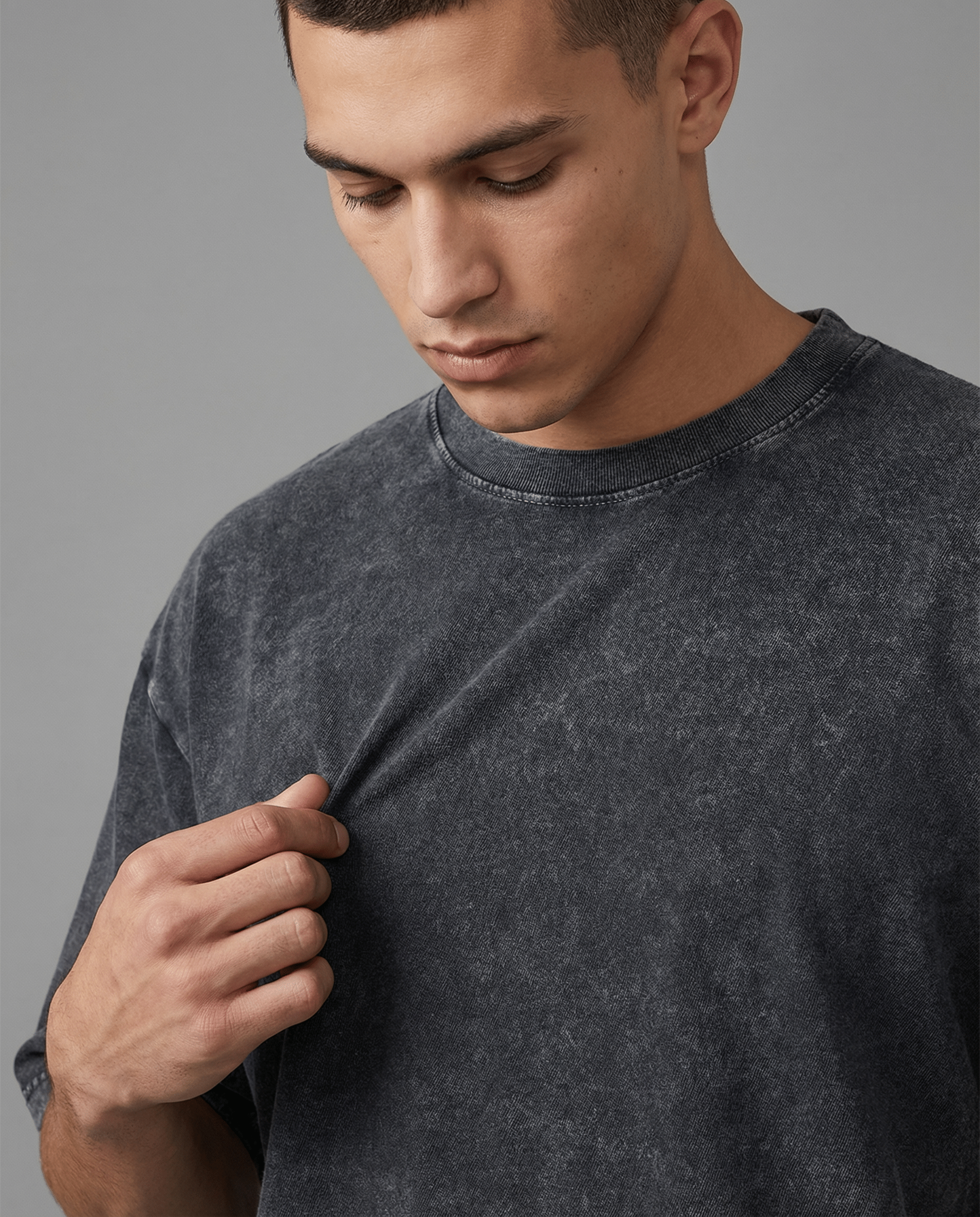
Le délavage à la pierre (stonewash) modifie la surface et le toucher du tissu. Réalisé avec soin, il adoucit le t-shirt, estompe le côté neuf du vêtement et donne à la couleur un caractère plus apaisé, vieilli. Le t-shirt semble moins brut dès la première utilisation.
Cela a un effet à la fois stylistique et pratique. Visuellement, un t-shirt délavé à la pierre paraît souvent plus décontracté et vécu, ce qui le rend facile à associer à du denim, des vêtements de travail, des tricots ou des costumes décontractés. Physiquement, le tissu peut être plus agréable dès le premier jour, surtout pour les hommes qui apprécient le coton épais mais ne veulent pas d'une première impression rigide.
Une finition peut améliorer un bon tissu, ou masquer un tissu de mauvaise qualité. Une sensation très douce au toucher sur un t-shirt neuf n'est pas toujours un signe de qualité durable. Si le tricot sous-jacent est fin ou instable, cette douceur peut s'accompagner d'un étirement plus rapide et d'une moindre récupération. Si vous souhaitez une lecture utile sur la façon dont les performances du coton affectent l'usure quotidienne, ce guide sur le coton prérétréci respirant pour les essentiels quotidiens offre un contexte utile.
Comparaison des cotons pour t-shirts
| Attribut | Coton standard | Coton biologique | Coton biologique lourd |
|---|---|---|---|
| Sensation | Familier et respirant | Doux, respirant, souvent choisi pour un approvisionnement à faible impact | Doux avec plus de substance et une tenue plus pleine |
| Drapé | Peut varier de fluide à fin | Dépend généralement du tricot et de la finition | Plus structuré, souvent plus net sur le corps |
| Durabilité | Varie considérablement | Varie selon la construction | Souvent mieux adapté aux utilisations et lavages répétés |
| Opacité | Peut être plus léger ou semi-transparent | Dépend du poids du tissu | Généralement plus opaque |
| Idéal pour | Vêtements décontractés généraux | Acheteurs privilégiant les fibres naturelles et la durabilité | Hommes recherchant durabilité, tenue de la forme et drapé premium |
Autres options de tissus haut de gamme
Le coton n'est pas la seule option solide. Les mélanges de lin ajoutent de la texture et de la circulation de l'air, ce qui peut être utile par temps chaud. Les mélanges de Modal ou de Tencel créent une surface plus lisse et un drapé plus fluide. Les mélanges performants peuvent aider à la gestion de l'humidité, en particulier pour les voyages ou l'utilisation active.
Cependant, pour un t-shirt de tous les jours destiné à constituer une garde-robe intentionnelle, le coton biologique lourd est souvent le point de départ le plus évident. Il relie la science du tissu à la valeur quotidienne. Vous ressentez le confort, voyez la structure et comprenez pourquoi payer pour un meilleur t-shirt peut signifier en acheter moins au fil du temps.
Trouver votre coupe et silhouette parfaites
Un bon tissu peut toujours décevoir si la forme est mauvaise. L'ajustement est la raison pour laquelle de nombreux achats de t-shirts échouent, surtout en ligne, car les hommes se fient souvent aux étiquettes de taille au lieu des mesures, du comportement du tissu et du look qu'ils préfèrent.

Trois silhouettes qui comptent
Une coupe ajustée suit le corps de plus près. Elle peut bien fonctionner sous une veste, mais elle révèle aussi davantage le torse et a tendance à être moins indulgente si le tissu est fin.
Une coupe classique est un juste milieu. Elle laisse généralement assez d'espace au niveau de la poitrine et de la taille pour être confortable sans paraître trop ample. Pour de nombreux hommes, c'est la forme tout usage la plus facile.
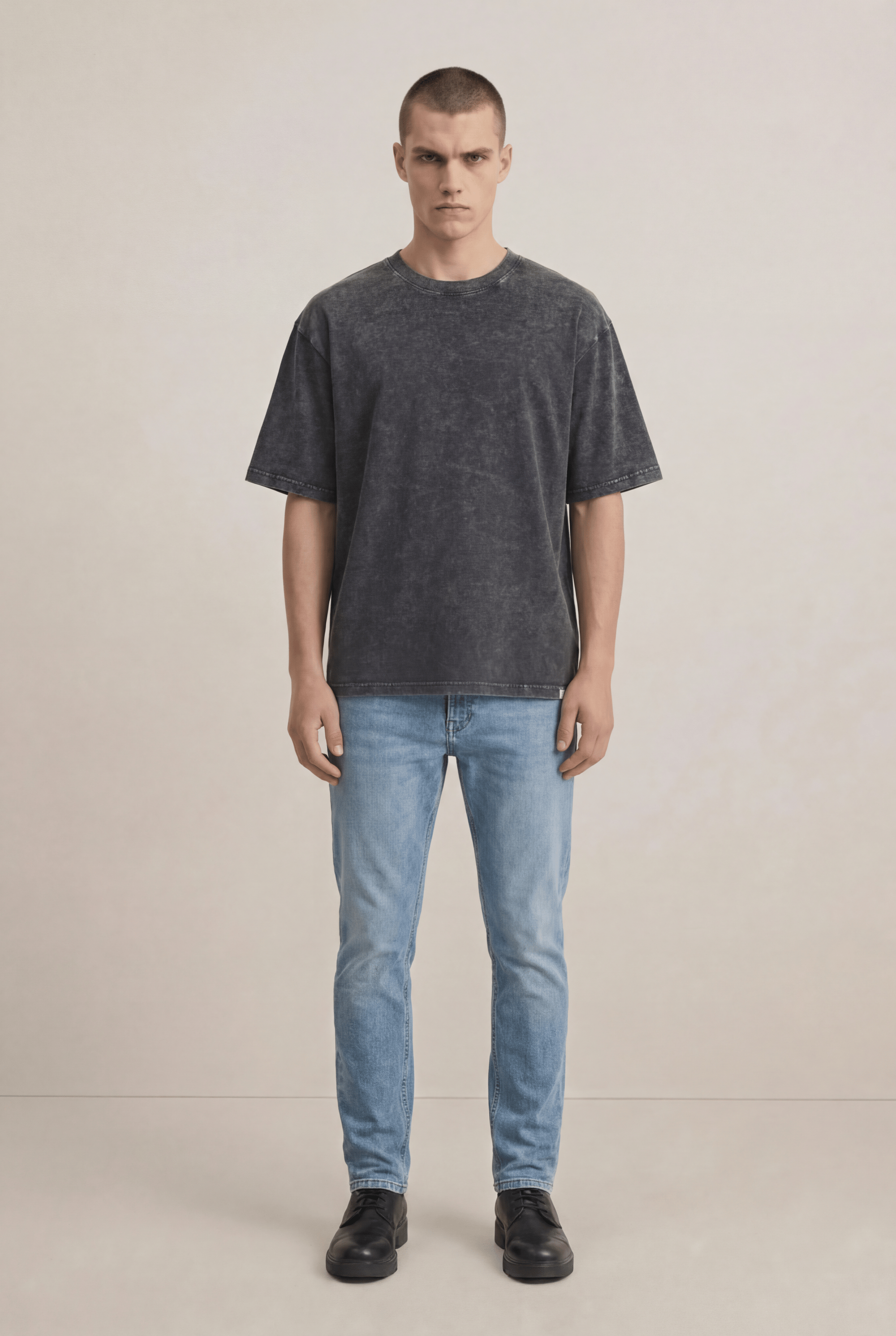
Une coupe décontractée crée plus d'espace au niveau du corps et des manches. Dans un tissu lourd, cet espace supplémentaire produit souvent un tombé net et intentionnel plutôt qu'un aspect négligé. Dans un tissu léger, la même coupe peut parfois paraître molle.
Le tissu modifie la coupe
Un t-shirt léger a tendance à se coller davantage au corps. Un t-shirt épais garde plus sa forme. Cela signifie que la même taille numérique peut avoir un aspect très différent selon le poids et la finition du tissu.
Les gens se trompent souvent. Ils pensent que le t-shirt est trop grand parce qu'il ne colle pas, alors qu'ils voient en réalité de la structure. Ou ils réduisent trop agressivement la taille et perdent la facilité de mouvement qui donne à un t-shirt décontracté un aspect moderne.
Si vous voulez porter un t-shirt seul, jugez la silhouette en reculant de quelques pas devant un miroir. La ligne générale est plus importante que la proximité du tissu à un endroit donné.
Comment prendre ses mesures à la maison
Vous n'avez pas besoin d'une expérience en couture pour améliorer vos chances en ligne. Utilisez un mètre ruban et vérifiez un t-shirt que vous aimez déjà.
- Poitrine. Posez le t-shirt à plat et mesurez à travers la poitrine, juste en dessous de l'emmanchure.
- Longueur du corps. Mesurez du point d'épaule haut jusqu'à l'ourlet.
- Largeur des épaules. Mesurez droit d'une couture d'épaule à l'autre.
- Ouverture de la manche. Cela aide si vous vous souciez de savoir si la manche est ajustée ou ample.
Ensuite, comparez ces chiffres avec le guide des tailles de la marque plutôt que de supposer que votre taille habituelle se traduira. Un point de référence pratique pour les achats en ligne est un guide clair des tableaux de tailles de chemises.
Signes que la coupe fonctionne
Recherchez ces indices visuels :
- Les épaules s'alignent bien sans tomber trop bas sur le bras.
- Les manches effleurent le bras plutôt que de serrer ou de s'évaser de manière maladroite.
- La longueur du corps couvre la ceinture sans se transformer en tunique.
- La poitrine et la taille ont de l'aisance pour que le t-shirt bouge avec vous.
La meilleure coupe n'est pas la plus serrée. C'est celle qui soutient votre façon de vous habiller. Si vous portez des t-shirts avec des surchemises, des vestes de travail et des pantalons décontractés, un peu d'espace aura souvent l'air plus raffiné que la compression.
Coiffer votre t-shirt décontracté pour toute occasion
Un t-shirt de qualité gagne sa place par sa polyvalence. Le même t-shirt devrait fonctionner pour faire les courses, sous un blazer, et lors d'une journée de temps incertain où la superposition devient toute la tenue.

Facilité du week-end
Commencez par un col rond épais en blanc, noir délavé, olive fané ou un ton terre sourd. Ajoutez un jean droit ou un chino décontracté et des baskets simples. La raison pour laquelle cela fonctionne n'est pas la complexité. C'est la clarté.
Un t-shirt substantiel donne de la forme à la tenue. Il permet au torse de paraître intentionnel plutôt que sous-habillé. Même avec un style minimal, le tissu plus lourd et le drapé plus net font un travail visuel.
Smart casual sans trop d'efforts
Un t-shirt bien coupé peut remplacer une chemise boutonnée dans des contextes où une chemise serait trop formelle. Associez un col rond uni à un pantalon bien ajusté et un blazer non structuré. Gardez les couleurs sobres. Le gris, le marine, le crème, le charbon de bois et le vert délavé s'accordent généralement bien.
La clé est la qualité de la surface. Un t-shirt fin d'aspect promotionnel affaiblit l'ensemble de la tenue. Un t-shirt en coton plus dense avec un col stable tient bon sous une veste souple.
Si vous hésitez entre les encolures pour ce type de look, ce guide pratique sur le t-shirt homme à col en V peut vous aider à savoir quand un col en V est approprié et quand un col rond semble plus ancré.
Superposer pour le temps de transition canadien
Un t-shirt devient particulièrement utile lorsque le temps change au cours de la journée. Portez-le sous une surchemise ouverte, une veste légère ou un tricot texturé. Le t-shirt doit ancrer la tenue plutôt que de disparaître en dessous.
Cette courte vidéo peut susciter quelques idées de tenues :
Dans ce type de superposition, une finition délavée est souvent utile. Elle adoucit le contraste entre les vêtements et évite que la tenue ne paraisse trop pointue ou trop précieuse.
Trois formules de tenues fiables
-
Hors service
T-shirt épais, jean, baskets, veste décontractée. -
Bureau moderne
T-shirt impeccable, pantalon décontracté, mocassins ou chaussures minimalistes, blazer non structuré. -
Couche de transition
T-shirt, surchemise ouverte, tricot texturé ou vêtement d'extérieur léger, pantalon robuste.
Plus le t-shirt est neutre et bien fait, plus il peut jouer de rôles. C'est là que réside la véritable valeur d'une garde-robe.
La différence IdyllVie expliquée
Vous enfilez un t-shirt à 7 heures du matin, le superposez sous un tricot pour une fraîche matinée canadienne, puis le portez seul l'après-midi. Le soir, le col a soit gardé sa forme et le tissu est toujours impeccable, soit le t-shirt est déjà fatigué. Ce test quotidien en dit plus sur une marque que n'importe quel slogan.
Un t-shirt gagne sa place par ses choix de matériaux, sa construction, sa finition et l'expérience d'achat qui l'entoure. Ces éléments fonctionnent ensemble comme une maison bien construite. Une bonne isolation, une charpente solide et des fenêtres durables sont importants individuellement, mais le résultat global vient de leur performance combinée au fil du temps.

Ce à quoi ressemble la conception consciente en pratique
Pour de nombreux consommateurs canadiens, la durabilité et la qualité vont de pair. Comme indiqué précédemment, la demande des consommateurs s'est orientée vers des t-shirts plus écologiques, et cette préférence influence la façon dont les marques développent les basiques quotidiens.
Ce changement est important, car un meilleur t-shirt est rarement plus doux dès le premier jour. Il est fabriqué avec des fibres résistantes, des finitions qui améliorent le confort sans altérer le caractère, et une construction qui permet une utilisation et un lavage répétés. En termes pratiques, cela signifie moins de remplacements décevants et une garde-robe construite avec plus d'intention.
La philosophie d'IdyllVie s'inscrit dans cette approche. L'accent mis par la marque sur le coton biologique épais et le coton délavé au sable témoigne d'une idée claire de la valeur. Un t-shirt doit être confortable sur la peau, avoir une substance visuelle lorsqu'il est porté seul, et rester utile assez longtemps pour justifier sa place dans le tiroir.
Matériaux, finition et utilisation
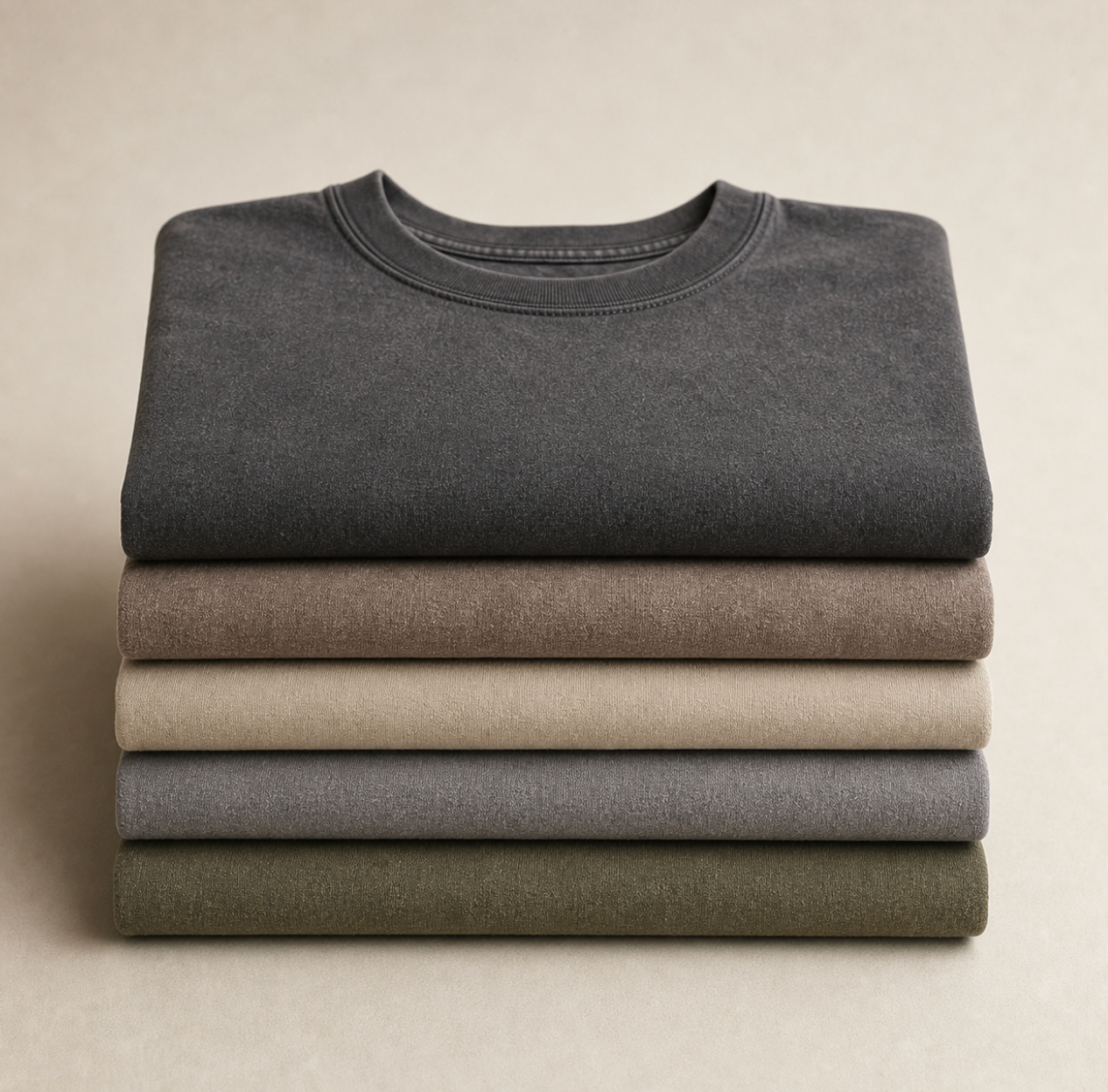
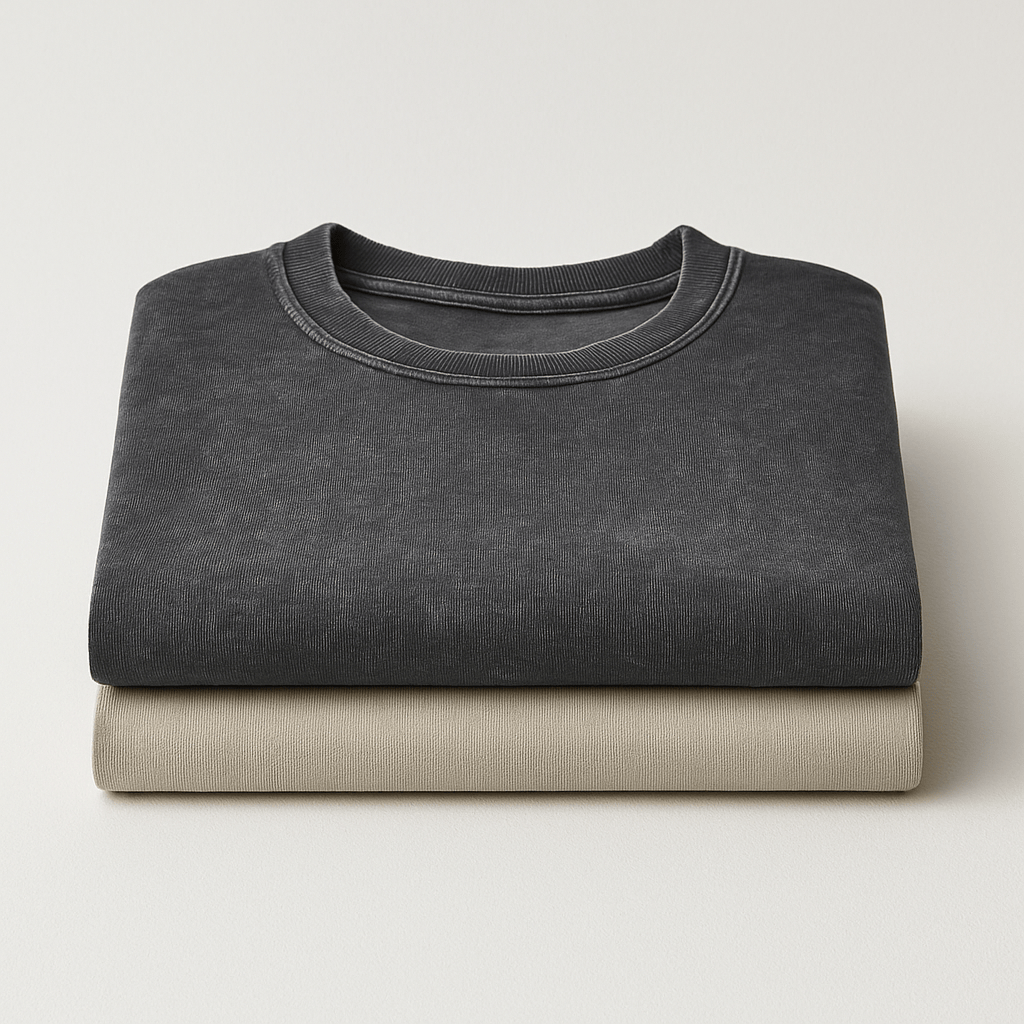
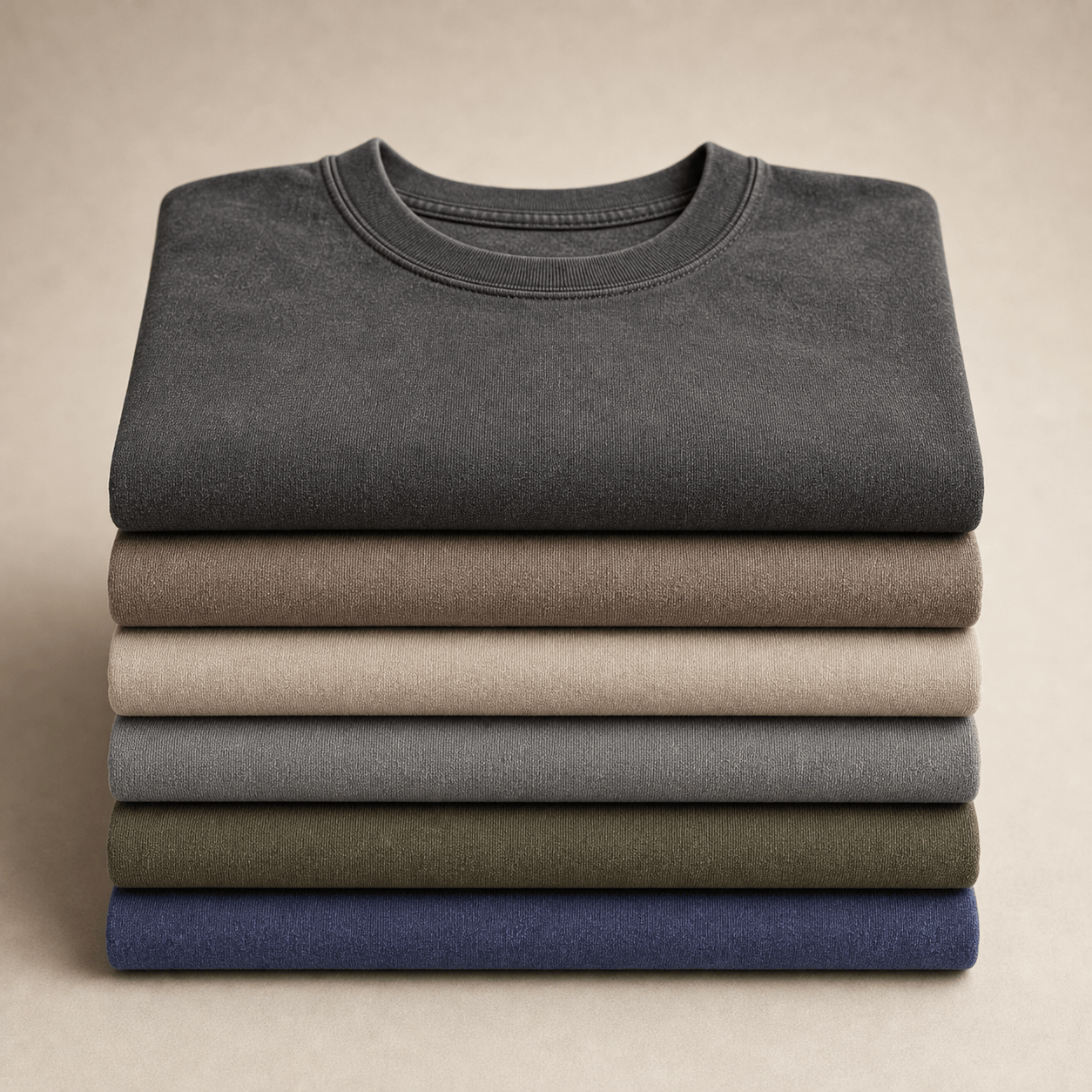
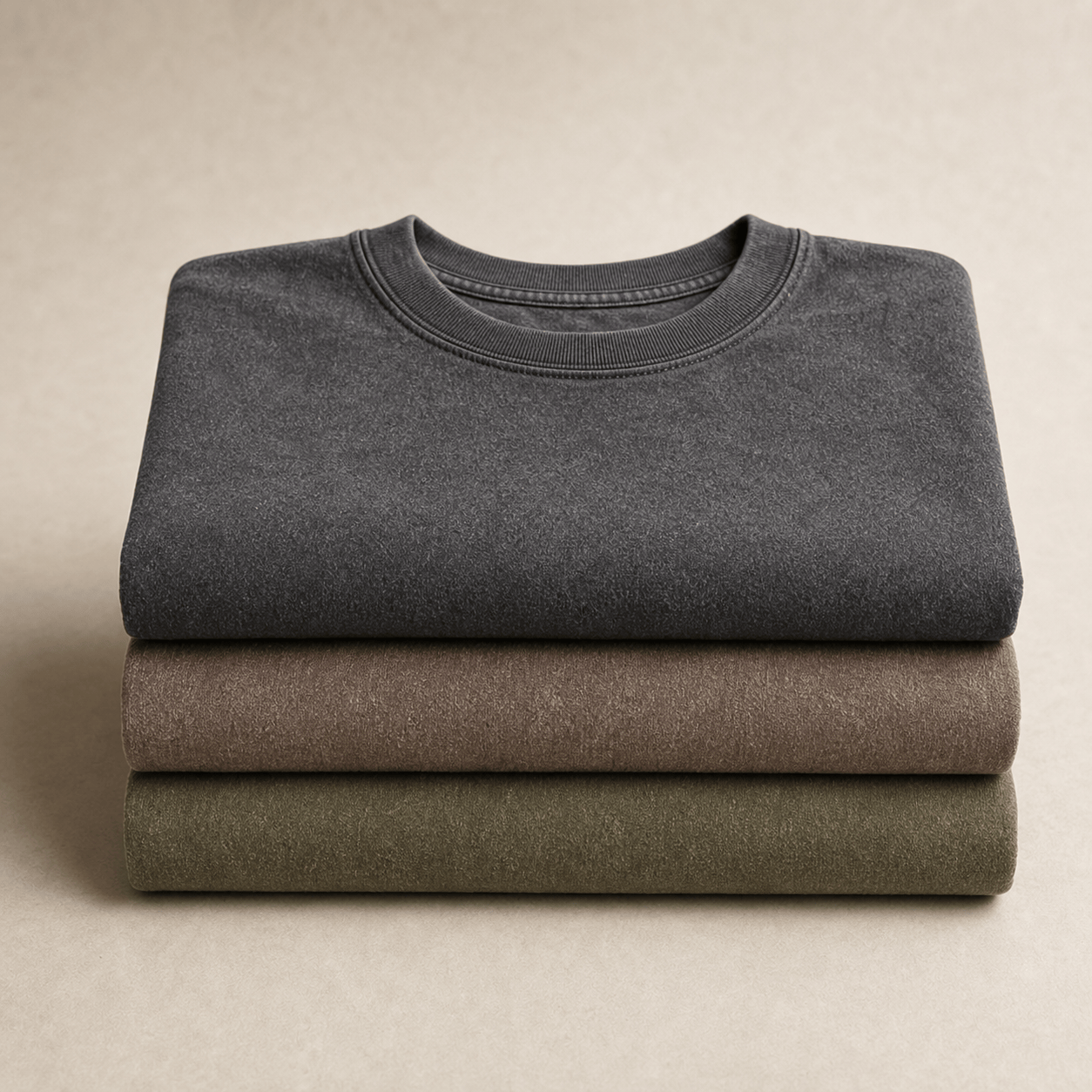
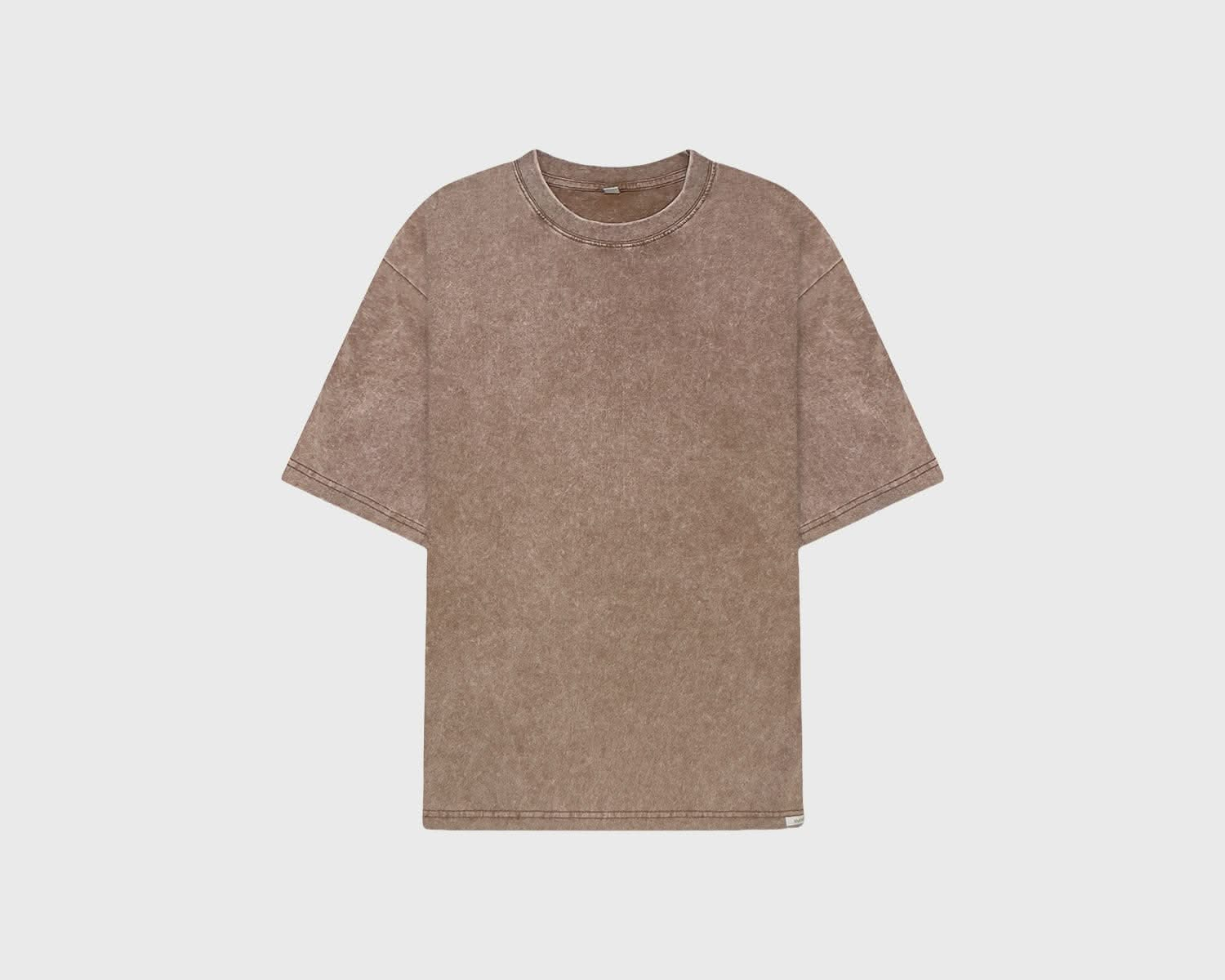
Un exemple concret dans ce domaine est le lot de 5 t-shirts pour hommes en coton délavé coupe classique d'IdyllVie, ainsi que son t-shirt pour hommes en coton délavé à col rond coupe classique. Ces produits sont importants ici car ils reflètent les questions exactes sur le tissu que de nombreux hommes essaient de résoudre.
Le coton épais aide un t-shirt à avoir un meilleur tombé et à résister à l'aspect fragile et promotionnel que développent souvent les chemises de courte durée. Le coton biologique fait référence aux méthodes d'approvisionnement et de culture des fibres, ce qui est important pour les acheteurs qui essaient de réduire le coût environnemental des basiques qu'ils achètent encore et encore. Le délavage au sable modifie le toucher et le caractère de la surface, donnant à la chemise une qualité plus douce et déjà portée dès le début.
Chacun de ces choix affecte l'usure quotidienne. Le poids favorise la durabilité et la rétention de la forme. La fibre biologique favorise une stratégie de garde-robe à moindre impact. Le délavage au sable favorise le confort et une finition plus décontractée et usée. Ensemble, ils créent une chemise qui ressemble moins à un achat jetable et plus à une partie stable d'une garde-robe intentionnelle.
Politiques favorisant de meilleures habitudes d'achat
La qualité du produit n'est qu'une partie de l'histoire. Les politiques environnantes déterminent également si quelqu'un peut acheter avec soin plutôt que de manière réactive.
Voici des exemples utiles :
- Livraison gratuite à partir de 150 $ CA, ce qui peut favoriser les achats planifiés plutôt que les remplacements ponctuels.
- Retours sous 30 jours, ce qui donne aux acheteurs le temps de vérifier la coupe, la longueur des manches et le toucher du tissu à la maison.
- Options de paiement flexibles, ce qui peut faciliter le remplacement progressif des basiques usés par des pièces mieux fabriquées.
- Emballages 100 % compostables et enveloppes recyclées, ce qui étend la réflexion sur l'impact réduit au-delà du vêtement lui-même.
Ces détails ne garantissent pas un excellent t-shirt. Ils montrent si une marque a pris en compte l'ensemble du cycle de vie de l'achat, de la fibre à l'emballage, jusqu'au moment où le client décide si la pièce a sa place dans sa garde-robe.
Les meilleurs basiques proviennent généralement de marques qui traitent les petites décisions comme faisant partie du produit. Le tissu, la finition, les retours, l'expédition et l'emballage révèlent tous à quel point l'entreprise prend au sérieux l'utilisation à long terme.
C'est la différence clé. IdyllVie présente le t-shirt décontracté non pas comme un élément jetable, mais comme un investissement réfléchi dans le confort, la durabilité et un mode de vie à moindre impact. Pour les hommes canadiens qui construisent une garde-robe avec moins de pièces, mais de meilleure qualité, cette philosophie change la façon dont un simple t-shirt doit être jugé.
Pièges courants lors de l'achat de t-shirts
Vous enfilez un nouveau t-shirt pour la troisième fois, vous vous regardez dans le miroir près de la porte et vous remarquez tous les problèmes d'un coup. Le col a commencé à onduler. Le corps semble légèrement tordu. Le tissu qui était doux en magasin pend maintenant mollement après un ou deux lavages. La plupart des erreurs d'achat commencent bien plus tôt, au moment où une chemise est jugée par sa couleur, sa marque ou son prix plutôt que par les détails qui déterminent comment elle se portera dans la vraie vie canadienne.
C'est important car un t-shirt est l'une des pièces les plus sollicitées d'une garde-robe. Il est en contact avec la peau, est lavé souvent, se superpose à des températures changeantes et doit être impeccable seul. Un mauvais choix devient coûteux de manière discrète. Vous le remplacez plus tôt, le portez moins, et vous vous retrouvez avec un tiroir plein de chemises qui ne deviennent jamais des favorites.
Erreur n°1 : acheter l'histoire, pas les spécifications
Une image de marque soignée peut cacher un vêtement très ordinaire. Si la page du produit ne dit pas grand-chose au-delà du nom et de quelques photos de style de vie, il vous manque les faits qui influencent la performance.
Commencez par trois questions. Quelle fibre est utilisée ? Quel est le poids du tissu ? Quelle finition a été appliquée ? Ces réponses vous en diront bien plus qu'un logo. Le coton épais offre généralement plus de structure et d'opacité. Le coton biologique indique comment la fibre a été cultivée. Une finition délavée modifie le toucher et l'apparence car la surface a déjà été adoucie et légèrement usée.
Si ces détails sont absents, la prudence est de mise.
Erreur n° 2 : considérer tous les t-shirts en coton comme équivalents
Le coton est une catégorie, pas une garantie. Deux chemises peuvent toutes deux être étiquetées coton et se comporter très différemment au lavage, sur le corps et dans le temps.
Le poids du tissu est comme la fondation d'une maison. Vous ne le remarquerez peut-être pas en premier, mais il affecte tout ce qui est construit dessus. Un t-shirt plus léger peut sembler aéré et facile par temps chaud, mais peut montrer l'usure plus rapidement ou devenir transparent sous une lumière vive. Un t-shirt plus lourd tient généralement mieux sa forme, résiste au froissement et supporte les lavages répétés. Pour de nombreux hommes canadiens, cette substance supplémentaire rend un t-shirt plus utile en toutes saisons, surtout sous des surchemises, des pulls et des vestes.
Le but n'est pas de choisir l'option la plus lourde à chaque fois. Le but est de faire correspondre le tissu à l'usage.
Erreur n°3 : confondre douceur et qualité
De nombreux t-shirts de mauvaise qualité séduisent les gens dès les dix premières secondes. Ils semblent très doux sur le portant en raison d'une finition agressive, de lavages au silicone ou d'un tissu fin qui tombe rapidement. Après quelques utilisations, le même t-shirt peut boulocher, s'étirer ou perdre sa forme nette.
La douceur durable provient d'une meilleure fibre et d'une construction solide, pas seulement d'un traitement de surface. Un bon t-shirt doit être confortable immédiatement, puis continuer à s'améliorer au fur et à mesure qu'il est porté et lavé. C'est l'une des raisons pour lesquelles les chemises en coton biologique épais soigneusement fabriquées sont souvent plus agréables après une courte période de rodage. Le confort est intégré au matériau, il n'est pas pulvérisé comme un effet temporaire.
Erreur n° 4 : acheter pour un cycle de tendances plutôt que pour une garde-robe
Un t-shirt avec une coupe extrême ou un motif très spécifique peut être agréable pendant une saison. Il devient rarement la chemise que vous portez deux fois par semaine pendant plusieurs années.
Une garde-robe intentionnelle nécessite une valeur de répétition. Des couleurs neutres, des proportions équilibrées et un col rond net sont généralement plus utiles car ils s'accordent avec le jean, le pantalon, les surchemises et la confection décontractée. Pour un acheteur canadien, la polyvalence est importante. Une chemise doit mériter sa place en juillet seule et en octobre sous des couches.
Erreur n°5 : négliger l'entretien avant d'acheter
La durabilité est en partie fabriquée en usine et en partie préservée à la maison. Même un t-shirt bien fait peut rétrécir, se tordre ou se rugosifier s'il est lavé avec trop de chaleur et séché de manière agressive.
Quelques habitudes font une différence visible :
- Lavez à l'eau froide ou tiède lorsque l'étiquette d'entretien le permet.
- Retournez le t-shirt à l'envers pour réduire l'abrasion de surface.
- Utilisez un cycle plus doux pour une meilleure conservation de la forme.
- Évitez le séchage excessif pour aider à préserver le col, le corps et le toucher.
- Rangez plié ou soigneusement suspendu afin que l'encolure conserve sa forme.
L'entretien fait partie de la qualité. Un meilleur t-shirt récompense les bonnes habitudes par une plus longue durée de vie, un ajustement plus stable et moins de remplacements.
Le fil conducteur de ces erreurs est simple. Les hommes achètent souvent des t-shirts comme s'ils étaient temporaires, puis sont déçus lorsque la chemise se comporte ainsi. Une meilleure approche consiste à considérer un t-shirt comme un objet en tissu. La fibre, le poids, la finition, la forme et l'entretien laissent tous des indices. Une fois que vous savez comment les repérer, l'achat ressemble moins à l'acquisition d'un basique et plus au choix d'une pièce qui mérite sa place dans une garde-robe plus petite et de meilleure qualité.
Construire une garde-robe intentionnelle, un t-shirt à la fois
Le t-shirt parfait n'est généralement pas trouvé par hasard. On le trouve quand on sait quoi remarquer.
Commencez par les trois fondamentaux. La fibre affecte le confort et la respirabilité. La construction affecte la forme et la durabilité. La finition affecte le toucher, l'apparence et la facilité avec laquelle le t-shirt s'intègre aux tenues de tous les jours. Une fois que vous comprenez ces éléments, les t-shirts décontractés pour hommes ne semblent plus interchangeables.
Un bon choix reflète également votre mode de vie. Au Canada, cela signifie penser aux superpositions, aux changements de température, aux lavages fréquents et à la capacité du t-shirt à se porter seul avec un jean, un pantalon ou une surchemise. Une chemise qui ne fonctionne que dans un contexte étroit devient rarement un véritable basique.
Le mieux, c'est que construire une meilleure garde-robe ne nécessite pas une refonte spectaculaire. Un t-shirt fiable peut changer la façon dont le reste de vos vêtements fonctionne. Il peut rendre un vieux jean plus élégant, rendre un blazer plus décontracté et réduire l'envie de remplacer constamment des basiques médiocres.
Achetez moins. Remarquez plus. Un t-shirt semble insignifiant, mais c'est l'un des endroits les plus clairs pour pratiquer l'habillage intentionnel.
Questions fréquemment posées
Ces questions apparaissent après qu'un t-shirt ait été porté dans la vie réelle. L'un est superbe dans le miroir mais se tord après le lavage. L'autre est doux pendant une semaine, puis perd sa forme. Une bonne FAQ devrait répondre à la partie pratique de la qualité, pas seulement au langage commercial.
FAQ
| Question | Réponse |
|---|---|
| Combien de t-shirts décontractés pour hommes ai-je réellement besoin ? | Une petite rotation performante est généralement suffisante. Pour de nombreux hommes au Canada, cela signifie quelques t-shirts qui peuvent supporter des utilisations répétées à des températures changeantes, des superpositions et des lavages réguliers. L'objectif n'est pas la quantité. Il s'agit d'avoir des chemises que vous portez souvent parce qu'elles vous vont bien, gardent leur forme et s'harmonisent avec le reste de votre garde-robe. |
| Est-ce que le poids lourd est toujours meilleur ? | Le poids modifie la façon dont un t-shirt se comporte. Un tricot plus lourd donne généralement plus de structure, une meilleure opacité et un drapé plus net lorsqu'il est porté seul. Un t-shirt plus léger peut sembler plus frais et plus facile à porter sous un pull ou une surchemise. Le meilleur choix dépend de l'usage. Un poids lourd est souvent un meilleur investissement pour un t-shirt décontracté autonome, tandis qu'un tissu plus léger convient à une utilisation en première couche. |
| Comment dois-je laver un t-shirt en coton de qualité supérieure ? | Commencez par l'étiquette d'entretien. Dans la plupart des cas, l'eau froide, un cycle délicat et une chaleur plus faible protègent les fibres et aident le col à conserver sa forme. Retourner le t-shirt à l'envers réduit l'abrasion de surface, ce qui est important pour les finitions telles que le délavage à la pierre, car le frottement est ce qui rugosifie lentement la surface du tissu. |
| Que devraient rechercher les acheteurs de grandes tailles ? | Concentrez-vous sur les proportions avant les étiquettes de taille. Un meilleur t-shirt a suffisamment d'espace au niveau de la poitrine et du corps sans devenir carré, des manches qui se placent proprement sans tirer, et un col qui reste plat au lieu de s'étirer. Les fibres naturelles respirantes peuvent également rendre le port confortable tout au long de la journée, surtout si le t-shirt est porté sous des couches. |
| Les t-shirts durables sont-ils moins résistants ? | Durabilité et durabilité ne sont pas des opposés. Un t-shirt dure grâce à la qualité de la fibre, à la résistance du fil, à la densité du tricot, aux coutures et aux choix de finition. Le coton biologique, par exemple, peut très bien s'user si le tissu est bien fabriqué et si le vêtement est entretenu correctement. Acheter un t-shirt qui conserve sa forme pendant des années est souvent un choix à moindre impact que de remplacer des chemises moins chères à chaque saison. |
Si vous affinez votre garde-robe avec plus d'intention, IdyllVie offre un endroit utile pour explorer les essentiels discrets, l'éducation sur les tissus et les choix de conception à moindre impact pour la vie quotidienne.












0 commentaire