
Une chemise arrive. La couleur est bonne, le tissu semble prometteur, puis vous l'essayez. Les épaules sont trop larges, la poitrine est serrée ou le corps pend comme un vêtement emprunté à la garde-robe de quelqu'un d'autre.
Ce moment est plus qu'agaçant. Il fait perdre du temps, entraîne des retours et pousse souvent les gens à acheter de manière négligente. De nombreuses garde-robes finissent par être encombrées de chemises "presque parfaites" parce que la taille reste une affaire de tâtonnements.
Mais ce n'est pas une fatalité.
Apprendre à lire les guides des tailles pour chemises est l'une des compétences vestimentaires les plus utiles que vous puissiez acquérir. Cela vous aide à acheter moins de pièces, à choisir les meilleures et à les conserver plus longtemps. Cela compte encore plus lorsque vous investissez dans des tissus naturels, une confection soignée et des pièces que vous voulez porter pendant des années plutôt qu'une saison.
Un bon ajustement n'est pas seulement une question d'apparence. Il change la fréquence à laquelle vous portez une chemise, le confort avec lequel vous bougez dedans, et si elle gagne une place permanente dans votre garde-robe.
La fin de la déception liée aux achats en ligne
Vous êtes probablement ici parce qu'une étiquette vous a déjà déçu.
Peut-être avez-vous commandé votre taille habituelle, le médium, pour découvrir que le médium de cette marque était comme un petit d'une autre marque. Peut-être que la chemise était parfaite sur le mannequin, mais que l'ourlet tombait de manière maladroite sur vous. Peut-être que le tissu était plus rigide, plus lourd ou plus collant que prévu, de sorte que l'ajustement général semblait "faux" même si les chiffres semblaient proches.

Ce cycle est courant car on demande souvent aux acheteurs de faire confiance à une seule lettre sur une étiquette. S, M, L. Simple en apparence. Déroutant en pratique.
Pourquoi les étiquettes de taille semblent peu fiables
Une étiquette de taille n'est qu'un raccourci. Elle ne vous indique pas la forme complète de la chemise, l'espace intégré ou la façon dont le tissu se comportera une fois porté et lavé.
Une chemise peut convenir à votre poitrine mais être mal ajustée aux épaules. Une autre peut être bien ajustée au cou mais serrer aux hanches. L'étiquette n'a pas exactement menti. Elle a juste omis les détails qui comptent.
Un guide des tailles est moins un outil marketing qu'une carte. Si vous savez la lire, vous cessez de vous perdre.
L'ajustement fait partie de l'achat réfléchi
Quand une chemise est bien ajustée, vous la gardez dans votre rotation. Vous la lavez, la réparez, la stylisez et la portez à nouveau. C'est le fondement d'une garde-robe plus réfléchie.
Un mauvais ajustement fait le contraire :
- Cela crée de l'encombrement : Les chemises qui "presque" fonctionnent ont tendance à rester non portées.
- Cela augmente le gaspillage : Les retours et les remplacements ajoutent des frictions et des emballages.
- Cela diminue la valeur : Même un beau tissu ne sauvera pas une chemise qui ne se sent pas bien sur le corps.
Une chemise bien ajustée devient fiable. C'est celle que vous choisissez les matins occupés parce que vous savez déjà comment elle se comporte.
Cette confiance commence par la compréhension de vos propres mesures, et non par la mémorisation des étiquettes d'une marque.
Comment se mesurer précisément pour les chemises
Avant de regarder un tableau, prenez vos propres mesures. Les acheteurs sautent souvent cette étape, et c'est la raison pour laquelle le dimensionnement reste aléatoire.
Vous n'avez pas besoin d'une cabine d'essayage de studio. Vous avez besoin d'un mètre-ruban souple, d'un miroir si possible, et de quelques minutes de calme.

Préparez-vous correctement
Mesurez-vous avec des vêtements légers ou près du corps. Tenez-vous naturellement. Ne retenez pas votre souffle, ne gonflez pas votre poitrine, et ne serrez pas le ruban comme si vous emballiez un colis.
Le ruban doit être plat et de niveau. Considérez qu'il repose sur le corps, sans le comprimer.
Les quatre mesures qui comptent le plus
Pour la plupart des chemises, voici les chiffres clés à connaître :
-
Poitrine
Enroulez le ruban autour de la partie la plus large de votre poitrine. Gardez-le au même niveau sous les bras et dans le dos.
C'est souvent la première mesure que les gens vérifient, et pour une bonne raison. Elle affecte le confort lorsque vous respirez, vous asseyez, vous étirez et superposez des vêtements.
-
Taille
Mesurez autour de votre tour de taille naturel. C'est généralement la partie la plus étroite de votre torse.
Pour les coupes de chemises plus droites, cela compte un peu moins que la poitrine. Pour les styles plus ajustés, cela compte beaucoup.
-
Hanches
Mesurez autour de la partie la plus large de vos hanches ou de votre fessier.
Les gens ignorent souvent cela pour les chemises, puis se demandent pourquoi les chemises boutonnées sont serrées en bas ou pourquoi un t-shirt tombe bizarrement à l'ourlet.
-
Longueur des manches
Mesurez du centre du dos de votre cou, en traversant l'épaule, jusqu'à l'os du poignet.
Cela donne un chiffre plus utile que de commencer uniquement à la couture de l'épaule, car les corps réels ne sont pas pré-marqués avec des points de couture d'usine.
Une cinquième mesure peut être utile pour les chemises à col :
-
Tour de cou
Mesurez autour de la base de votre cou, là où un col serait placé. Gardez la mesure confortable, pas serrée.
Voici un guide visuel si vous souhaitez voir le processus en mouvement :
De petites erreurs de mesure qui entraînent de gros problèmes d'ajustement
La plupart des erreurs de taille de chemise proviennent de petites habitudes.
- Serrer le ruban trop fort : Cela vous donne un chiffre optimiste, pas un chiffre utile.
- Mesurer avec des vêtements épais : Un sweat-shirt ajoute un volume faussé.
- Se tenir immobile : Votre posture quotidienne est celle qui compte.
- Utiliser une ancienne étiquette de chemise comme seule référence : Les étiquettes varient. Les mesures disent la vérité.
Règle pratique : Mesurez-vous deux fois. Si les chiffres diffèrent, mesurez une troisième fois et utilisez le résultat le plus cohérent.
Pourquoi votre mesure corporelle n'est pas la mesure de la chemise
De nombreux acheteurs trouvent cela déroutant. Vos chiffres corporels sont le point de départ, pas la réponse finale.
Les tableaux de tailles professionnels pour t-shirts répertorient souvent les mesures du vêtement fini, et non les mesures du corps, et ces spécifications incluent de l'aisance pour le confort et le mouvement. Les normes de fabrication intègrent également des tolérances techniques. Pour les t-shirts pour hommes à coupe régulière, les tolérances de tombé d'épaule sont de 1 à 2 cm en dessous des points d'épaule réels, comme indiqué dans ce tableau de tailles pour pack technique de t-shirt.
Cela signifie que la chemise est conçue en tenant compte de la forme, du tombé et de la portabilité. Elle n'est pas censée suivre votre corps comme un plan.
Un moyen simple de garder vos chiffres utiles
Notez vos mesures en un seul endroit. Conservez les deux, centimètres et pouces, si vous achetez chez différentes marques.
Une note dans votre téléphone fonctionne bien. Une petite carte de garde-robe glissée dans votre portefeuille aussi. Ce qui compte, c'est que vous puissiez comparer votre corps aux guides des tailles pour chemises sans vous fier à votre mémoire.
Si vous possédez déjà une chemise qui vous va particulièrement bien, mesurez-la aussi. Vos mesures corporelles vous indiquent par où commencer. Une chemise préférée vous dit ce que le confort signifie dans la vie réelle.
Décoder le guide des mesures : Vêtement vs Mesures corporelles
Un tableau de tailles de chemises peut paraître précis et pourtant dérouter les gens, car deux types de mesures différents sont mélangés.
L'une est votre mesure corporelle. L'autre est la mesure du vêtement fini. Elles ne sont pas censées correspondre exactement.
Chiffres du corps contre chiffres de la chemise
Votre tour de poitrine peut mesurer une chose, tandis que le tour de poitrine de la chemise mesure plus. Cet espace supplémentaire est intentionnel. Les tailleurs appellent cela l'aisance.
L'aisance est l'espace qui vous permet de respirer, de bouger vos bras, de vous asseoir et de porter la chemise toute la journée sans vous sentir piégé. Sans aisance, une chemise ne peut convenir que si vous restez parfaitement immobile.
C'est comme un meuble. Une chaise de salle à manger qui correspondrait exactement à la largeur de votre corps ne serait pas confortable. Vous avez besoin d'un peu d'espace autour de vous pour vous asseoir confortablement. Les chemises fonctionnent de la même manière.
Pourquoi deux chemises de taille moyenne peuvent tailler différemment
Une chemise slim et une chemise classique peuvent toutes deux cibler la même fourchette de tailles corporelles, mais elles utilisent cet espace différemment.
Une coupe slim affine généralement plus étroitement la taille, les bras et la poitrine. Une coupe classique laisse plus d'espace au niveau du torse et semble souvent plus droite de l'aisselle à l'ourlet.
C'est pourquoi copier votre « taille habituelle » d'une marque à l'autre fonctionne rarement. L'étiquette vous indique la catégorie. Le tableau vous indique la forme.
Recherchez l'intention du designer
Certaines spécifications techniques révèlent à quel point les mesures du vêtement sont délibérées.
Les guides professionnels de placement d'impression ne mesurent pas à partir de points aléatoires sur la chemise. Ils se basent sur des caractéristiques fixes du vêtement. Pour les motifs de poitrine centrés pour adultes, le placement commence à 4 à 5 pouces du col selon ce guide des tailles de conception de t-shirt.
Ce niveau de précision est important car les dimensions des vêtements ne sont pas des estimations informelles. Ce sont des systèmes construits. Si le tableau indique que le corps, l'épaule ou la longueur d'une chemise mesure d'une certaine manière, ce chiffre reflète généralement les décisions du patron, et non des suppositions.
Comment lire un tableau sans trop y réfléchir
Utilisez cette séquence :
| Ce que vous avez | À quoi vous le comparez | Ce que vous demandez |
|---|---|---|
| Votre tour de poitrine, tour de taille, tour de hanches, longueur de manche | Le tableau de la marque | Cette chemise me conviendra-t-elle ? |
| Une chemise préférée mesurée à plat | Le tableau des mesures du vêtement | Cette chemise sera-t-elle aussi confortable une fois portée ? |
Si un tableau liste les mesures du corps, comparez-les aux vôtres.
Si un tableau liste les mesures du vêtement, comparez-les à une chemise que vous aimez déjà. C'est souvent plus facile et plus précis.
Un test de décision rapide
Si vous êtes entre deux tailles, posez-vous ces questions :
- Voulez-vous de la structure ou du drapé ? Une coupe plus ajustée est plus nette. Une coupe plus ample est plus décontractée.
- Allez-vous superposer des vêtements ? Les chemises portées par-dessus des t-shirts ou sous des tricots nécessitent un espace différent.
- Le tissu est-il élastique ? Une chemise tissée se comporte différemment d'un tricot doux.
- Qu'est-ce qui vous dérange le plus ? Une poitrine serrée, une manche longue ou une taille lâche ? Votre réponse vous aide à choisir où faire un compromis.
Si vous ne pouvez comparer qu'une seule chose, comparez la poitrine et la longueur du corps de la chemise à une chemise que vous portez déjà souvent. Ces deux chiffres vous en disent généralement le plus.
Une fois que vous comprenez la différence entre les mesures corporelles et les mesures du vêtement, les tableaux ne ressemblent plus à un puzzle. Ils commencent à se lire comme des instructions.
Comment le tissu et la coupe déterminent l'ajustement parfait
Les chiffres sont importants, mais le tissu change la sensation de ces chiffres.
Deux chemises peuvent avoir des mesures presque identiques et pourtant se porter comme des vêtements complètement différents. L'une peut se tenir à l'écart du corps avec un contour net. L'autre peut se détendre, se plier et épouser votre forme plus doucement.

Pourquoi le tissu modifie la perception de l'ajustement
Un t-shirt en coton biologique épais est souvent plus structuré qu'un jersey plus léger. Il garde mieux sa ligne aux épaules et à la poitrine. Une couche tricotée, en revanche, peut être plus drapée et bouger davantage avec le corps.
De nombreux guides de tailles génériques manquent de précision ici. Les tableaux existants ont tendance à appliquer la même logique à tous les types de tissus, même si les matériaux haut de gamme se comportent différemment. Une lacune importante est le rétrécissement. Les guides génériques ne tiennent souvent pas compte du fait que les chemises en fibres naturelles, telles que le coton biologique épais, peuvent subir un rétrécissement de 3 à 5 % après le premier lavage, comme le souligne cette discussion sur la lacune dans les directives de tableaux de tailles standard.
Cela ne signifie pas que les tissus naturels sont un problème. Cela signifie qu'ils méritent une meilleure explication.
La chemise n'est pas seulement une grille de mesures
Une bonne chemise a trois niveaux d'ajustement qui fonctionnent simultanément :
- L'ajustement des mesures : poitrine, taille, hanches, manches, cou
- L'ajustement du tissu : si le tissu est net, élastique, doux, dense ou fluide
- L'ajustement de la coupe : si le motif est carré, droit, fuselé, court ou allongé
Si l'une de ces couches est manquante, la chemise peut toujours ne pas convenir.
Un t-shirt en coton structuré pourrait être idéal avec un peu plus d'espace car le tissu a une bonne tenue. Un tricot doux peut se sentir mieux un peu plus près du corps car il offre déjà du mouvement grâce à son élasticité et son drapé.
Comment se comportent les tissus naturels courants
Voici une façon pratique d'aborder quelques familles de tissus familières.
Coton lourd
Ce tissu est généralement stable et substantiel. Il a tendance à effleurer plutôt qu'à coller.
Si vous aimez une silhouette plus nette, votre taille habituelle peut bien fonctionner. Si vous n'aimez pas la fermeté au niveau de la poitrine ou du haut du bras, vous préférerez peut-être un peu plus d'espace.
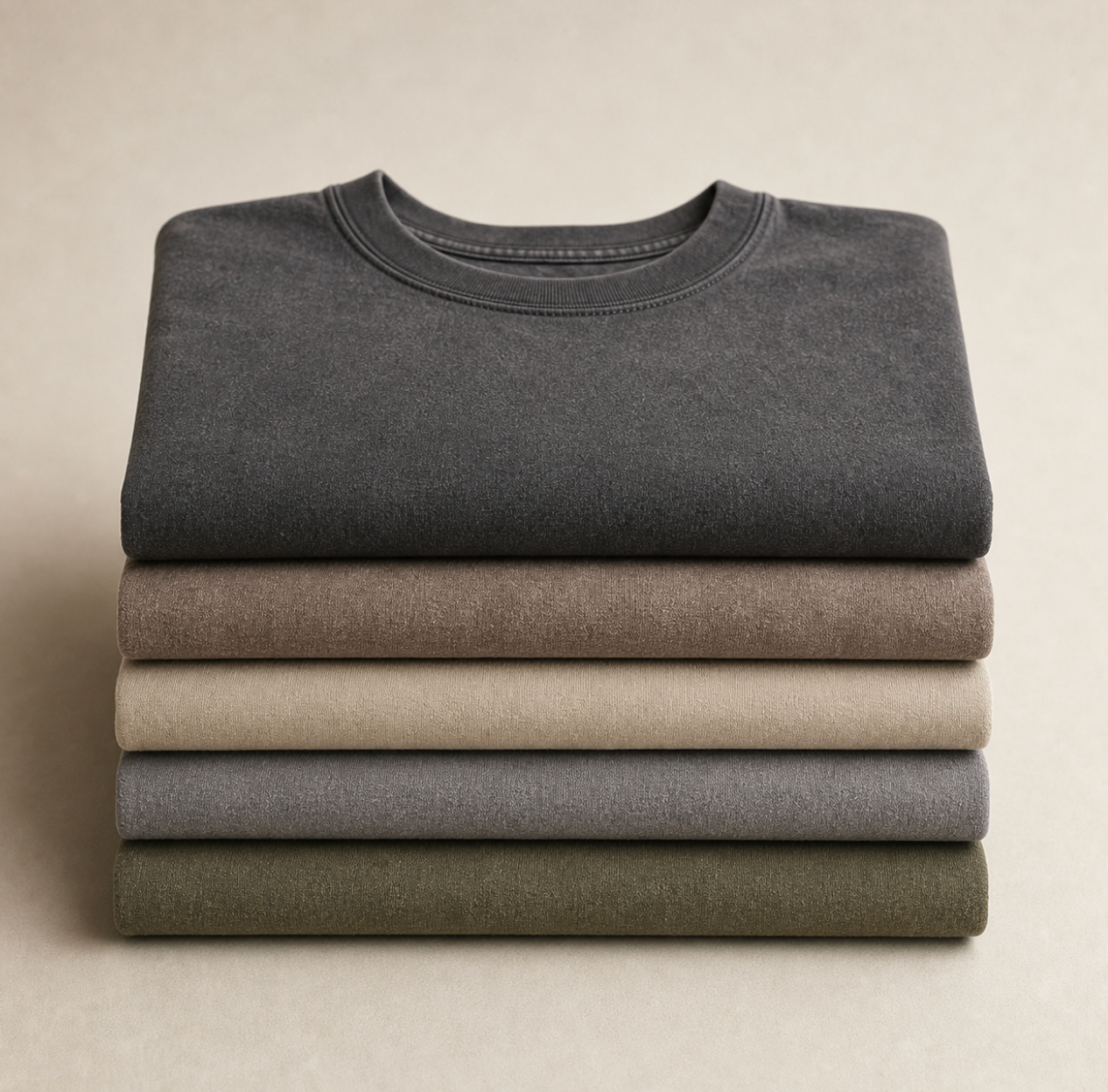
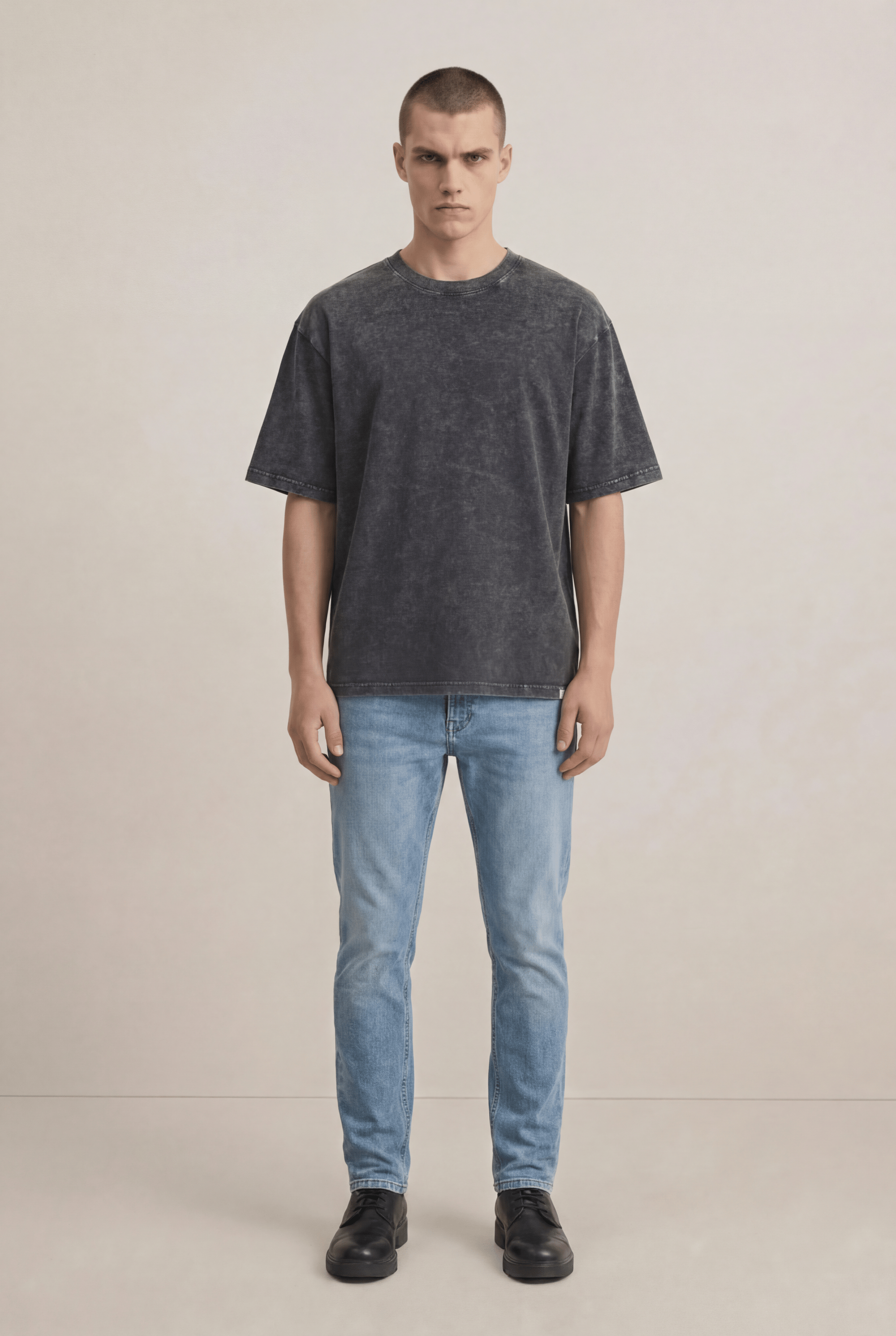
Coton délavé à la pierre
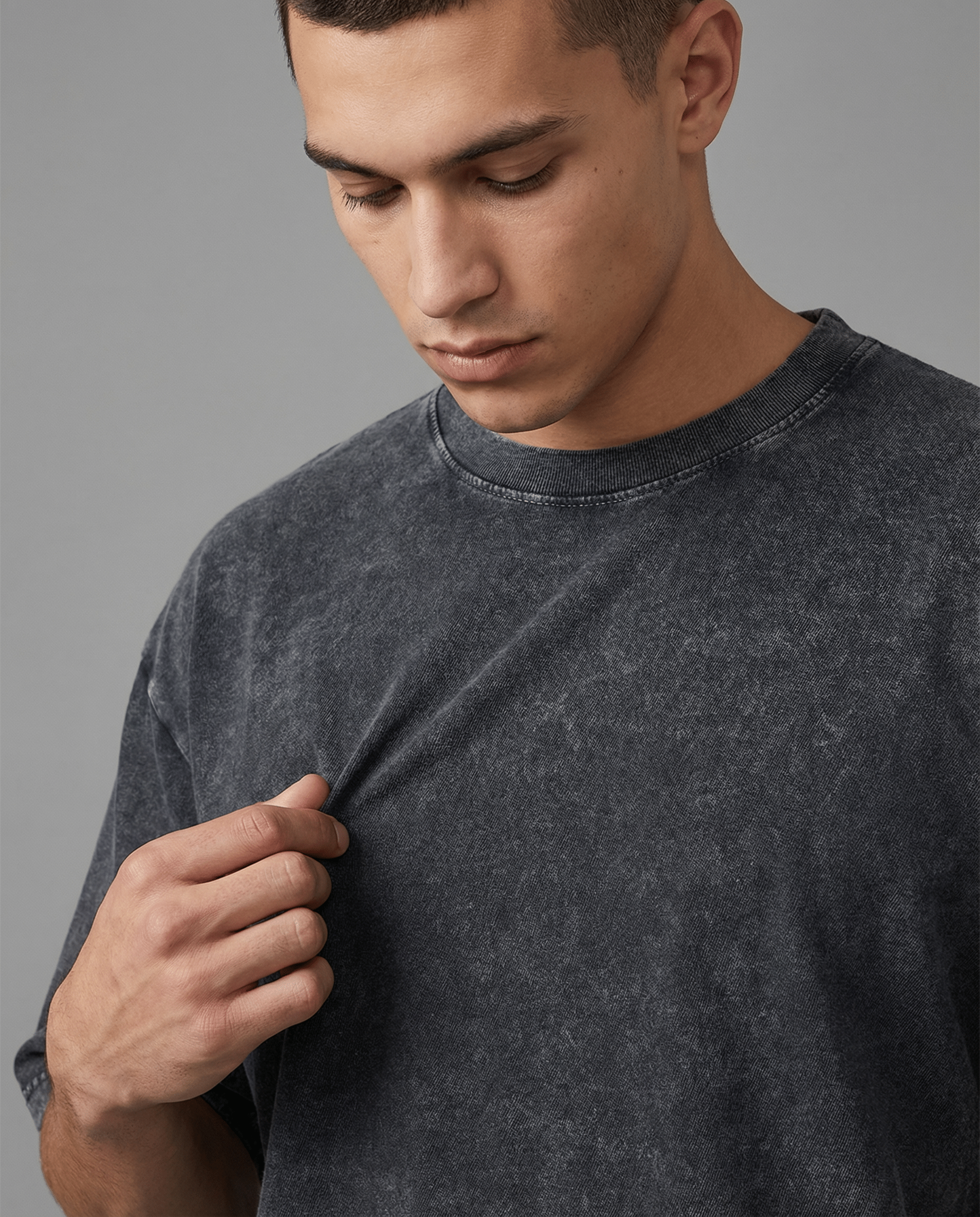
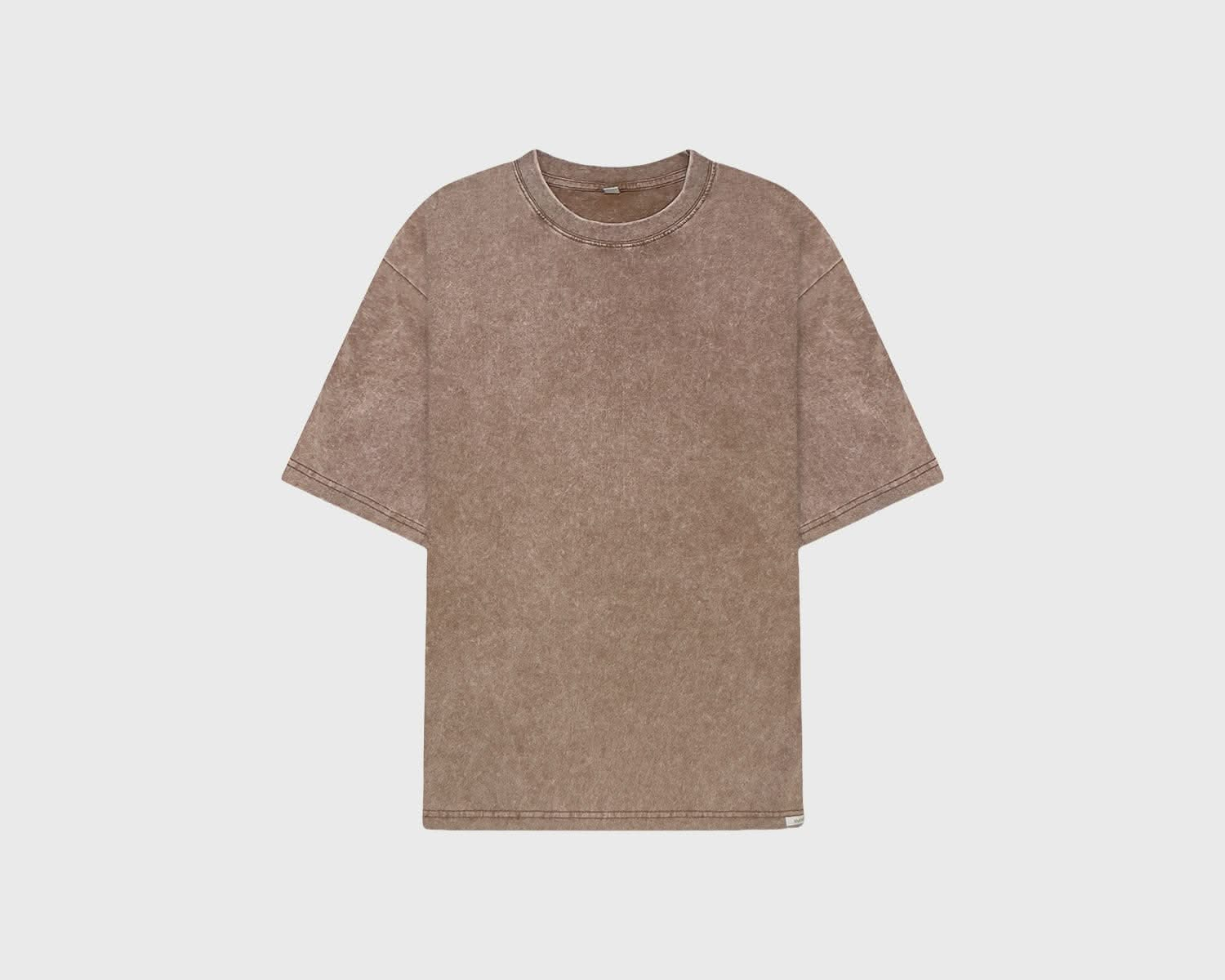
Le délavage à la pierre adoucit souvent le toucher et modifie l'aspect visuel de la surface. La chemise peut sembler usée plus tôt, mais elle peut aussi se comporter différemment d'un coton net non traité.
Les gens s'attendent souvent à ce que la douceur signifie "plus grand". Ce n'est pas le cas. Cela signifie généralement que la chemise se pose plus facilement sur le corps.
Mérinos et tricots fins
Ces tissus peuvent drapés et retrouver leur forme d'une manière qui semble indulgente. Un tricot peut épouser votre corps plus étroitement sans vous sentir à l'étroit.
C'est pourquoi la même mesure de poitrine peut sembler plus facile à porter dans un tricot que dans une chemise tissée rigide.
Lin et tissus tissés légers
Ces tissus se détendent souvent à l'usage et montrent un mouvement naturel. Certaines personnes aiment cette souplesse. D'autres la considèrent comme trop grande lorsqu'ils l'essaient pour la première fois.
La clé est de ne pas paniquer si la chemise n'a pas l'air aussi nette que le coton. C'est peut-être le tissu qui fait exactement ce qu'il est censé faire.
Adaptez la coupe à vos habitudes vestimentaires
Si vous construisez une garde-robe consciente, ne demandez pas seulement : « Quelle est ma taille ? »
Posez-vous plutôt ces questions :
- La porterai-je rentrée ou non ?
- Préférez-vous de la structure aux épaules ?
- La laverai-je et la sécherai-je à l'air libre, ou en machine ?
- Est-ce que je choisis ceci comme couche de base, comme pièce autonome ou comme surchemise ?
Ces habitudes façonnent le bon choix de taille autant que le tableau.
Pour une comparaison plus approfondie des tissus, ce guide sur les chemises en coton vs polyester pour les t-shirts de tous les jours est utile car il aborde le choix des matériaux en termes pratiques et quotidiens.
Le tissu n'est pas une information de fond. Il fait partie de l'ajustement.
Une meilleure façon d'acheter des chemises haut de gamme
Lorsque vous achetez des fibres naturelles, pensez au-delà de l'étiquette.
Utilisez d'abord le tableau. Puis ajustez vos attentes en fonction du tissu. Une chemise plus épaisse peut nécessiter un peu plus d'aisance. Un tricot fluide peut être parfait avec moins d'espace. Un coton susceptible de rétrécir mérite un plan de lavage avant de juger que la coupe est mauvaise.
Ce changement est important pour la durabilité. Si vous comprenez comment le tissu va se poser, s'adoucir et s'user, vous serez moins susceptible de retourner une bonne chemise parce qu'elle vous semble inhabituelle le premier jour.
Naviguer entre les tailles internationales et les pièges courants
Le dimensionnement régional ajoute une autre couche de confusion.
Une chemise étiquetée "medium" au Canada ou aux États-Unis peut ne pas correspondre précisément à une taille européenne. Même lorsque les tableaux de conversion sont utiles, les coupes des marques varient toujours, de sorte que l'étiquette seule ne peut pas faire tout le travail.
Pourquoi les étiquettes se décalent avec le temps
Les systèmes de taille ont une histoire derrière eux, et cette histoire n'est pas fixe.
Le dimensionnement des vêtements pour femmes au Canada s'est développé à partir de données américaines plus anciennes, où la taille 10 était autrefois considérée comme la moyenne. Plus tard, le "vanity sizing" a tellement modifié les étiquettes qu'une taille 8 moderne peut convenir à un corps qui aurait été étiqueté taille 12 avant les années 1990, reflétant une inflation d'étiquette de 20 à 30 %, selon ce résumé des données du tableau des tailles pour femmes.
C'est pourquoi les gens disent : « Je fais toujours une taille 8 », puis commandent chez une nouvelle marque et se retrouvent perplexes. Le chiffre a peut-être changé de signification.
Une référence de conversion simple
Voici un tableau de conversion général pour les tailles de chemises pour hommes basées sur le tour de poitrine. Considérez-le comme un point de départ, pas une garantie.
| Taille Alpha | US/CA (po) | Royaume-Uni (po) | Europe (cm) |
|---|---|---|---|
| TP | 32 | 32 | 42 |
| P | 34 à 36 | 34 à 36 | 44 à 46 |
| M | 38 à 40 | 38 à 40 | 48 à 50 |
| G | 42 à 44 | 42 à 44 | 52 à 54 |
| TG | 46 | 46 | 56 |
Ces gammes sont utiles lorsqu'un détaillant ne répertorie qu'un seul système régional. Elles ne remplacent pas le tableau des mesures du vêtement d'une marque.
Si vous achetez sur différents marchés, ce tableau des tailles de vêtements au Canada offre une référence pratique pour les conversions US, UK et EU, ainsi qu'un guide de mesure.
Les pièges les plus courants en matière de taille
Certaines erreurs se répètent sans cesse.
- Faire confiance à l'étiquette, pas aux mesures : « Medium » n'est pas une unité universelle.
- Ignorer les différences de coupe : Les coupes décontractées, ajustées, cintrées et amples modifient toutes le résultat.
- Négliger les notes sur le tissu : Une chemise rigide et une chemise souple n'auront pas la même sensation dans la même taille.
- Utiliser d'anciennes habitudes d'achat : La taille qui convenait il y a dix ans, dans un autre pays ou pour une autre marque peut ne plus s'appliquer.
À quoi faire confiance à la place
Fiez-vous à cet ordre de preuves :
- Vos mesures corporelles actuelles
- Le tableau des mesures du vêtement
- La description du tissu
- Les notes sur la coupe
- L'étiquette de taille
L'étiquette vient en dernier car c'est l'outil le moins spécifique du processus.
Si les achats mondiaux vous ont déjà donné l'impression que les tailles sont arbitraires, ce sentiment est compréhensible. Mais la solution n'est pas d'abandonner. C'est de s'appuyer sur des mesures, pas sur des mythes.
La philosophie d'IdyllVie en matière de coupe : un choix conscient
Une garde-robe durable ne commence pas uniquement par le tissu. Elle commence par le choix de vêtements que vous continuerez à porter.
C'est pourquoi la coupe est si importante. Une chemise peut être fabriquée de manière responsable, magnifiquement teinte et soigneusement finie, mais si la forme ne vous convient pas, vous ne la porterez pas souvent.

Des stocks pour des personnes réelles, pas des formes idéalisées
Au Canada, la demande de tailles de chemises se concentre autour des tailles courantes. Pour les marques de vêtements qui travaillent selon les standards nord-américains, la taille L représente environ 30 % des ventes de chemises, ce qui en fait la taille dominante, selon cette analyse de la répartition des tailles de commande de chemises.
Cela est important car le dimensionnement responsable ne concerne pas seulement les tableaux. Il s'agit également de reconnaître la façon dont les gens achètent et portent des vêtements.
Une philosophie de coupe façonnée par le tissu
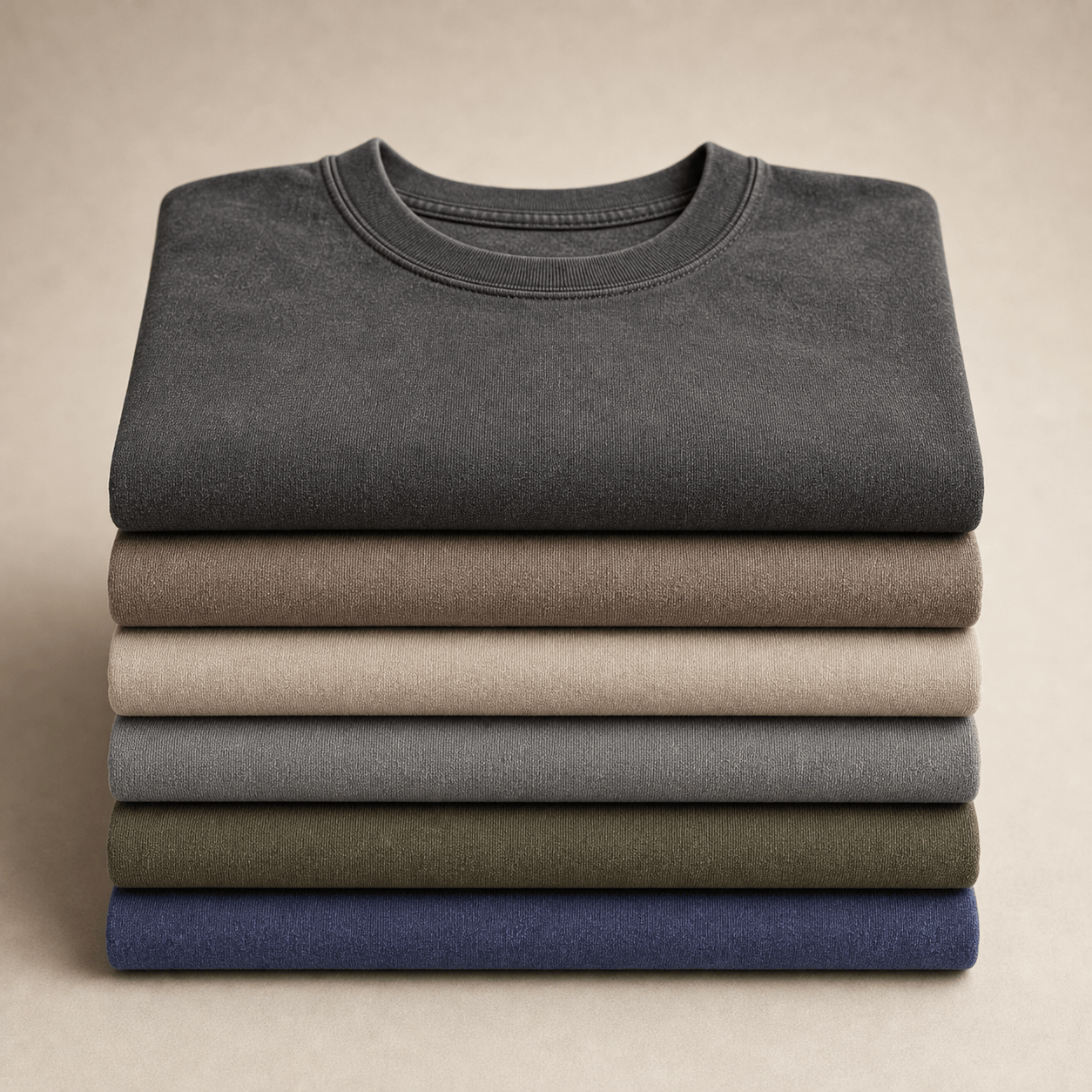
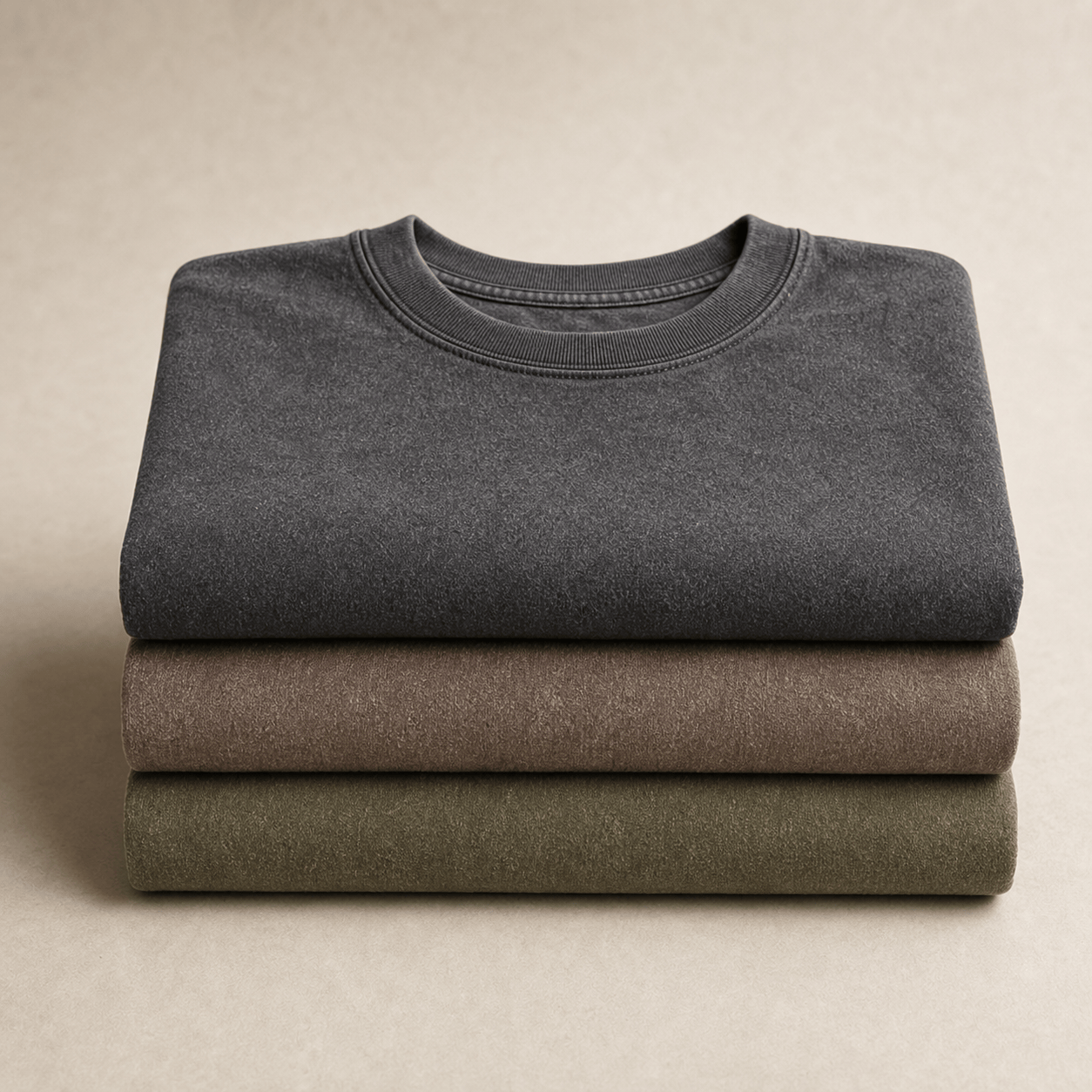
Le coton épais, les finitions délavées, les tricots et les fibres naturelles nécessitent tous un jugement légèrement différent. Un tableau des tailles bien pensé doit respecter cette réalité au lieu de prétendre que toutes les chemises se comportent de la même manière.
C'est l'une des raisons pour lesquelles de nombreux acheteurs bénéficient de la lecture des informations sur le tissu en plus des mesures du vêtement. Par exemple, les vêtements en coton biologique au Canada décrivent le contexte matériel qui peut aider un client à interpréter la coupe de manière plus réaliste avant d'acheter.
Une chemise censée être substantielle ne doit pas être jugée avec les mêmes attentes qu'un tricot fluide. Une pièce conçue pour draper ne doit pas être considérée comme trop grande parce qu'elle ne tient pas rigidement.
La bonne coupe n'est pas toujours la coupe la plus ajustée. Souvent, c'est celle qui correspond au matériau, à la coupe et à la façon dont vous vivez dans le vêtement.
Pourquoi cela contribue à une garde-robe plus durable
Un dimensionnement réfléchi contribue à la durabilité de manière très directe :
- Vous portez le vêtement plus souvent : le confort crée la fidélité.
- Vous le lavez et l'entretenez avec intention : les vêtements que vous appréciez reçoivent un meilleur traitement.
- Vous le retouchez plutôt que de l'abandonner : une chemise presque parfaite vaut la peine d'être affinée lorsque la coupe de base est bonne.
- Vous arrêtez d'acheter des remplaçants à la hâte : une chemise fiable peut remplacer plusieurs chemises décevantes.
C'est aussi là que les politiques pratiques sont importantes. Les retours sans tracas dans les 30 jours peuvent réduire la pression de « s'arranger » avec une mauvaise coupe, et ils donnent aux acheteurs la possibilité de comparer les choix de taille plus attentivement avant de se décider pour celle qu'ils garderont.
La coupe fait partie de l'artisanat
Une chemise bien faite ne crie pas. On le remarque dans la ligne d'épaule, la chute nette du torse à l'ourlet, la façon dont le tissu se pose après avoir été porté, et le fait que l'on ne passe pas la journée à l'ajuster.
C'est le standard à viser dans n'importe quelle garde-robe. Pas plus de chemises. Des chemises mieux choisies.
Foire aux questions sur le dimensionnement des chemises
Dois-je prendre une taille au-dessus si je suis entre deux tailles de chemise ?
Pas toujours.
Prenez une taille au-dessus si le tissu est structuré, si vous préférez de l'aisance au niveau de la poitrine, ou si vous prévoyez de porter des couches en dessous. Restez plus proche de votre taille habituelle si le tissu tombe souplement ou si vous souhaitez une silhouette plus nette.
Si vous n'êtes pas sûr, comparez le tableau des mesures du vêtement avec une chemise que vous portez déjà souvent. Cela vous en dira généralement plus que la taille indiquée sur l'étiquette.
Quelle est la différence entre les coupes de chemises pour hommes et pour femmes ?
Les plus grandes différences se situent généralement au niveau de la largeur des épaules, de la forme de la poitrine, du rétrécissement de la taille et de l'aisance au niveau des hanches.
De nombreuses chemises pour hommes sont coupées plus droites au niveau du torse. De nombreuses chemises pour femmes sont plus ajustées à la taille et tiennent souvent compte différemment des proportions de la poitrine et des hanches. Cela dit, les garde-robes modernes sont plus flexibles que ne le suggèrent les étiquettes. Beaucoup de gens portent des vêtements de différentes catégories en fonction de la coupe qu'ils désirent.
Le tableau et la coupe importent plus que le nom du rayon.
Un tailleur peut-il réparer une chemise mal ajustée ?
Un tailleur peut améliorer certains problèmes, mais pas tous.
Généralement plus facile à modifier :
- Longueur des manches
- Largeur du corps
- Longueur de l'ourlet
Plus difficile à bien modifier :
- Largeur des épaules
- Forme des emmanchures
- Équilibre général de la chemise
Si les épaules sont très mal ajustées, la chemise devient rarement parfaite. Commencez par la meilleure coupe possible aux épaules et à la poitrine, puis modifiez les petits détails.
Comment dois-je tailler les chemises pour enfants ?
Les vêtements pour enfants changent rapidement, de sorte que de nombreux parents se fient trop aux étiquettes d'âge. Une meilleure méthode consiste à comparer une chemise actuelle bien ajustée posée à plat avec les mesures du vêtement suivant.
Pour les enfants, le confort et la liberté de mouvement importent encore plus que la précision. Laissez une marge raisonnable pour jouer, grandir et superposer les couches, mais ne prenez pas une taille trop grande pour que les manches et les épaules ne soient pas gênantes.
Pourquoi une chemise semble-t-elle plus petite après le lavage, même si le tableau des tailles était correct ?
Les fibres naturelles peuvent se modifier après le premier lavage, surtout lorsqu'il y a de la chaleur.
C'est pourquoi les instructions de lavage sont importantes. Le séchage à l'air libre, le remodelage lorsqu'il est humide et l'évitement de la chaleur excessive peuvent préserver beaucoup mieux la coupe prévue qu'un cycle de séchage chaud.
Vaut-il mieux mesurer mon corps ou ma chemise préférée ?
Idéalement, les deux.
Mesurez votre corps pour trouver votre taille de départ. Mesurez votre chemise préférée pour comprendre votre aisance préférée. Ces deux références fonctionnent ensemble.
L'une vous indique ce qui vous va. L'autre vous dit ce qui vous convient.
Et si j'aime les chemises décontractées mais que je veux quand même avoir l'air soigné ?
Choisissez l'aisance dans le corps, mais surveillez les proportions.
Une chemise décontractée a toujours l'air raffinée lorsque la ligne d'épaule est bien ajustée, que la longueur des manches est appropriée et que la longueur de l'ourlet convient à la façon dont vous la portez. Le style décontracté doit sembler intentionnel, pas accidentel.
Les tableaux de tailles de chemises fonctionnent-ils de la même manière pour les t-shirts et les chemises boutonnées ?
Ils suivent la même logique de base, mais les vêtements se comportent différemment.
Un t-shirt dépend souvent davantage de la poitrine, des épaules, de la longueur du corps et du comportement du tissu. Une chemise boutonnée peut impliquer l'ajustement du col, l'aisance aux hanches, la tension de la patte de boutonnage et la longueur des poignets. Le tableau reste important dans les deux cas, mais les points de pression changent.
Si vous affinez votre garde-robe avec moins de pièces, mais de meilleure qualité, IdyllVie propose une éducation sur les tissus, des conseils de taille et des vêtements de tous les jours conçus avec des matériaux naturels, durables et une utilisation consciente à l'esprit.












0 commentaire