
Imaginez votre t-shirt préféré—maintenant, imaginez-le plus doux, plus durable et produit d'une manière meilleure pour l'environnement et plus agréable pour votre peau. C'est la véritable promesse des vêtements en coton biologique pour femmes.
Cela marque un tournant, passant des tendances jetables à des pièces qui ont du sens et un style durable.
Pourquoi le coton biologique redéfinit les garde-robes modernes
La conversation autour de ce que nous choisissons de porter est en train de changer. Beaucoup d'entre nous vont au-delà des styles éphémères, demandant plutôt de la qualité, du confort et de la durabilité. Le coton biologique n'est pas juste un autre matériau ; c'est une réponse directe à cet appel à une vie plus consciente.
Il incarne un mouvement vers l'élégance discrète—une philosophie d'investir dans moins de choses, mais de meilleure qualité, que vous aimerez et porterez pendant des années.
Les vêtements conventionnels sont souvent comme de la restauration rapide—rapides et peu coûteux, mais ils vous laissent rarement une sensation de bien-être à long terme. En revanche, le coton biologique bien fait est comme un repas nourrissant, de la ferme à la table. La différence est quelque chose que vous pouvez ressentir dès le premier contact.
La sensation immédiate de qualité
Lorsque vous manipulez pour la première fois un vêtement en coton biologique de première qualité, la douceur supérieure est indéniable. Ce n'est pas un accident. Les plantes de coton biologique produisent des fibres plus longues, plus résistantes et plus douces parce qu'elles sont cultivées dans un sol plus sain, exempt des produits chimiques agressifs qui peuvent affaiblir le coton conventionnel.
Cette intégrité naturelle donne un tissu qui est :
- Exceptionnellement doux : Il est doux et luxueux sur votre peau, ce qui le rend idéal pour les essentiels quotidiens.
- Très respirant : Contrairement aux matières synthétiques qui peuvent emprisonner la chaleur, le coton biologique permet à l'air de circuler, vous gardant à l'aise dans différents climats.
- Naturellement durable : Les fibres plus résistantes signifient que vos vêtements résistent au boulochage et aux déchirures, conservant leur forme et leur beauté lavage après lavage.
En choisissant le biologique, vous investissez dans un vêtement qui non seulement est plus agréable, mais qui est conçu pour durer. Cette philosophie de « acheter une fois, acheter bien » est la pierre angulaire d'une garde-robe véritablement durable et élégante.
Une feuille de route pour une garde-robe plus consciente
Ce guide est conçu comme votre feuille de route, vous aidant à passer de la simple connaissance du coton biologique à la construction confiante d'une garde-robe autour de celui-ci.
Nous explorerons tout le parcours de la graine à la chemise, décoderons les étiquettes de durabilité et vous donnerons des conseils pratiques pour identifier la vraie qualité. Notre objectif est de vous montrer comment créer une collection intemporelle de basiques en coton biologique qui reflètent à la fois votre style et vos valeurs. C'est plus que des vêtements ; il s'agit de faire des choix qui s'alignent sur un mode de vie plus réfléchi.
Du sol sain à votre chemise préférée
Lorsque nous entendons le mot « biologique », la plupart d'entre nous pensons au rayon des produits frais. Mais pour le coton, le terme décrit toute une philosophie agricole—qui commence bien avant que le premier fil ne soit filé. Choisir des vêtements en coton biologique pour femmes, c'est choisir un vêtement issu d'un système agricole plus sain et plus intentionnel.
Pensez à la différence entre l'entretien d'un petit jardin et la gestion d'une ferme industrielle. Un agriculteur de coton biologique travaille avec la terre, pas contre elle.
La base d'une agriculture saine
Tout repose sur le sol. Le processus commence par des semences non génétiquement modifiées (non-OGM), ce qui garantit la préservation de l'intégrité naturelle du coton dès le début. C'est la première étape du rejet de l'intervention artificielle.
À partir de là, l'accent est mis sur la construction d'un écosystème riche et vivant dans le sol. Au lieu de pesticides synthétiques et d'engrais chimiques, les agriculteurs biologiques utilisent des méthodes naturelles comme la rotation des cultures, le compostage et même l'introduction d'insectes bénéfiques pour gérer les parasites. Il ne s'agit pas seulement d'éviter les produits chimiques ; il s'agit de construire activement un sol sain et résilient.
Cette approche crée un système agricole qui régénère la terre au lieu de l'épuiser. Un sol sain agit comme une éponge, retenant l'humidité beaucoup plus efficacement et offrant aux plants de coton une base plus solide pour pousser.
Cette simple différence dans les pratiques agricoles a des avantages profonds qui se répercutent du champ à votre garde-robe.
D'un meilleur sol à un meilleur tissu
Les résultats de cette culture soignée se manifestent dans le tissu final. Lorsque vous portez du coton biologique, vous portez un matériau cultivé sans l'héritage de produits chimiques agressifs.
Ceci est particulièrement important pour les personnes ayant la peau sensible. Le coton conventionnel est souvent traité avec des produits chimiques pendant les phases de croissance et de transformation, ce qui peut laisser des résidus irritants. En revanche, le coton biologique est naturellement hypoallergénique et beaucoup plus doux pour la peau.
Ce guide simple montre comment faire un choix conscient est le premier pas vers la construction d'une garde-robe plus intemporelle et élégante.
 Le parcours illustre que le choix du coton biologique est le premier pas vers la création d'une collection durable d'essentiels raffinés.
L'impact environnemental et humain
Les effets positifs de l'agriculture biologique vont bien au-delà de la personne qui porte le vêtement. Ils représentent une étape significative vers une industrie de la mode plus durable.
L'un des avantages les plus cruciaux est la conservation de l'eau. Étant donné que l'agriculture biologique développe une matière organique saine dans le sol, elle améliore considérablement sa capacité à absorber et à retenir l'eau. Cela peut réduire la consommation d'eau jusqu'à 91 % par rapport au coton conventionnel, qui dépend souvent d'une irrigation intensive épuisant les ressources en eau locales.
L'élimination des pesticides et engrais synthétiques a également un impact considérable sur les personnes et la planète :
- Plus sûr pour les agriculteurs : Il protège les travailleurs agricoles et leurs familles de l'exposition à des produits chimiques toxiques liés à de graves problèmes de santé.
- Cours d'eau plus propres : Il empêche le ruissellement chimique de contaminer les rivières, les lacs et les nappes phréatiques, préservant la biodiversité et maintenant la santé des écosystèmes locaux.
- Favorise la biodiversité : En évitant les pesticides à large spectre, les fermes biologiques deviennent des refuges sûrs pour les pollinisateurs et autres animaux sauvages essentiels à un environnement équilibré.
En choisissant des vêtements en coton biologique pour femmes, vous soutenez un système qui honore à la fois la gestion de l'environnement et le bien-être humain. Pour en savoir plus sur la façon dont les marques peuvent mettre ces pratiques en œuvre, vous pouvez en apprendre davantage sur l'approvisionnement en vêtements en coton biologique au Canada et sur ce qu'il faut vraiment pour donner vie à ces vêtements. Le parcours d'une graine saine à votre chemise préférée est la preuve que la vraie qualité est ancrée dans des choix conscients et responsables.
Comment décrypter les étiquettes de durabilité
Tenter de comprendre les étiquettes sur les vêtements en coton biologique pour femmes peut sembler décrypter un code secret. Avec tous les symboles et termes différents qui existent, comment être sûre que certains ont vraiment un sens ? Heureusement, il existe deux certifications clés qui coupent court au bruit, vous donnant la confiance que vous faites un choix vraiment responsable.
Lorsque vous voyez une étiquette sur un vêtement, c'est une promesse. Mais toutes les promesses n'ont pas le même poids. Certaines certifications ne s'intéressent qu'à un seul aspect, tandis que d'autres garantissent un niveau bien plus élevé, de la ferme au vêtement fini. Connaître la différence est primordial.
GOTS vs OCS : les deux principales certifications biologiques
Les deux certifications les plus importantes que vous rencontrerez sont le Global Organic Textile Standard (GOTS) et l'Organic Content Standard (OCS). Les deux sont fiables, mais elles garantissent des choses très différentes.
Voici une façon simple d'y penser : l'OCS confirme que le moteur est biologique, tandis que le GOTS assure que la voiture entière—moteur, peinture, processus de fabrication, et même le bien-être des travailleurs qui l'ont construite—répond aux normes les plus élevées possibles. L'OCS est un bon début, mais le GOTS est la référence incontestée.
La différence fondamentale est l'étendue. L'OCS est une norme de chaîne de traçabilité qui suit le matériau biologique de la ferme au produit final. Le GOTS le fait aussi, mais il applique également des critères écologiques et sociaux stricts tout au long de la chaîne d'approvisionnement.
Décomposons ce que chacun signifie pour les vêtements de votre garde-robe.
Qu'est-ce que la norme OCS (Organic Content Standard)
L'Organic Content Standard (OCS) est un outil de vérification avec une tâche très spécifique : suivre la quantité de matière biologique dans un produit fini. Son objectif principal est de vous donner la certitude que lorsqu'une étiquette indique qu'un vêtement contient du coton biologique, cette fibre a été tracée et vérifiée de la ferme au produit final.
L'OCS se décline en deux niveaux différents :
- OCS 100 : Cette étiquette s'applique aux produits contenant 95 à 100 % de matière biologique. Elle confirme que presque tout le vêtement est fabriqué à partir de fibres biologiques certifiées.
- OCS Blended : Il est utilisé pour les produits avec 5 à 94 % de matière biologique. Le pourcentage exact sera toujours affiché sur l'étiquette.
L'OCS offre une transparence précieuse sur les matières premières, mais c'est là que sa surveillance s'arrête. Il ne réglemente pas les colorants, les produits chimiques ou l'eau utilisés dans la fabrication. Il n'a pas non plus d'exigences en matière de travail équitable ou de gestion environnementale dans l'usine. C'est une vérification solide des matériaux, mais elle ne raconte pas toute l'histoire.
GOTS vs OCS : Un guide comparatif rapide
Ce tableau présente les principales différences entre les deux certifications textiles biologiques les plus importantes pour vous aider à comprendre ce que chaque label signifie pour vos vêtements.
| Caractéristique | GOTS (Global Organic Textile Standard) | OCS (Organic Content Standard) |
|---|---|---|
| Objectif principal | Chaîne d'approvisionnement complète : environnementale et sociale | Chaîne de traçabilité : suit le contenu biologique |
| Contenu biologique | 95 %+ pour l'étiquette « biologique » ; 70 %+ pour « fabriqué avec » | 95 %+ pour « OCS 100 » ; 5 %+ pour « OCS Blended » |
| Utilisation de produits chimiques | Interdit les métaux lourds toxiques, le formaldéhyde, les OGM | Non couvert |
| Traitement de l'eau | Traitement fonctionnel obligatoire des eaux usées | Non couvert |
| Droits des travailleurs | Applique des salaires équitables, des conditions sûres, pas de travail des enfants | Non couvert |
| Portée globale | Norme holistique « de la graine à la chemise » | Vérification du contenu matériel uniquement |
Bien que les deux certifications soient précieuses, GOTS offre une image beaucoup plus complète du parcours d'un vêtement et de son impact total.
Pourquoi GOTS est la référence absolue
Le Global Organic Textile Standard (GOTS) est reconnu mondialement comme la norme de traitement la plus exigeante et la plus rigoureuse pour les textiles fabriqués à partir de fibres biologiques. Il va bien au-delà de la simple vérification du coton. Pour obtenir la certification GOTS, un produit doit satisfaire à un ensemble de critères incroyablement stricts couvrant l'ensemble du parcours, du champ à la mode.
Cette approche exhaustive et holistique est précisément la raison pour laquelle GOTS est considéré comme la référence absolue en matière de textiles durables. Il offre une véritable garantie de responsabilité environnementale et sociale.
Les exigences clés pour la certification GOTS incluent :
- Teneur minimale en matière biologique : Un vêtement doit contenir au moins 70 % de fibres biologiques certifiées pour être considéré comme portant le label GOTS « fabriqué avec du biologique ». Pour porter le label de niveau supérieur « biologique », il doit contenir un minimum de 95 %.
- Critères environnementaux stricts : Tous les intrants chimiques, des colorants aux auxiliaires de traitement, doivent respecter des normes environnementales et toxicologiques rigoureuses. Les métaux lourds dangereux, le formaldéhyde et les OGM sont totalement interdits.
- Traitement de l'eau : Chaque usine impliquée doit disposer d'une station d'épuration des eaux usées fonctionnelle pour éviter la pollution des rivières et des nappes phréatiques locales.
- Responsabilité sociale : GOTS applique des critères sociaux basés sur les principes clés de l'Organisation internationale du travail (OIT). Cela inclut la garantie de conditions de travail sûres, l'interdiction du travail des enfants et la garantie de salaires et d'heures de travail équitables pour tous.
Lorsque vous choisissez une pièce de vêtement en coton biologique pour femme certifiée GOTS, vous obtenez plus qu'un simple produit fabriqué à partir de matière biologique. Vous soutenez activement un système qui valorise l'eau propre, une production non toxique et le traitement éthique de chaque travailleur. Pour celles qui souhaitent construire une garde-robe véritablement responsable, en apprendre davantage sur les principes qui sous-tendent les vêtements durables au Canada peut offrir une compréhension encore plus approfondie.
En fin de compte, choisir GOTS signifie que vous investissez dans un produit qui s'aligne sur un engagement fort envers la santé des personnes et de la planète.
Identifier des vêtements en coton biologique de haute qualité

Choisir des vêtements en coton biologique pour femmes est un excellent point de départ, mais la certification biologique n'est que cela — un début. La véritable qualité ne se trouve pas sur l'étiquette ; elle est dans le toucher du tissu, la structure du vêtement et les petits détails qui signalent la longévité.
Apprendre à reconnaître ces marqueurs, c'est comme un chef qui connaît la différence entre un bon ingrédient et un excellent. C'est une compétence pratique qui garantit que votre investissement est rentable en termes de confort et de durabilité, créant des pièces qui vous accompagneront pendant des années, et non pas seulement une saison.
Le toucher de la fibre
Le facteur le plus important de la douceur et de la résistance d'un vêtement est la fibre de coton elle-même. Tout dépend du coton à fibres longues par rapport au coton à fibres courtes.
Imaginez que c'est comme torsader du fil. Un long morceau de fil continu se transforme en un fil lisse et solide. Des morceaux plus courts torsadés ensemble créent un fil avec des extrémités duveteuses qui dépassent, le rendant plus faible et plus susceptible de se casser. Le coton fonctionne exactement de la même manière.
- Coton à fibres longues : Ces fibres sont plus longues, plus fines et plus lisses. Lorsqu'elles sont filées, elles créent un tissu incroyablement doux, avec un éclat subtil, et qui résiste au boulochage et à l'effilochage.
- Coton à fibres courtes : Ces fibres plus courtes produisent un fil plus rugueux et moins durable. Les vêtements fabriqués à partir de coton à fibres courtes ont tendance à être rêches et à montrer des signes d'usure beaucoup plus rapidement.
Lorsque vous faites vos achats, passez toujours le tissu entre vos doigts. Une pièce de haute qualité fabriquée à partir de coton à fibres longues sera lisse, substantielle et presque soyeuse.
Un signe clé de qualité supérieure est un tissu qui devient encore plus doux à chaque lavage. C'est une caractéristique des fibres longues, qui se détendent et s'adoucissent avec le temps sans perdre leur intégrité structurelle.
Évaluer le poids et la construction du tissu
Au-delà du type de fibre, le poids et la construction du tissu sont des indicateurs de qualité essentiels. Le poids du tissu, souvent mesuré en grammes par mètre carré (GSM), vous renseigne sur sa densité et sur la façon dont il tombera. Un GSM plus élevé signifie généralement un tissu plus substantiel et durable.
Examinez attentivement les coutures. Un vêtement bien fait a des coutures petites, serrées et régulières. Vérifiez les zones soumises à de fortes contraintes comme les coutures des épaules, le col et les ourlets—elles doivent être renforcées par des coutures nettes et régulières qui reposent à plat sans aucun plissage.
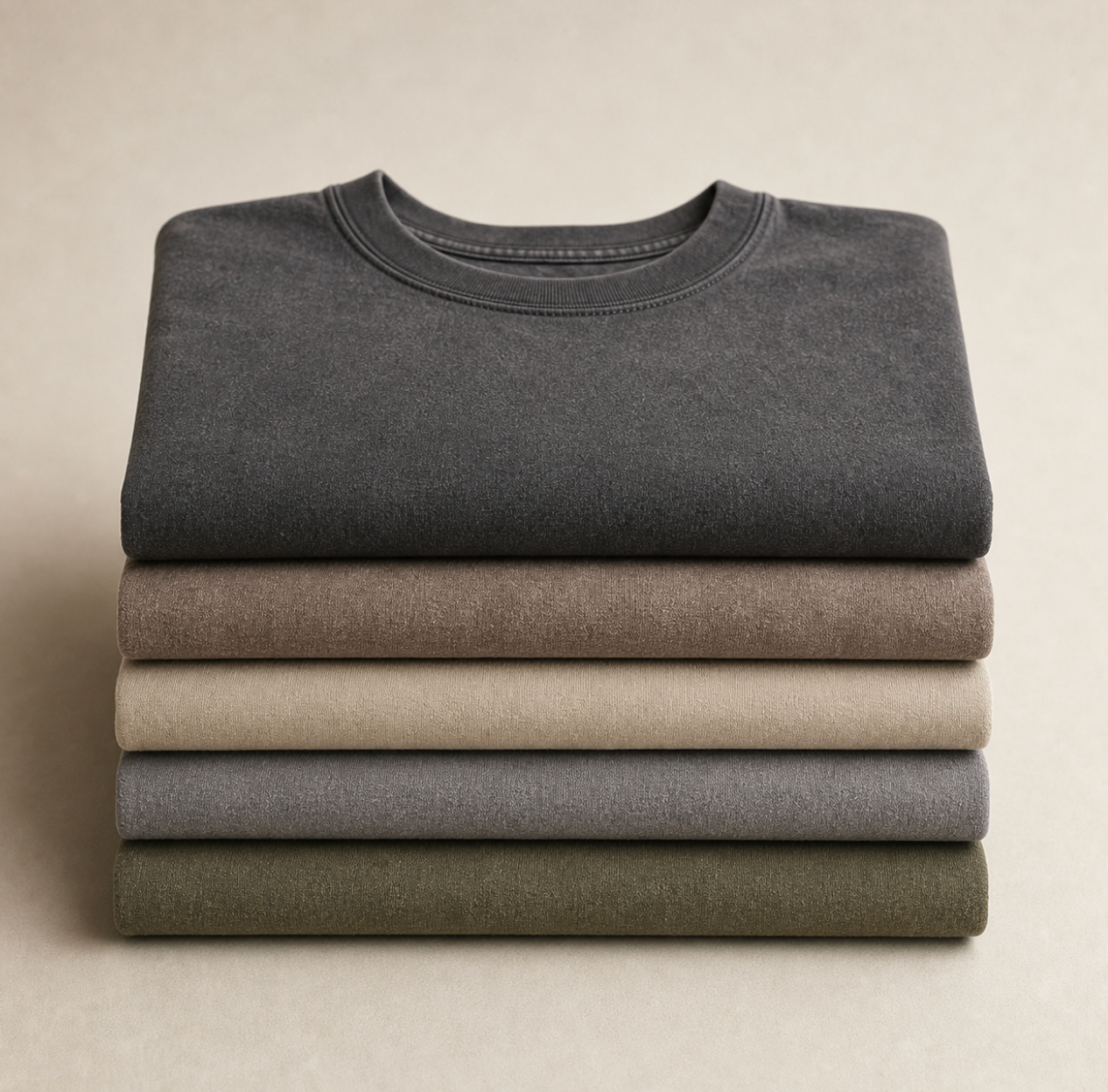
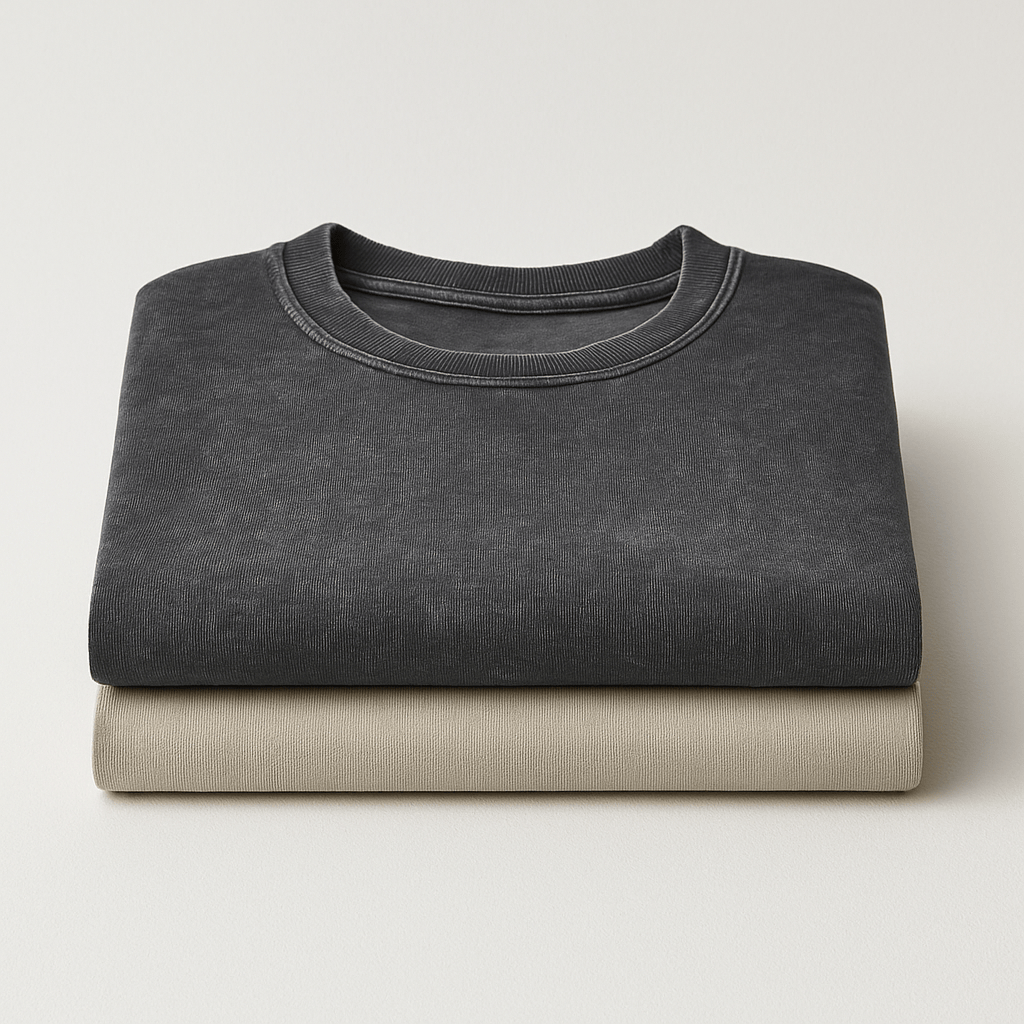
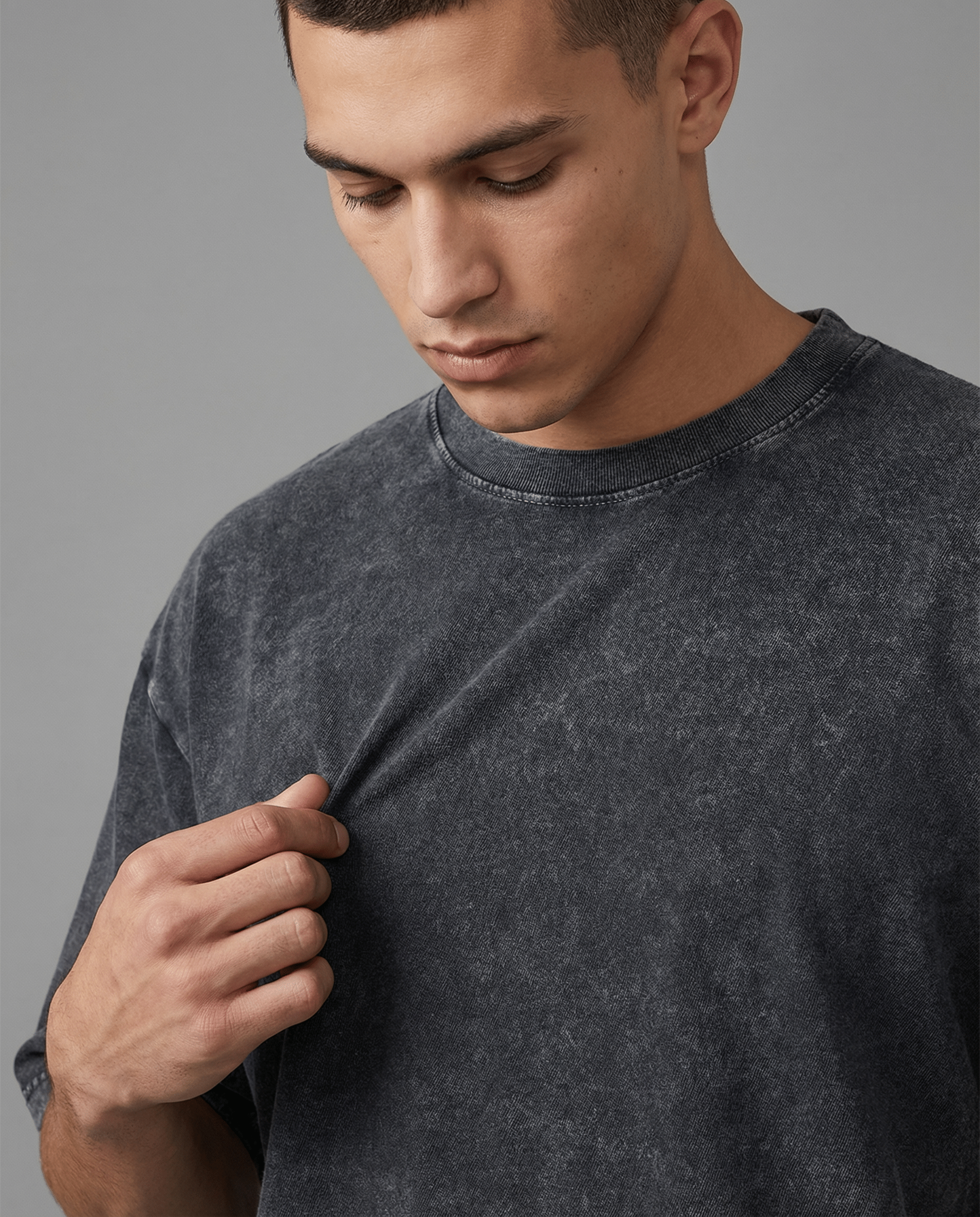
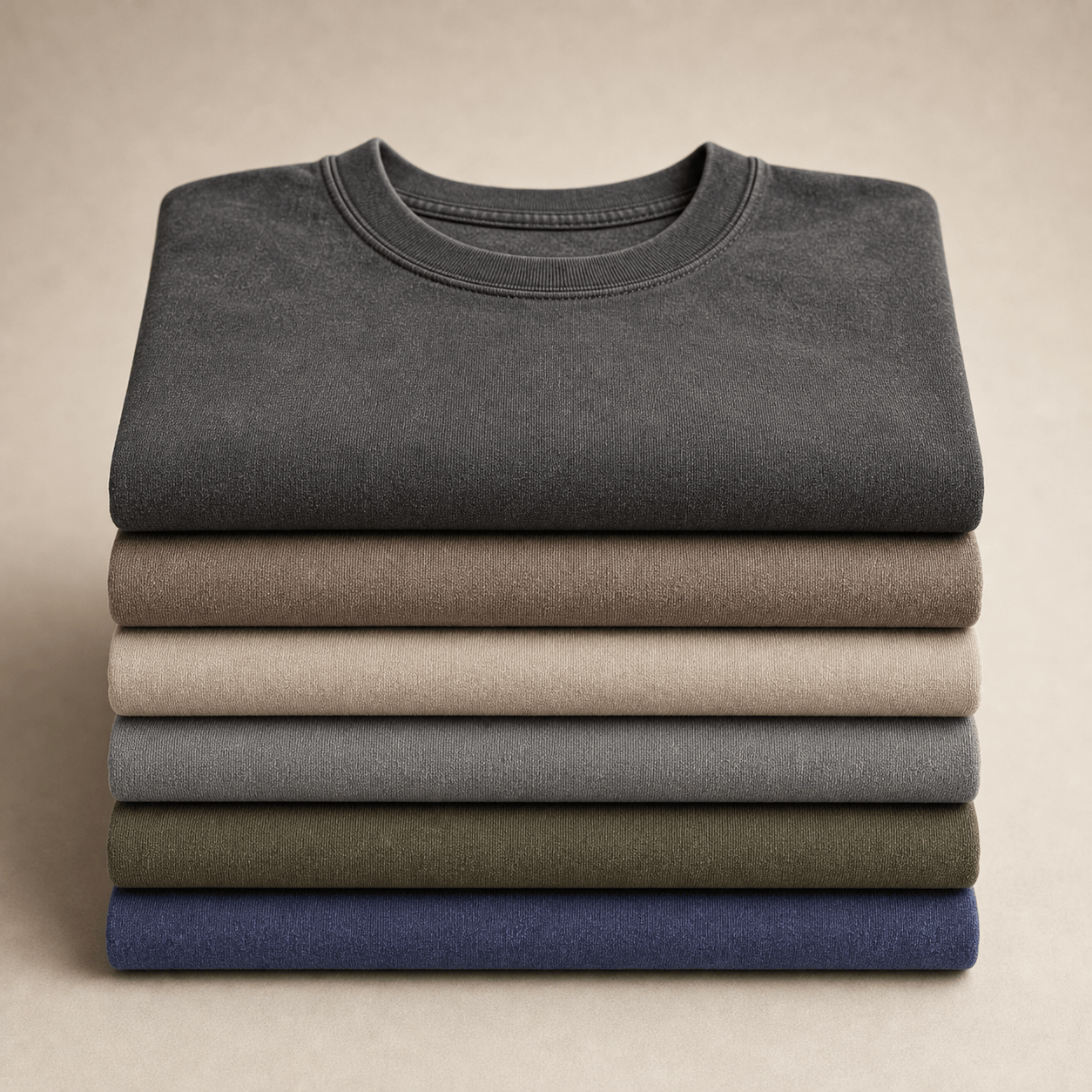
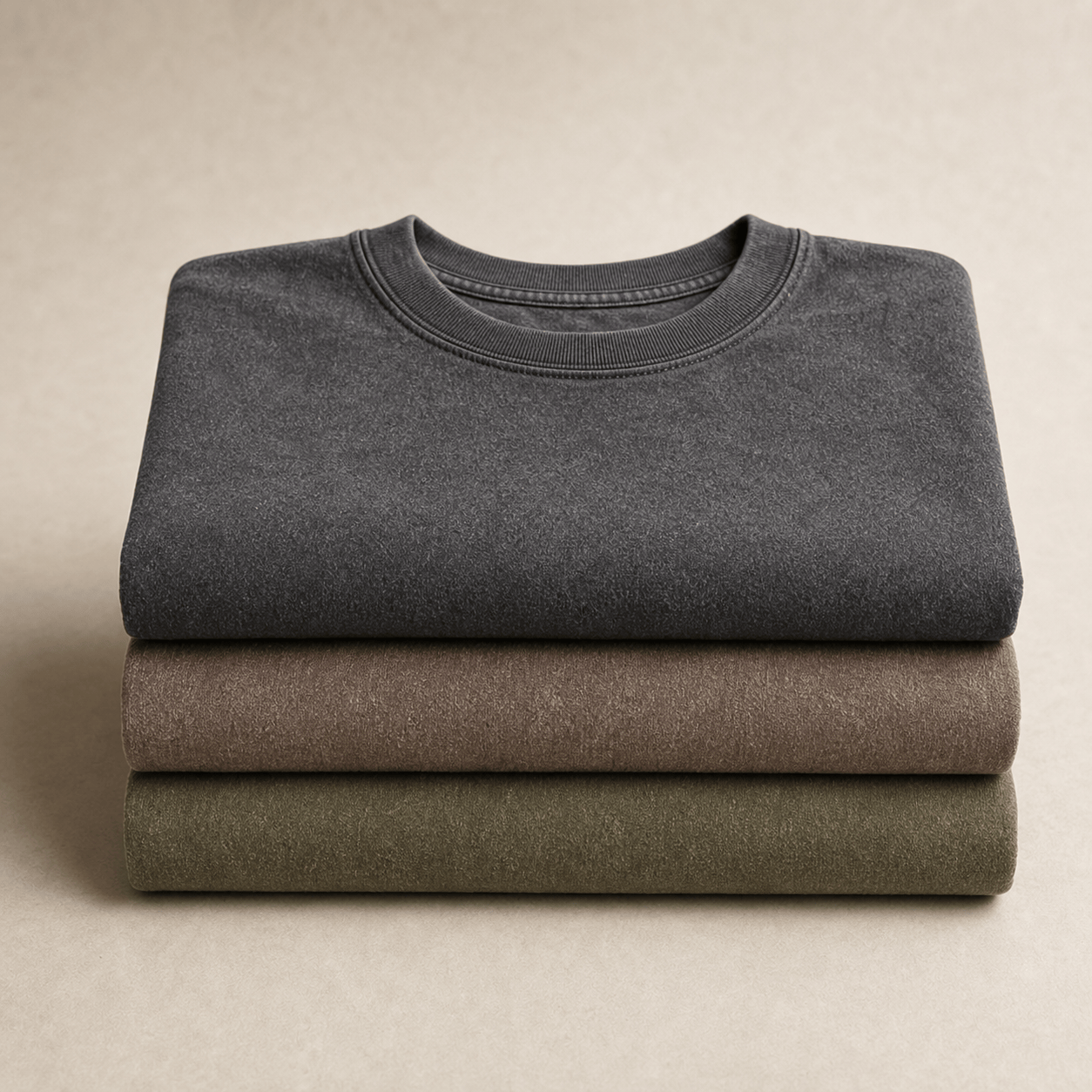
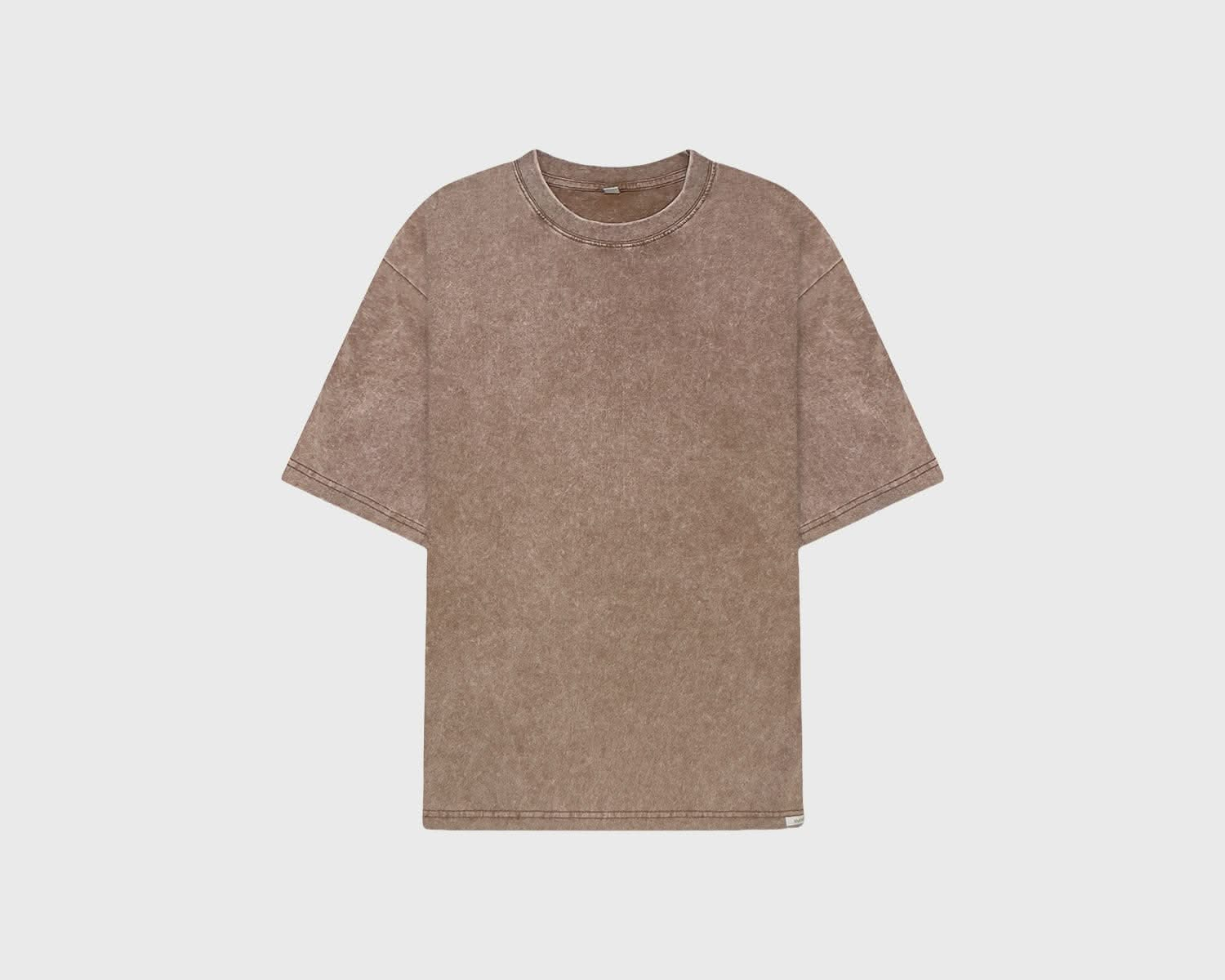
Les détails de finition révèlent également beaucoup sur la qualité d'un vêtement. Chez IdyllVie, nos t-shirts en coton biologique sont lavés à la pierre, un processus qui utilise un léger tumbling pour adoucir les fibres. Cela crée une belle sensation de « vécu » dès le premier port sans endommager la résistance naturelle du coton.
Pour voir comment ces détails s'assemblent dans un article vraiment exceptionnel, vous pouvez en apprendre davantage sur nos t-shirts en coton pré-rétréci et respirant de qualité supérieure et ce qui en fait le parfait ajustement et la sensation idéale.
En recherchant ces signes—douceur des fibres longues, un poids de tissu solide et une finition méticuleuse—vous pouvez distinguer en toute confiance un vêtement de qualité supérieure d'un vêtement standard. Cela vous assure que vous n'achetez pas seulement un autre t-shirt, mais que vous investissez dans un futur classique de votre garde-robe.
Construire une garde-robe intemporelle avec des basiques biologiques

Une fois que vous savez reconnaître la vraie qualité, vous pouvez commencer à construire une garde-robe conçue pour durer. C'est là que l'idée de « moins, mais mieux » prend tout son sens. Une garde-robe intemporelle, ce n'est pas un placard rempli de vêtements ; c'est avoir les bons vêtements—des basiques polyvalents et durables qui vous sont réellement utiles.
Toute l'approche est bâtie sur une fondation de vêtements en coton biologique de haute qualité pour femmes. Ces pièces sont les chevaux de bataille de votre garde-robe, celles que vous porterez encore et encore. Considérez-les comme la toile parfaite pour votre style personnel, prouvant que l'intemporel l'emporte toujours sur le tendance.
Le pouvoir des pièces maîtresses
Considérez votre garde-robe comme un garde-manger bien rempli. Avant d'arriver aux épices exotiques, vous avez besoin des basiques : farine, sucre, sel. En mode, vos pièces maîtresses sont votre t-shirt blanc parfait, un pull en maille douillet ou une chemise boutonnée classique.
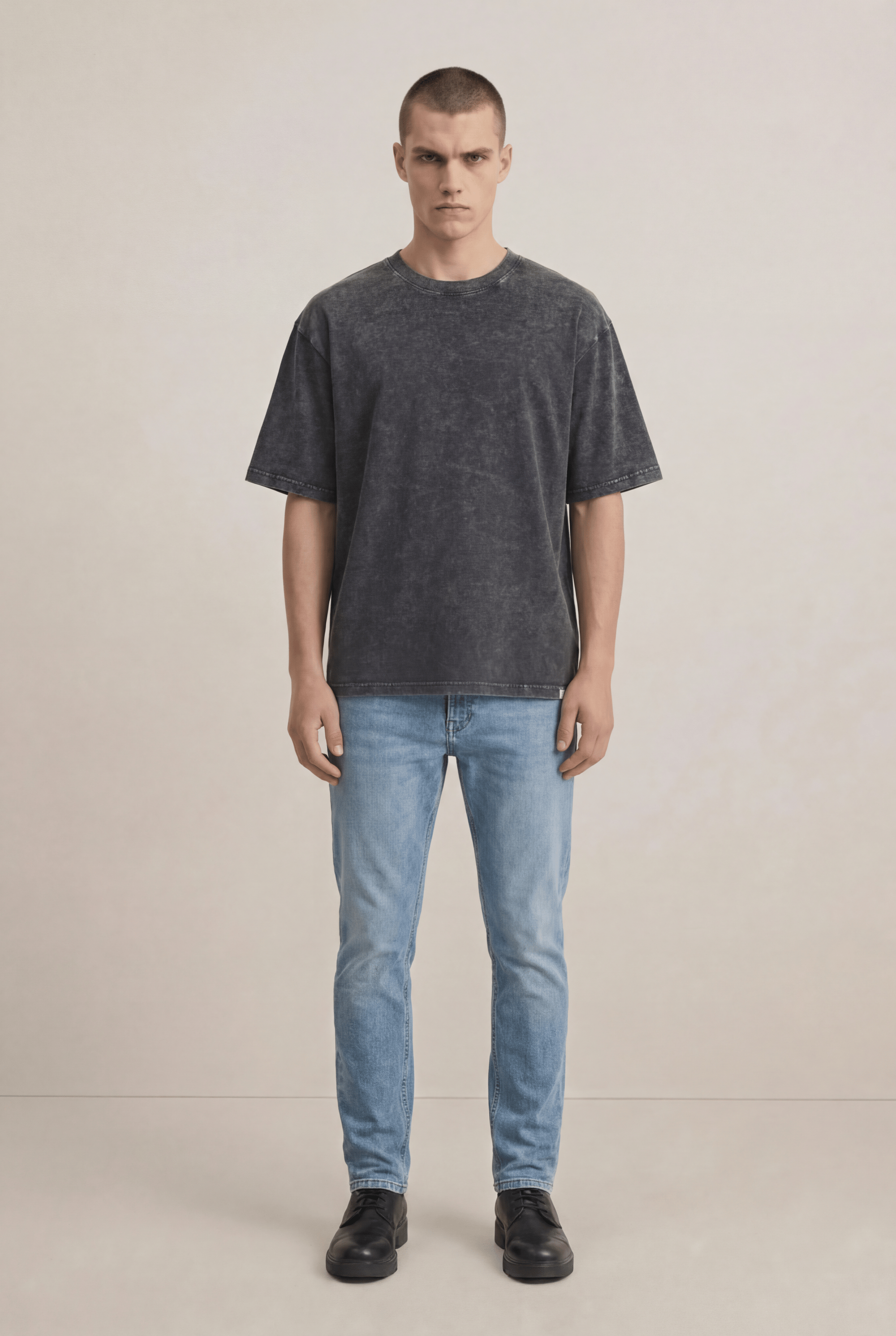
Ces pièces fondamentales, surtout lorsqu'elles sont fabriquées à partir de coton biologique de première qualité, sont les ultimes passe-partout. Elles sont conçues pour être mélangées, assorties et superposées, formant la colonne vertébrale d'un nombre incalculable de tenues. Un simple t-shirt col rond en coton biologique peut être porté avec un jean pour un week-end décontracté, puis rentré dans un pantalon ajusté pour un look de bureau chic et décontracté.
L'objectif est de posséder des pièces qui vous offrent le plus d'options de style.
Maîtriser l'élégance discrète
L'élégance discrète consiste à faire une déclaration en toute subtilité. C'est un style bâti sur des matériaux de qualité, un ajustement parfait et des silhouettes simples, loin des logos ostentatoires ou des tendances éphémères. Les basiques en coton biologique sont absolument essentiels à cette philosophie.
Le véritable secret réside dans le stylisme. Le jeu des superpositions est votre outil le plus puissant pour créer des tenues soignées et sans effort, qui sont à la fois confortables et intentionnelles.
Voici quelques façons de styliser vos basiques essentiels :
- Le T-shirt parfait : Commencez par un T-shirt en coton biologique de haute qualité. Superposez-le sous un blazer structuré pour un look instantanément adapté au bureau, ou associez-le à une jupe fluide pour une sensation plus douce et plus féminine.
- La chemise boutonnée classique : Portez-la ouverte sur un simple débardeur et un jean pour une allure décontractée. Ou bien, boutonnez-la et rentrez-la dans une jupe taille haute pour une apparence plus soignée et professionnelle.
- Le pull en tricot douillet : Drapez un pull doux en coton biologique sur vos épaules lors d'une soirée fraîche. Vous pouvez également le superposer sur une chemise à col pour un look classique et preppy qui ne se démode jamais.
Le vrai style ne consiste pas à courir après chaque nouvelle tendance. Il s'agit de savoir comment utiliser des pièces intemporelles pour créer des looks qui vous ressemblent. Ces basiques sont les piliers d'une élégance sans effort.
Construire votre collection capsule
Créer une garde-robe capsule, c'est mettre en pratique l'idée de "moins mais mieux". Il s'agit de constituer une petite collection d'articles essentiels qui peuvent être portés de manière interchangeable, vous permettant de créer une grande variété de tenues avec seulement quelques pièces clés.
Commencez par rechercher les lacunes dans votre garde-robe actuelle. Quels sont les essentiels dont vous avez constamment besoin ? Commencez avec une ou deux pièces en coton biologique de haute qualité.
Pensez à ajouter ces articles à votre collection en premier :
- Un T-shirt blanc premium : La pièce polyvalente par excellence. Recherchez une coupe flatteuse et un coton biologique doux et durable.
- Un pull en tricot bien fait : Un pull douillet dans une couleur neutre comme le camel, le gris ou le bleu marine est un essentiel toute l'année.
- Une chemise impeccable : Elle apporte instantanément de l'élégance à n'importe quelle tenue, qu'elle soit portée de manière décontractée ou pour le travail.
En vous concentrant sur ces pièces essentielles de vêtements en coton biologique pour femmes, vous construirez une garde-robe non seulement durable et élégante, mais aussi profondément personnelle. Vous investissez dans des vêtements que vous aimerez sincèrement et que vous porterez pendant des années, transformant votre placard en une source de confiance et de facilité.
Prendre soin de vos vêtements pour qu'ils durent
Investir dans des vêtements en coton biologique pour femmes de haute qualité est la première étape vers la construction d'une garde-robe durable. La seconde est un entretien approprié. La façon dont vous prenez soin de vos vêtements a un impact direct sur leur durée de vie, garantissant que vos pièces préférées restent douces, éclatantes et bien ajustées pendant des années.
Considérez cela comme une protection de l'intégrité du tissu. En adoptant quelques habitudes de lavage simples, vous préservez la qualité des fibres naturelles et alignez votre routine quotidienne sur vos objectifs de durabilité. C'est un petit effort qui rapporte beaucoup en termes de longévité.
Laver avec soin
La règle la plus importante pour l'entretien du coton biologique est d'éviter la chaleur élevée. L'eau chaude peut faire rétrécir les fibres naturelles et estomper les couleurs avec le temps. Optez toujours pour un lavage à l'eau froide.
Ce simple changement présente plusieurs avantages :
- Préserve la coupe et la couleur : L'eau froide est beaucoup plus douce pour les fibres de coton délicates, aidant les vêtements à conserver leur forme, leur taille et leur éclat d'origine.
- Économise de l'énergie : Environ 90 % de l'énergie utilisée par une machine à laver sert à chauffer l'eau. Laver à l'eau froide réduit considérablement la consommation d'énergie de votre foyer.
- Maintient la douceur : La chaleur peut rendre les fibres naturelles rigides avec le temps. Un lavage à froid aide à préserver cette texture souple et douce que vous aimez.
Pour de meilleurs résultats, retournez vos vêtements avant de les laver. Cela protège la surface extérieure de la friction et de l'apparition de bouloches. L'utilisation d'une lessive douce et écologique contribuera également à maintenir l'intégrité du tissu sans introduire de produits chimiques agressifs.
Prendre soin du coton biologique, c'est travailler avec ses propriétés naturelles, et non contre elles. Une approche douce protège votre investissement et garantit que vos vêtements restent beaux et confortables le plus longtemps possible.
Séchage et rangement pour la longévité
Tout comme pour le lavage, la clé du séchage du coton biologique est de maintenir une basse température. La chaleur intense d'un sèche-linge conventionnel est la principale cause de rétrécissement et peut affaiblir les fibres, entraînant une usure prématurée.
Dans la mesure du possible, le séchage à l'air libre est la meilleure option. C'est la méthode la plus douce, elle ne coûte rien et laisse à vos vêtements une odeur fraîche et naturelle. Si vous devez utiliser un sèche-linge, choisissez le réglage de chaleur le plus bas ou la fonction « air sec » pour minimiser le stress sur le tissu.
Un rangement approprié est la dernière pièce du puzzle. Pour les articles tricotés comme les t-shirts et les pulls, il est préférable de les plier soigneusement et de les ranger dans un tiroir ou sur une étagère. Suspendre les tricots peut les faire s'étirer avec le temps, surtout au niveau des épaules. Les articles tissés, comme les chemises boutonnées, peuvent être suspendus sur des cintres de bonne qualité qui soutiennent leur forme.
En suivant ces simples instructions d'entretien, vous devenez un participant actif dans le cycle de vie de vos vêtements. Vous vous assurez que chaque pièce de vos vêtements en coton biologique pour femmes soigneusement choisis vive une longue et belle vie, rendant votre garde-robe véritablement intemporelle.
Vos questions sur le coton biologique – nos réponses
Entrer dans le monde des vêtements en coton biologique pour femmes soulève souvent quelques questions. Lorsque vous faites un choix conscient concernant le contenu de votre garde-robe, vous souhaitez comprendre les détails pratiques, et pas seulement les avantages généraux. Cette section est là pour éclaircir les incertitudes courantes, afin que vous puissiez avoir une confiance totale en votre décision.
Notre objectif est de vous apporter des réponses claires, vous aidant à construire une garde-robe plus durable et soigneusement sélectionnée. Considérez ceci comme votre guide pour naviguer vers une mode de meilleure qualité et plus responsable.
Pourquoi les vêtements en coton biologique sont-ils souvent plus chers ?
Le prix d'un vêtement en coton biologique reflète son coût réel et honnête. Contrairement à la mode conventionnelle, où de nombreux coûts environnementaux et sociaux sont cachés, le prix d'une pièce biologique tient compte de l'ensemble du parcours éthique. Cela inclut le paiement d'un salaire équitable aux agriculteurs, le coût plus élevé de l'utilisation de méthodes de lutte antiparasitaire naturelles et le processus rigoureux et coûteux d'obtention de la certification GOTS.
Bien que l'investissement initial puisse être plus élevé, la véritable valeur apparaît avec le temps. Les pièces biologiques de haute qualité sont fabriquées avec des fibres plus solides et une meilleure construction, ce qui les rend beaucoup plus durables. Cela entraîne un coût par utilisation bien inférieur, ce qui signifie que vous remplacez les articles moins souvent et obtenez une meilleure valeur à long terme, tant pour votre portefeuille que pour la planète.
La différence de prix n'est pas une majoration ; elle est le reflet d'un travail équitable, de processus plus propres et d'un produit de meilleure qualité. Vous investissez dans tout le parcours éthique d'un vêtement, d'un sol sain à votre dressing.
Mes vêtements en coton biologique vont-ils rétrécir ?
Comme tout article fabriqué à partir de fibres naturelles, le coton biologique peut rétrécir si vous l'exposez à une chaleur élevée. Mais une marque responsable anticipe cela. Beaucoup, y compris IdyllVie, prélavent ou prérétrécissent leurs tissus pour s'assurer que la coupe que vous achetez est celle que vous conservez.
La meilleure façon de prévenir le rétrécissement est de suivre les instructions d'entretien figurant sur l'étiquette. En règle d'or :
- Lavez toujours à l'eau froide. C'est le moyen le plus efficace de protéger les fibres.
- Évitez la chaleur élevée au sèche-linge. Faites sécher vos vêtements à l'air libre chaque fois que vous le pouvez, ou utilisez le réglage de chaleur le plus bas ou le réglage "air sec" de votre machine.
Suivre ces conseils simples vous aidera à conserver de manière fiable la coupe et la forme originales de vos vêtements en coton biologique pendant des années.
Choisir le coton biologique fait-il réellement une différence ?
Oui, votre choix a un impact positif significatif et mesurable. Le coton conventionnel est l'une des cultures les plus gourmandes en eau et en produits chimiques de la planète. L'agriculture biologique, en revanche, construit un sol sain qui retient naturellement l'humidité, ce qui peut réduire la consommation d'eau jusqu'à 91 %.
Choisir le biologique élimine également les pesticides et les engrais synthétiques nocifs. Cela protège directement la santé des agriculteurs et de leurs communautés, empêche le ruissellement des produits chimiques de polluer nos cours d'eau et permet à la biodiversité de prospérer sur et autour des fermes. Chaque pièce de coton biologique que vous choisissez contribue à un écosystème plus sain.
Comment puis-je vérifier les allégations de durabilité d'une marque ?
Pour dépasser les slogans marketing, vous devez demander des précisions. Une marque véritablement durable sera transparente et fière de partager les détails de son processus.
Commencez par demander si leurs produits sont certifiés GOTS, car c'est la norme la plus complète couvrant à la fois la responsabilité environnementale et sociale. Renseignez-vous sur leur chaîne d'approvisionnement : peuvent-ils vous dire où le coton est cultivé et où les vêtements sont fabriqués ? Une marque véritablement engagée aura des réponses claires et un lien authentique avec l'ensemble de son parcours de production.
Prête à découvrir la différence des essentiels conçus avec soin ? Chez IdyllVie, nous construisons nos collections sur une base de coton biologique certifié GOTS, un savoir-faire supérieur et un design intemporel. Explorez notre collection de basiques premium et découvrez des pièces conçues pour être vécues et aimées pendant des années.
Découvrez la collection IdyllVie aujourd'hui.
Amélioré par Outrank












0 commentaire