
Promenez-vous dans n'importe quelle rue canadienne et vous remarquerez un changement dans nos garde-robes. Les vêtements en coton biologique au Canada passent d'un intérêt de niche à un choix conscient et quotidien. C'est un mouvement qui fait autant de bien à votre peau qu'à la planète, et il ne fait que se renforcer.
Pourquoi le coton biologique est plus qu'une simple tendance

Au fond, la différence entre le coton biologique et le coton conventionnel est profonde. Pensez-y comme au contraste entre une petite ferme locale et biodiverse et une opération industrielle massive. L'une travaille en harmonie avec la nature ; l'autre essaie de la contrôler avec une lourde main d'intrants chimiques.
Le coton conventionnel est l'une des cultures les plus gourmandes en eau et les plus dépendantes chimiquement au monde. Il repose sur des pesticides et des engrais synthétiques qui dégradent la santé des sols, contaminent les systèmes d'eau et privent les terres de leur biodiversité naturelle.
Le coton biologique, en revanche, est cultivé à l'aide de méthodes qui construisent et maintiennent la fertilité des sols. Il protège la biodiversité et évite complètement l'utilisation de produits chimiques toxiques et persistants. Cet engagement envers un écosystème plus sain est l'une des principales raisons pour lesquelles tant de Canadiens font ce changement.
Ce n'est pas seulement une sensation, c'est un changement mesurable du marché. Le marché des tissus durables au Canada, où le coton biologique est un acteur majeur, connaît une croissance significative. Évalué à 3,47 milliards de dollars en 2024, le secteur devrait atteindre 11,15 milliards de dollars d'ici 2035, les tissus biologiques détenant la plus grande part de marché.
De la ferme à votre garde-robe
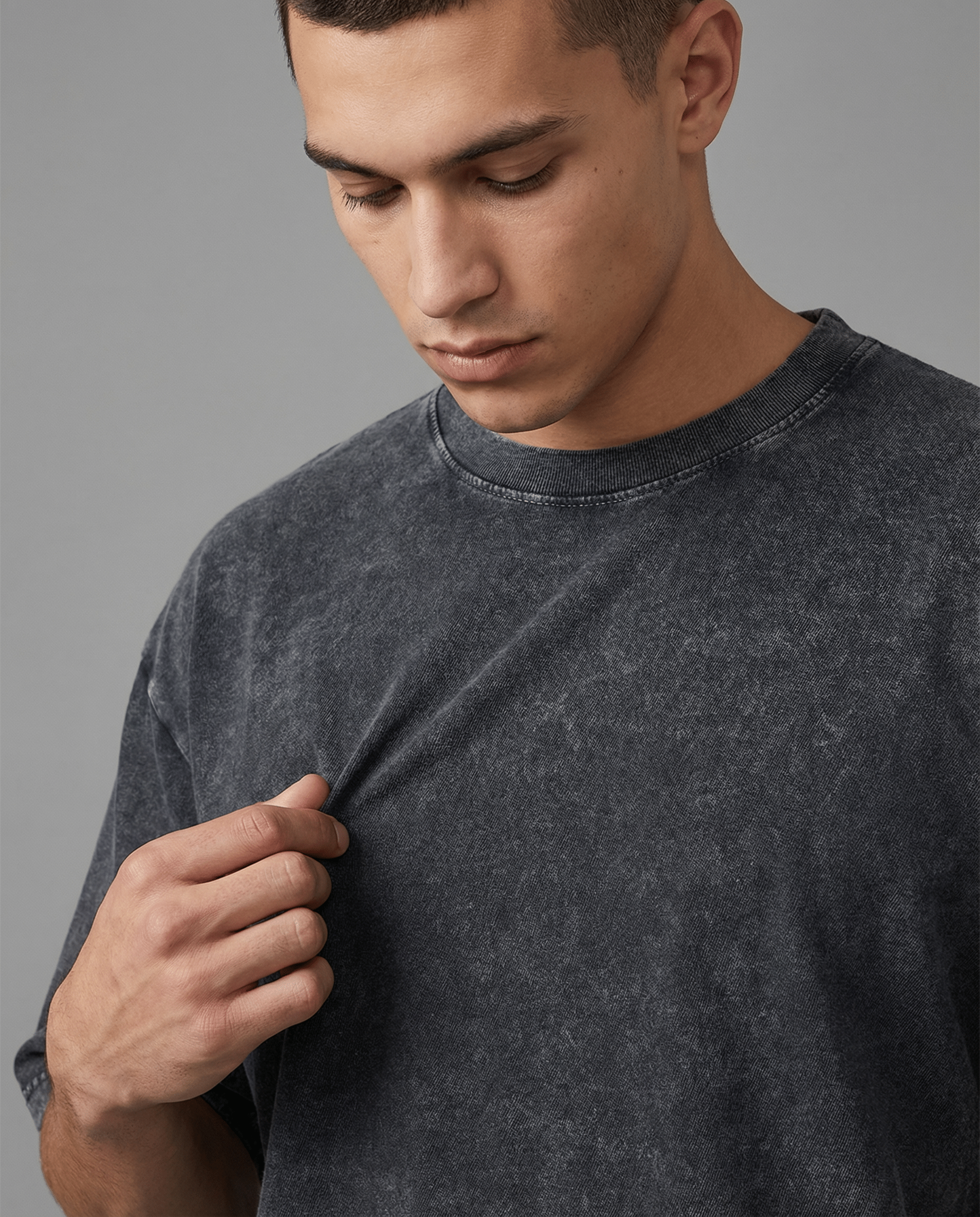
Les avantages ne s'arrêtent pas à la porte de la ferme. Pour vous, la personne qui porte les vêtements, le coton biologique offre une différence tangible. Parce qu'il est cultivé sans produits chimiques agressifs et traité plus en douceur, le tissu final est souvent sensiblement plus doux, plus respirant et beaucoup plus doux pour les peaux sensibles. Cela en fait un choix idéal pour tout, de votre t-shirt préféré aux essentiels douillets pour votre famille.
Choisir le biologique est un investissement dans une planète plus saine et une garde-robe plus confortable et de meilleure qualité. Il s'agit d'aligner vos valeurs personnelles sur vos décisions d'achat, un vêtement soigneusement fabriqué à la fois.
En tant que marque canadienne, IdyllVie est profondément enracinée dans ce mouvement. Nous pensons que le vrai luxe se trouve dans la qualité, le confort et le design responsable. C'est pourquoi nous utilisons exclusivement du coton biologique de première qualité dans nos collections, garantissant que chaque pièce répond à nos normes élevées de durabilité et de style intemporel. Notre dévouement aux vêtements durables au Canada est tissé dans tout ce que nous faisons, de l'approvisionnement de nos matériaux à nos emballages compostables.
Ce guide est conçu pour vous donner les connaissances pratiques pour naviguer dans le monde du coton biologique en toute confiance. Nous détaillerons les certifications, expliquerons l'impact réel de vos choix et vous montrerons comment repérer la qualité qui dure, afin que vous puissiez construire une garde-robe dont vous vous sentez vraiment bien.
Comment lire les étiquettes de vêtements comme un expert
En traversant un magasin, vous êtes confronté à un mur d'étiquettes et d'acronymes. Des termes comme « GOTS », « USDA Organic » et « OEKO-TEX » peuvent sembler être un langage privé, mais les comprendre est la clé pour savoir exactement ce que vous achetez.
Considérez ces certifications comme des guides indépendants et fiables. Elles vérifient les affirmations d'une marque concernant ses vêtements en coton biologique, de sorte que vous n'avez pas à vous fier uniquement au marketing. Savoir ce que chacune garantit fait de vous un acheteur confiant qui peut faire des choix qui correspondent à vos valeurs.
La norme d'or : GOTS Certified Organic
Si vous ne voyez qu'une seule certification sur un vêtement en coton biologique, espérez celle-ci. Le Global Organic Textile Standard (GOTS) est la norme d'or « de la ferme à la garde-robe » pour une raison. C'est la certification la plus complète et la plus exigeante pour les fibres biologiques.
Imaginez un passeport produit. Pour qu'un t-shirt certifié GOTS vous parvienne, ce passeport doit être tamponné à chaque étape de son parcours. Cela garantit l'intégrité du début à la fin.
- Agriculture : Le coton doit être cultivé biologiquement — pas d'OGM, de pesticides toxiques ou d'engrais synthétiques.
- Transformation : Tous les colorants et produits chimiques doivent répondre à des critères environnementaux et toxicologiques stricts. Les colorants contenant des métaux lourds, par exemple, sont interdits.
- Fabrication : Les usines doivent suivre des pratiques de travail équitables basées sur les principes de l'Organisation internationale du travail, garantissant des conditions de travail sûres et des salaires équitables.
- Le produit final : Pour porter l'étiquette « GOTS Organic », un vêtement doit contenir au moins 95 % de fibres biologiques certifiées.
Cette approche holistique signifie que GOTS audite l'ensemble de la chaîne d'approvisionnement, et pas seulement le produit final. Lorsque vous voyez le logo GOTS, vous pouvez être sûr que le vêtement est respectueux de l'environnement et socialement responsable, de la graine à l'étagère.
Comprendre les autres étiquettes courantes
Bien que GOTS soit la certification la plus complète, vous verrez d'autres certifications précieuses. Savoir ce qu'elles couvrent vous aide à reconstituer l'histoire complète d'un vêtement, car chacune se concentre sur une partie différente du processus de production.
USDA Organic Cette étiquette concerne la matière première. Si vous voyez le sceau USDA Organic sur un produit textile, il certifie que la fibre de coton elle-même a été cultivée selon les mêmes normes strictes d'agriculture biologique que celles utilisées pour l'alimentation. Cependant, cela ne couvre pas ce qui se passe après la récolte. Les étapes de transformation, de teinture et de fabrication sont en dehors de son champ d'application.
OEKO-TEX STANDARD 100 Il s'agit d'une étiquette populaire entièrement axée sur la sécurité des produits. Considérez-la comme un point de contrôle final de la sécurité pour le vêtement fini. OEKO-TEX teste l'article pour une longue liste de substances nocives, y compris les résidus de pesticides, les métaux lourds et le formaldéhyde.
Si un article textile porte l'étiquette STANDARD 100, vous pouvez être certain que chaque composant de cet article, c'est-à-dire chaque fil, bouton et autre accessoire, a été testé pour les substances nocives et que l'article est donc inoffensif pour la santé humaine.
C'est une excellente certification pour garantir que les vêtements que vous portez sont sans danger pour votre peau. Cependant, elle ne garantit pas que les fibres ont été cultivées biologiquement ou que la fabrication était durable ou éthique. Un vêtement peut être certifié OEKO-TEX sans être biologique du tout.
Pour les acheteurs au Canada, la compréhension de ces étiquettes est cruciale pour faire des choix éclairés. Un produit peut être fabriqué avec du coton biologique de l'USDA mais ne pas avoir la certification GOTS pour son traitement, ou il pourrait être certifié OEKO-TEX pour la sécurité mais être fabriqué à partir de coton conventionnel. Pour clarifier, voici une comparaison rapide des principales certifications que vous trouverez.
Un guide de l'acheteur pour les certifications textiles au Canada
| Certification | Ce qu'elle couvre | Garantie clé pour vous |
|---|---|---|
| GOTS | L'ensemble de la chaîne d'approvisionnement : agriculture biologique, traitement non toxique, fabrication éthique et composition du produit final. | Le vêtement est véritablement biologique, respectueux de l'environnement et socialement responsable, de la ferme à la garde-robe. |
| USDA Organic | Uniquement la fibre brute. Elle certifie que le coton a été cultivé selon les normes d'agriculture biologique. | Le coton brut utilisé dans le vêtement a été cultivé biologiquement, mais aucune déclaration n'est faite concernant le traitement ou la fabrication. |
| OEKO-TEX STANDARD 100 | Uniquement le produit fini. Il teste chaque composant pour plus de 100 substances nocives. | Le vêtement final est sans danger pour votre peau et exempt d'une longue liste de produits chimiques toxiques. |
Reconnaître GOTS comme la norme englobante pour les vêtements en coton biologique au Canada vous permet de magasiner en toute clarté. C'est le moyen le plus direct de s'assurer que les vêtements que vous achetez sont meilleurs pour la planète et les personnes qui les fabriquent.
Le véritable impact du choix du coton biologique
Que se passe-t-il réellement lorsque vous choisissez un t-shirt en coton biologique plutôt qu'un t-shirt conventionnel ? La décision va bien au-delà de votre garde-robe. C'est un choix qui a des impacts tangibles sur la planète, les personnes qui cultivent la fibre et même la façon dont le tissu se sent contre votre peau.
La différence la plus significative commence dans le sol. La culture conventionnelle du coton est notoirement exigeante, s'appuyant souvent sur un lourd cocktail de produits chimiques de synthèse. Cette approche épuise le sol, nécessite d'énormes quantités d'eau et pollue les écosystèmes locaux lorsque les pesticides s'écoulent dans les cours d'eau.
La culture du coton biologique adopte une approche complètement différente et régénératrice. En éliminant les pesticides et les engrais synthétiques, les agriculteurs travaillent avec la nature au lieu de la combattre. Cela favorise un sol sain et vivant qui retient l'eau beaucoup plus efficacement et peut même séquestrer le carbone de l'atmosphère.
Une planète plus saine et des communautés plus sûres
Les avantages de ce changement sont massifs. La production de coton biologique peut réduire la consommation d'eau jusqu'à 91 % par rapport aux méthodes conventionnelles. C'est parce qu'un sol sain agit comme une éponge naturelle, retenant l'humidité et réduisant le besoin d'irrigation intensive – un avantage essentiel à mesure que la pénurie d'eau devient un problème mondial plus pressant.
En évitant les produits chimiques toxiques, l'agriculture biologique protège également la faune et les sources d'eau de la pollution. Cela crée un environnement plus sûr et plus sain pour l'ensemble de l'écosystème et, tout aussi important, pour les communautés agricoles elles-mêmes.
Choisir le coton biologique est un vote direct pour une eau plus propre, un sol plus sain et un écosystème plus équilibré. C'est une action simple qui contribue à une solution mondiale beaucoup plus vaste pour une agriculture durable.
Cet élément humain est une partie cruciale de l'histoire. Les cultivateurs de coton conventionnels sont souvent exposés à des produits chimiques dangereux liés à de graves problèmes de santé. L'agriculture biologique offre une alternative plus sûre, éliminant cette exposition directe et favorisant de meilleures conditions de travail. Elle libère également les agriculteurs des coûts élevés des intrants chimiques, les reliant à un marché haut de gamme croissant et offrant une plus grande stabilité économique.
C'est pourquoi la demande de vêtements en coton biologique au Canada croît si rapidement. En fait, le marché nord-américain devrait connaître la croissance mondiale la plus rapide du coton biologique, avec un TCAC prévu de plus de 6 % jusqu'en 2033. À mesure que les grandes marques s'engagent à utiliser davantage de fibres biologiques, elles contribuent à améliorer la qualité de l'air, à promouvoir la durabilité des sols et à soutenir les moyens de subsistance des agriculteurs. Vous pouvez explorer plus de données sur ces tendances sur le site Web de Spherical Insights.
Les avantages personnels du passage au biologique
Alors que les impacts environnementaux et sociaux sont profonds, les avantages vous reviennent également. La différence est quelque chose que vous pouvez réellement ressentir dans le vêtement final.
- Douceur supérieure : Les fibres de coton biologique sont souvent plus longues et plus résistantes car elles n'ont pas été affaiblies par un traitement chimique agressif. Il en résulte un tissu sensiblement plus doux et plus durable.
- Respirabilité accrue : Sans les résidus chimiques qui peuvent obstruer le tissage d'un tissu, le coton biologique offre une meilleure circulation de l'air, vous gardant plus frais et plus confortable.
- Qualités hypoallergéniques : Pour toute personne ayant la peau sensible ou des allergies, le coton biologique est un gagnant incontestable. Il est naturellement exempt de résidus irritants – comme le formaldéhyde et les métaux lourds – souvent trouvés dans les textiles conventionnels.
Ce tableau présente les certifications les plus importantes à rechercher lorsque vous achetez de véritables vêtements en coton biologique.

La hiérarchie montre que GOTS est la norme la plus complète, couvrant l'ensemble de la chaîne d'approvisionnement, tandis que d'autres se concentrent sur des étapes spécifiques comme l'agriculture (USDA Organic) ou la sécurité du produit final (OEKO-TEX).
En fin de compte, choisir le biologique signifie que vous portez un tissu plus propre et fabriqué dans le respect des personnes et de la planète. Pour approfondir les détails, vous pourriez être intéressé par notre guide complet sur les vêtements en coton biologique au Canada, qui couvre l'ensemble du parcours de la fibre au tissu.
Reconnaître une qualité qui dure toute une vie

Choisir du coton biologique n'est pas seulement un choix éthique ; c'est un investissement dans une qualité conçue pour durer. À l'ère de la fast fashion conçue pour se désintégrer, apprendre à repérer un vêtement bien fait est une compétence puissante. C'est ce qui vous permet de construire une garde-robe durable, de réduire les déchets et de vous faire économiser de l'argent à long terme.
Pensez-y comme à l'inspection d'une belle pièce de menuiserie. Un artisan recherche des joints serrés et une finition lisse, et vous pouvez apprendre à rechercher des signes similaires de qualité dans les vêtements. En entraînant vos yeux et vos mains, vous apprendrez rapidement à distinguer une pièce qui durera des années d'une autre destinée à la décharge après seulement quelques lavages.
Juger du poids et du toucher du tissu
Le premier véritable indicateur de qualité est le tissu lui-même. Le coton biologique est disponible en différents poids, et comprendre ce qu'ils signifient est essentiel. Le poids du tissu est mesuré en grammes par mètre carré (GSM).
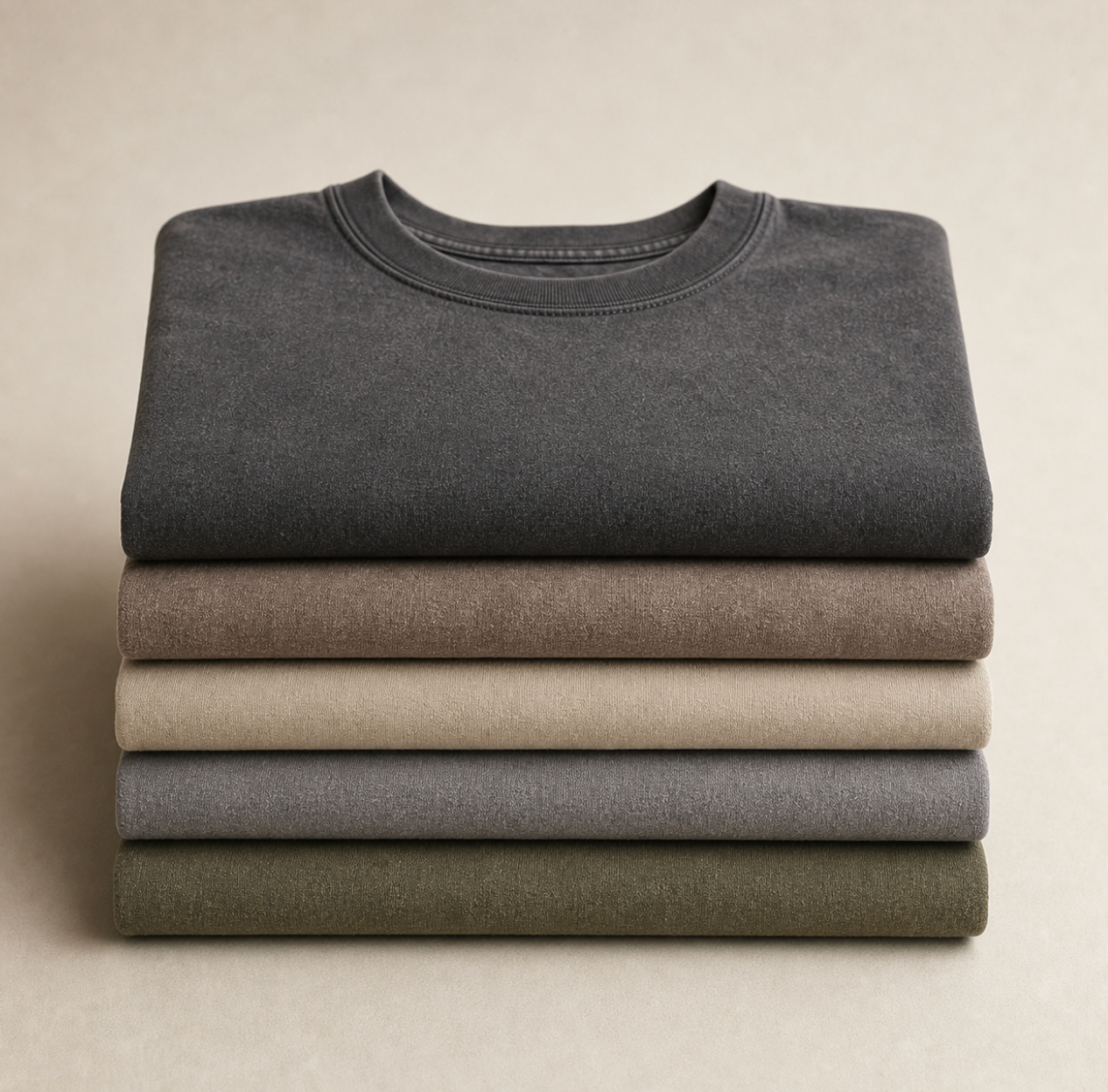
Un GSM plus élevé, souvent étiqueté comme coton épais, indique un tissu plus dense et plus substantiel. Ces vêtements, comme un t-shirt IdyllVie bien fait, offrent une durabilité supérieure et un tombé plus structuré. Le coton plus léger, quant à lui, est excellent pour l'été mais n'aura pas la même résilience à long terme.
Lorsque vous touchez le tissu, il doit être à la fois substantiel et lisse, jamais fin ou rugueux. Le coton biologique de haute qualité a des fibres plus longues, ce qui crée un fil à la fois plus doux et plus résistant. Cette résistance inhérente signifie que le vêtement résistera au boulochage et à l'amincissement tout au long de sa durée de vie. Pour une analyse plus approfondie, vous pourriez trouver utile de lire également ce qui fait du coton prérétréci de première qualité l'essentiel parfait au quotidien dans notre autre guide.
Examen des coutures et des finitions
Ensuite, concentrez-vous sur la construction. La couture est le squelette qui maintient le vêtement ensemble, et sa qualité est un signe non négociable de durabilité.
Examinez attentivement les coutures. Les points sont-ils petits, serrés et uniformément espacés ? Des coutures lâches, inégales ou clairsemées sont un signal d'alarme clair que le vêtement pourrait se déchirer sous la contrainte. Tirez doucement sur une couture : elle doit être solide, sans espaces visibles ni fils tirés.
La longévité d'un vêtement est souvent déterminée par ses points faibles. Des coutures de haute qualité et des finitions renforcées font la différence entre un t-shirt qui dure une décennie et un autre qui perd sa forme après une seule saison.
Vous devriez également examiner le type de finition des coutures. Regardez à l'intérieur du vêtement pour voir comment les bords bruts sont traités. Les pièces de qualité auront des coutures surjetées ou des coutures anglaises, qui enveloppent le bord brut pour éviter l'effilochage et ajouter de la résistance. Un simple bord non fini suggère que le fabricant a simplement fait des économies.
Prolonger la durée de vie de vos vêtements
Une fois que vous avez investi dans des vêtements en coton biologique au Canada de qualité, un entretien approprié garantit leur durabilité. Heureusement, le coton biologique est résistant, et quelques pratiques simples peuvent préserver sa douceur et sa forme pendant des années.
Suivez ces conseils d'entretien pour maximiser la durée de vie de vos pièces durables :
- Laver délicatement : Utilisez un cycle de lavage à froid et délicat. Cela protège les fibres, empêche le rétrécissement et réduit la consommation d'énergie, ajoutant aux credentials écologiques du vêtement.
- Utiliser un détergent doux : Les détergents agressifs peuvent enlever la douceur naturelle du coton. Optez pour un savon doux et au pH neutre pour que vos vêtements conservent leur meilleur aspect.
- Sécher à l'air libre si possible : Les sèche-linge sont agressifs pour les tissus. Le séchage à l'air libre ou à plat est le meilleur moyen de conserver leur forme et leur intégrité.
- Traiter les taches naturellement : Pour les taches courantes, une pâte de bicarbonate de soude et d'eau ou un peu de vinaigre blanc peut faire des merveilles. Évitez l'eau de Javel, qui affaiblit les fibres de coton et provoque le jaunissement.
En devenant un acheteur plus exigeant et en prenant soin de vos vêtements avec attention, vous transformez votre garde-robe d'un produit jetable en une collection de pièces durables et magnifiques. Cette approche consciente est la pierre angulaire de la mode durable.
Trouver votre ajustement parfait avec IdyllVie au Canada
Une fois que vous savez lire les certifications et repérer un savoir-faire de qualité, la dernière étape consiste à trouver une marque qui combine le tout. Pour les Canadiens, cela signifie souvent naviguer entre les expéditions transfrontalières, les droits de douane et les retours. C'est là qu'IdyllVie a été créée, pour offrir des essentiels en coton biologique soigneusement conçus, ici même chez nous.
Choisir une marque canadienne, c'est plus que simplement soutenir le design local ; c'est une expérience d'achat fondamentalement meilleure. Cela signifie une expédition plus rapide, des prix transparents sans frais d'importation surprises, et un contact avec une équipe qui comprend directement le marché canadien. C'est un lien direct avec les personnes derrière vos vêtements.
La différence IdyllVie : une qualité que vous pouvez ressentir
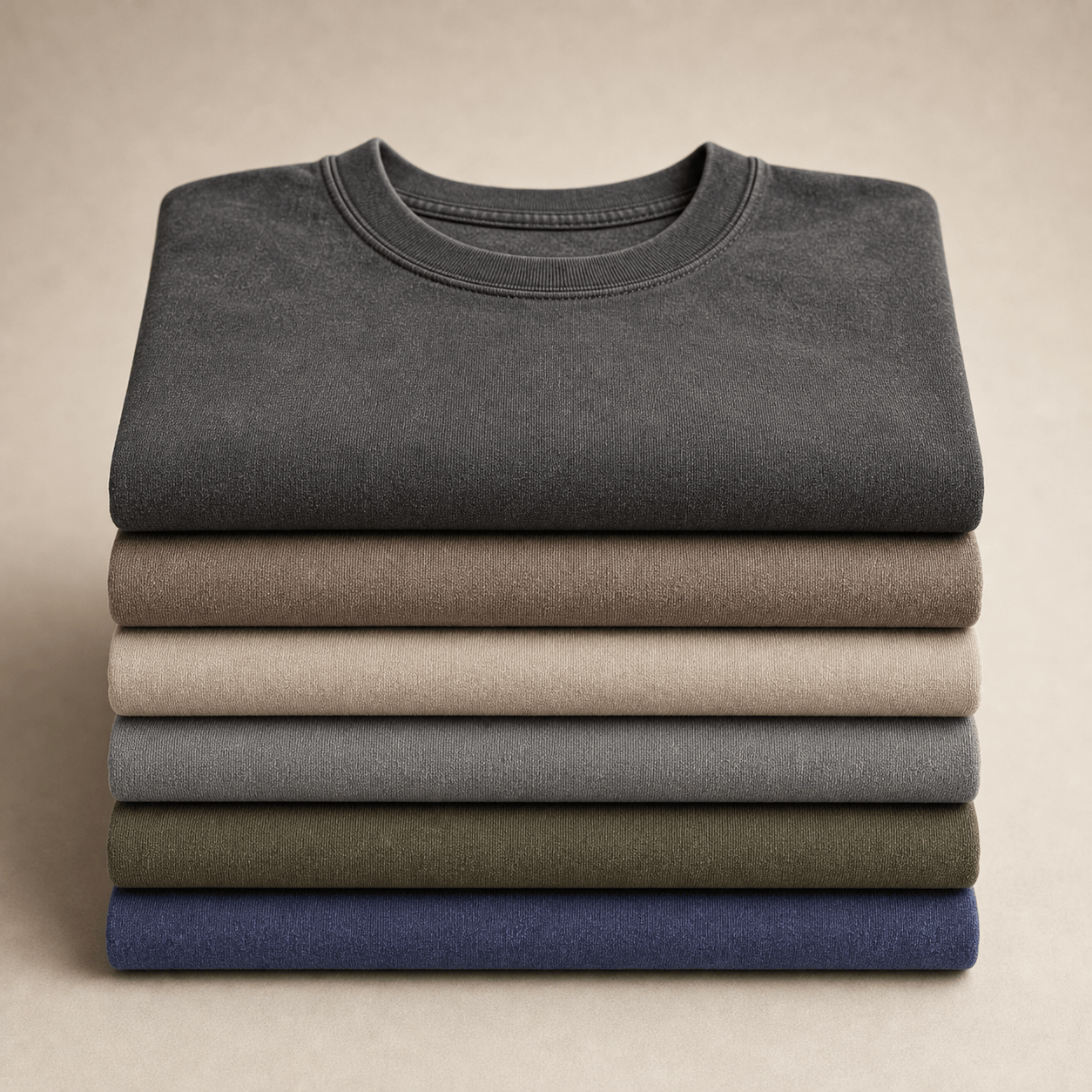
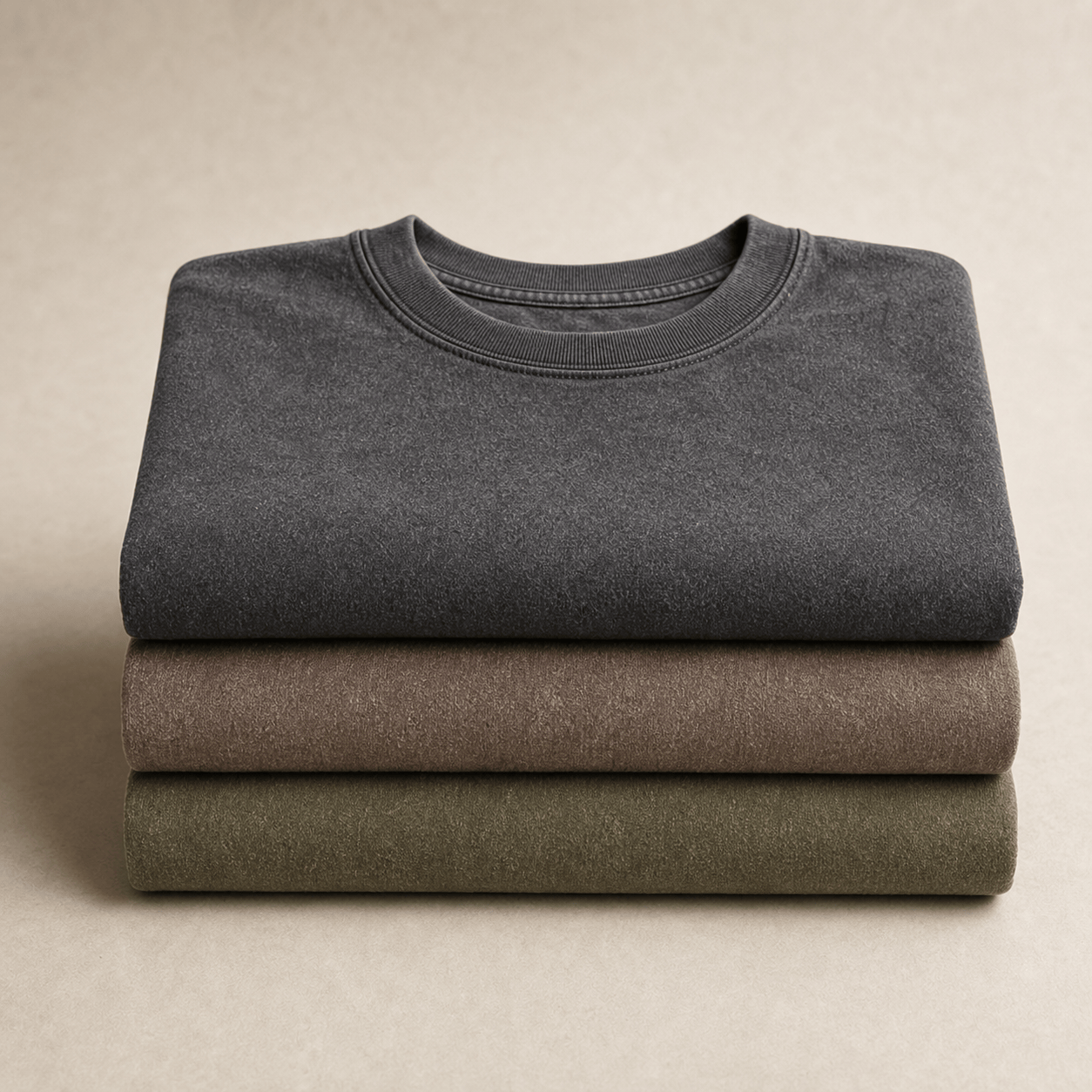
Notre approche chez IdyllVie est simple : créer des pièces intemporelles et durables à partir des meilleurs matériaux que nous pouvons trouver. Cet engagement commence par notre coton biologique épais signature, la base de notre collection, choisi pour son toucher substantiel, sa douceur incroyable et sa capacité à conserver sa forme.
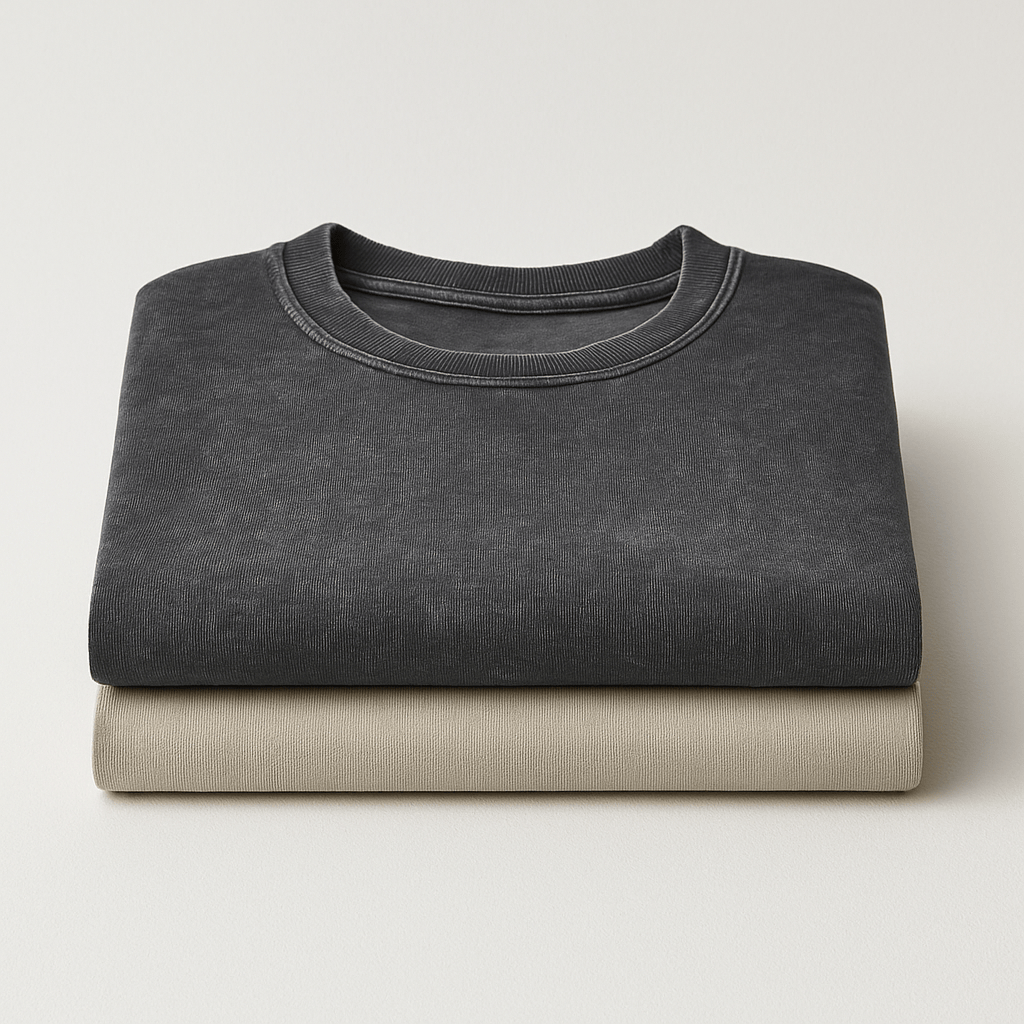
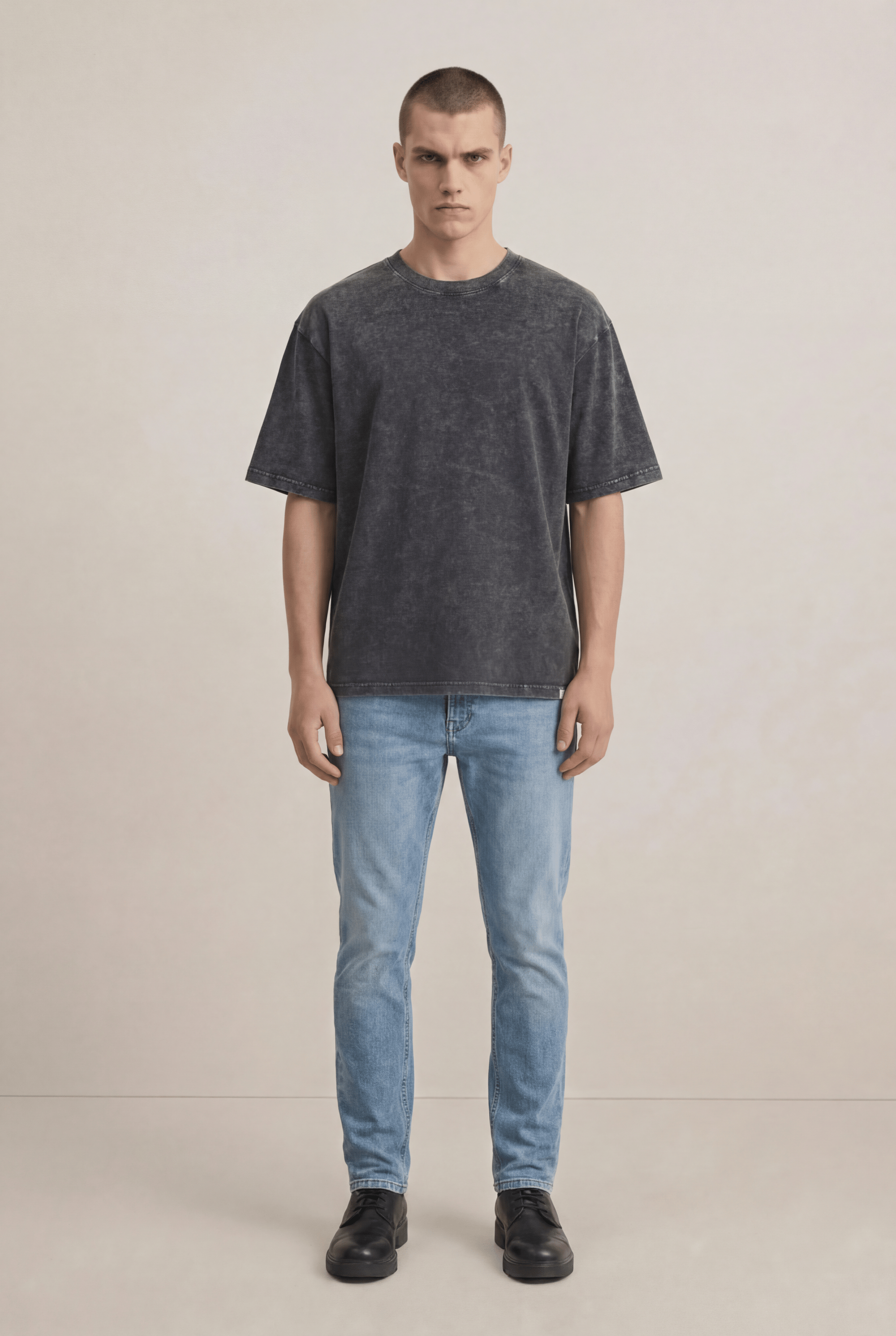
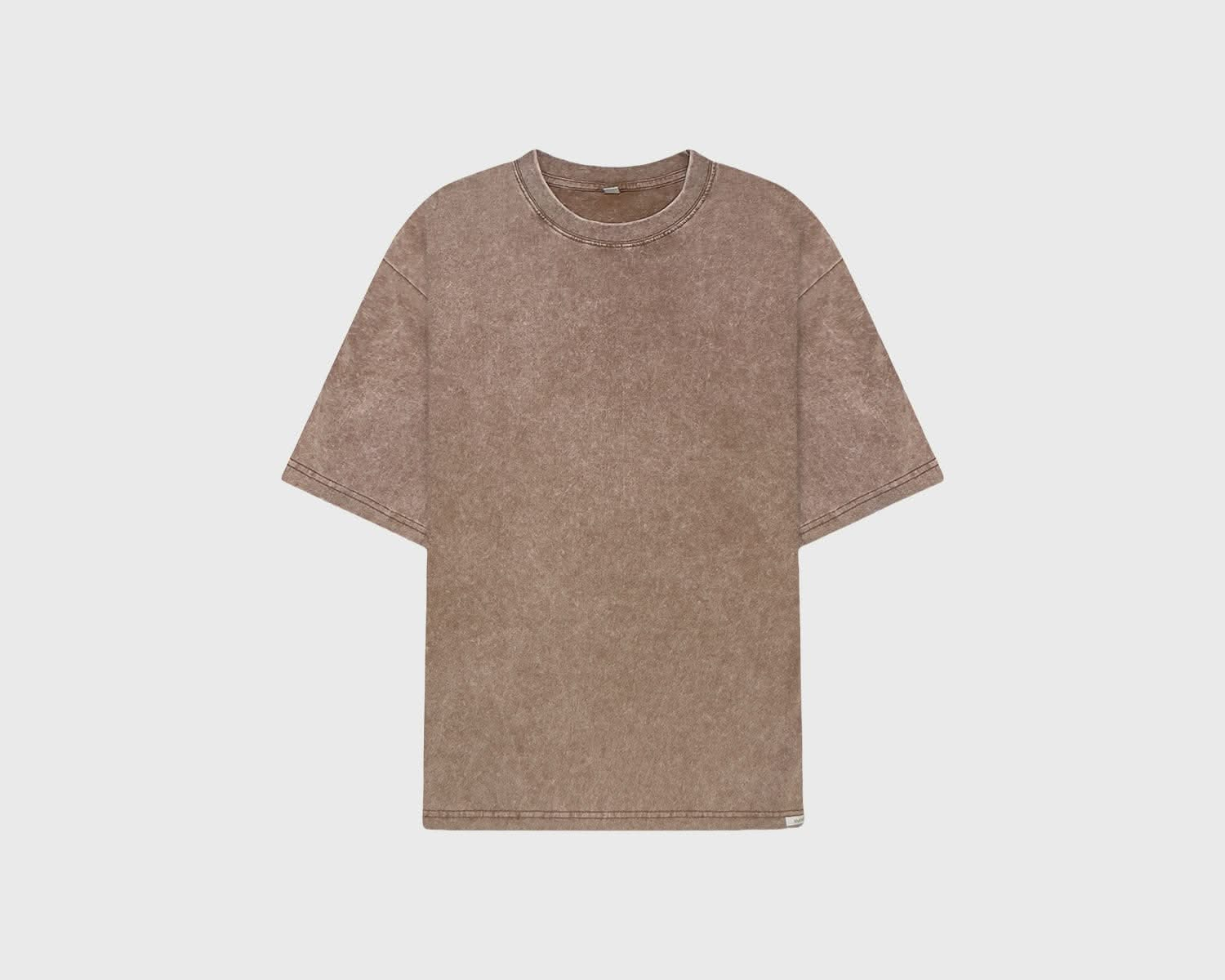
Nous croyons que la vraie qualité se trouve dans les détails qui résistent à l'épreuve du temps. C'est pourquoi nous nous concentrons sur la création de pièces essentielles, comme nos t-shirts biologiques de première qualité, que vous porterez saison après saison. Chaque pièce est conçue non seulement pour être portée, mais pour être vécue et aimée pendant des années.
Cet accent sur la longévité et la qualité reflète un changement plus large dans les habitudes de consommation des Canadiens. Le marché des vêtements personnalisés, par exemple, devrait passer de 70,25 millions USD en 2024 à 122,16 millions USD d'ici 2032. Un facteur important de cette croissance est la demande croissante de tissus respectueux de l'environnement comme le coton biologique. Vous pouvez en savoir plus sur ces tendances du marché canadien et voir comment IdyllVie s'inscrit dans ce mouvement, prouvant qu'un style sophistiqué et la durabilité peuvent aller de pair.
Une expérience d'achat fluide et durable
Un vêtement de qualité n'est qu'une partie de l'équation. L'expérience entière—de la navigation au déballage—devrait être tout aussi réfléchie et facile. C'est pourquoi nous avons élaboré nos politiques clients autour de la transparence, de la commodité et de la confiance.
Nous voulons que vous vous sentiez complètement à l'aise d'investir dans votre garde-robe, c'est pourquoi nous offrons :
- Livraison gratuite : Toutes les commandes canadiennes de plus de 150 $ sont expédiées gratuitement, ce qui facilite l'acquisition de pièces de qualité.
- Retours sans tracas de 30 jours : Si un vêtement ne vous convient pas parfaitement, vous pouvez le retourner. Votre satisfaction est la priorité.
- Options de paiement flexibles : Des services comme « Achetez maintenant, payez plus tard » vous permettent de constituer votre garde-robe selon vos propres conditions.
Chez IdyllVie, notre engagement envers la durabilité s'étend jusqu'à votre porte. Nous pensons que la façon dont vous recevez votre commande doit être aussi bien pensée que le vêtement qu'elle contient.
C'est pourquoi chaque commande IdyllVie est expédiée dans un emballage 100 % compostable et des enveloppes recyclées. C'est un détail petit mais essentiel dans notre promesse de minimiser notre empreinte environnementale. Ce cycle complet—du coton biologique certifié GOTS à l'emballage qui retourne à la terre—est ce qui fait d'IdyllVie un choix fiable pour les vêtements en coton biologique au Canada.
Lorsque vous choisissez IdyllVie, vous ne trouvez pas seulement votre coupe parfaite en termes de taille et de style. Vous trouvez une marque qui correspond à vos valeurs, offrant des essentiels haut de gamme, éco-luxe conçus pour une vie moderne et consciente.
Vos questions sur le coton biologique ont une réponse
Lorsque vous commencez à regarder votre garde-robe de plus près, des questions ne manqueront pas de surgir. Considérez ceci comme votre guide rapide des questions les plus courantes sur le coton biologique. L'objectif est de dissiper toute confusion, de déconstruire quelques mythes et de vous aider à magasiner en toute confiance.
Naviguer dans la mode durable peut sembler complexe au début, mais les idées fondamentales sont simples. Une fois que vous comprenez le « pourquoi » derrière les choix, il devient beaucoup plus facile de construire une garde-robe qui correspond vraiment à vos valeurs.
Pourquoi les vêtements en coton biologique coûtent-ils souvent plus cher ?
Le prix plus élevé d'un vêtement en coton biologique au Canada n'est pas une majoration ; c'est le reflet de son coût réel. C'est une comptabilité honnête de ce qu'il faut pour créer un vêtement de manière responsable, du sol à la dernière couture.
Pensez-y de cette façon : le prix plus bas du coton conventionnel n'est possible que parce qu'il externalise ses coûts réels à l'environnement et à ses travailleurs. Le prix sur l'étiquette ne tient pas compte des dépenses à long terme liées à la pollution de l'eau, à la dégradation des sols ou aux soins de santé des agriculteurs exposés à des produits chimiques toxiques.
Le prix du coton biologique, quant à lui, ramène ces coûts dans l'équation. Il tient compte de :
- Une agriculture plus manuelle : Sans herbicides ni pesticides chimiques, les agriculteurs dépendent de méthodes naturelles, plus intensives en main-d'œuvre, comme la rotation des cultures, les cultures associées et le désherbage manuel.
- Des salaires plus équitables : La production éthique, en particulier lorsqu'elle est certifiée par GOTS, exige un salaire équitable et des conditions de travail sûres pour tous, de l'agriculteur au travailleur du vêtement.
- Des coûts de certification : Le processus d'audit rigoureux du GOTS est un investissement, mais c'est ce qui garantit l'intégrité du produit du champ au vêtement fini.
- Des matériaux de meilleure qualité : Les pratiques agricoles biologiques produisent souvent des fibres de coton plus longues et plus résistantes. Cela crée un tissu plus durable et nettement plus doux, conçu pour durer.
En fin de compte, vous ne payez pas seulement plus cher pour un t-shirt. Vous investissez dans un vêtement de meilleure qualité, meilleur pour la planète, meilleur pour les gens et conçu pour durer. C'est un passage de la mode jetable à une valeur durable.
Le coton naturel est-il la même chose que le coton biologique ?
C'est une source de confusion très courante, et la réponse est un simple non. Ces termes ne sont pas interchangeables, et connaître la différence est essentiel pour tout consommateur conscient.
« Naturel » est principalement un terme marketing. Dans l'industrie textile, il n'a pas de définition réglementée ou légale. Cela signifie généralement que le coton n'est pas teint et qu'il a sa couleur d'origine blanc cassé, écru. Un vêtement fabriqué à partir de coton cultivé de manière conventionnelle, imbibé de pesticides, peut être étiqueté « naturel » tant qu'il n'est pas teint.
« Biologique », cependant, est un terme légalement protégé et réglementé. C'est une garantie que le coton a été cultivé et traité selon des normes strictes visant à protéger la santé environnementale et humaine.
Pour être certifié biologique, le coton doit provenir de graines non génétiquement modifiées et être cultivé sans pesticides, insecticides ou engrais synthétiques. Tout cela est vérifié par un tiers indépendant. Ainsi, bien que tout le coton biologique soit naturel, tout le coton « naturel » n'est pas biologique. Recherchez toujours le logo de certification.
Comment puis-je être sûr qu'une marque est vraiment durable ?
À l'ère du greenwashing rampant, la vérification des affirmations d'une marque est plus importante que jamais. Le moyen le plus fiable de le faire est de rechercher des certifications tierces crédibles.
Le GOTS (Global Organic Textile Standard) reste la norme d'or. Il audite toute la chaîne d'approvisionnement d'un vêtement – de la ferme à l'usine en passant par le produit final. C'est votre meilleure garantie de gestion environnementale et de responsabilité sociale.
Au-delà des certifications, recherchez une transparence authentique. Une marque vraiment durable ne se cache pas de ses pratiques ; elle est fière de les partager. Posez-vous quelques questions :
- La marque parle-t-elle ouvertement de l'origine de ses matériaux et de ses fournisseurs ?
- Donnent-ils des détails sur les usines avec lesquelles ils travaillent ?
- Sont-ils clairs sur leurs méthodes d'emballage et d'expédition ?
Les marques véritablement engagées, comme IdyllVie, intègrent ces principes dans leur ADN. Nous partageons ouvertement notre engagement à utiliser du coton biologique certifié GOTS, notre modèle de production en petites séries et notre choix d'utiliser des emballages 100 % compostables. Ce type de transparence est la marque d'une marque en laquelle vous pouvez avoir confiance.
Quelle est la différence entre le coton biologique et le coton recyclé ?
Le coton biologique et le coton recyclé sont d'excellents choix durables, mais ils s'attaquent à des problèmes environnementaux différents. Savoir d'où vient chacun vous aide à choisir celui qui correspond le mieux à vos objectifs.
Le coton biologique concerne le processus agricole. Il commence par une graine non-OGM et est cultivé d'une manière qui aide à régénérer le sol, à conserver l'eau et à éliminer les produits chimiques toxiques dès le départ. Son principal avantage est de prévenir la pollution à la source.
Le coton recyclé, d'autre part, s'attaque au problème massif des déchets textiles. Il est fabriqué en collectant des chutes post-industrielles (restes de tissus des usines) ou des déchets post-consommation (vieux vêtements) et en refilant les fibres en nouveau fil. Ce processus empêche des millions de tonnes de textiles d'être enfouis et réduit la demande de nouvelles cultures de coton.
Le principal inconvénient est qu'il n'y a aucune garantie que le matériau d'origine du coton recyclé était biologique. Le processus de recyclage peut également raccourcir les fibres de coton, rendant parfois le tissu résultant moins durable à moins d'être mélangé à des fibres vierges plus résistantes. Les deux sont précieux, mais ils jouent des rôles différents — et tout aussi importants — dans la construction d'un système de mode plus circulaire.
Prêt à construire une garde-robe qui reflète vos valeurs ? Chez IdyllVie, nous facilitons le choix de la qualité, du confort et de la durabilité. Explorez notre collection d'essentiels en coton biologique de première qualité et découvrez des pièces intemporelles conçues pour être portées et aimées pendant des années.
Découvrez la collection IdyllVie dès maintenant.
Raffiné à l'aide de l'outil Outrank












0 commentaire