

You’re probably standing in front of a drawer or closet doing the same calculation most of us do. You want the easiest shirt to reach for, but you also want it to sit well under a jacket, feel good by midday, and still look intentional when you catch yourself in a mirror.
That’s where a well-made v neck tee men's style earns its place. It seems simple, but it isn’t. The angle of the neckline, the weight of the cotton, the way the collar is attached, and even the finishing wash all change how the shirt looks, how it drapes, and how long it lasts.
A great V-neck does three jobs at once. It frames the face, simplifies layering, and disappears into daily life in the best possible way. You stop fussing with it. You stop replacing it. You start building outfits around it because it just works.
The Enduring Appeal of the Perfect V-Neck Tee
The men’s V-neck has lasted because it solves real wardrobe problems. It opens the neckline slightly, which makes layered outfits look cleaner than a crew neck can. It also feels less restrictive around the throat, which many men notice immediately even if they’ve never thought much about necklines before.
The best versions don’t chase trends. They rely on proportion, restraint, and material quality. That’s why two shirts can look similar on a hanger and behave completely differently once worn. One twists, stretches, and loses shape. The other settles naturally on the body and keeps doing that wash after wash.
Why small design choices matter
A V-neck tee is one of those garments where millimetres matter. If the V is too deep, it looks dated or overly revealing. If it’s too shallow, it can lose the clean visual line that makes the style useful in the first place. If the collar lacks structure, the neckline can ripple or sag.
The same goes for fabric. A thin jersey can cling where you don’t want it to and collapse under outerwear. A denser cotton tends to hold its line better, skim the torso more cleanly, and feel more composed through the day.
Practical rule: A premium basic should make getting dressed easier, not more complicated.
What a thoughtful buyer should look for
When you evaluate a V-neck, keep your attention on three things:
- Neckline shape: It should frame the chest modestly and sit flat.
- Fabric weight: It should drape with some substance rather than flutter.
- Finish quality: The collar, seams, and wash should support long-term wear.
That’s the difference between buying another T-shirt and choosing a wardrobe staple with purpose.
V-Neck vs Crew Neck A Strategic Wardrobe Choice
A V-neck and a crew neck aren’t rivals so much as tools with different strengths. Most confusion comes from asking which one is better in general. The better question is which one serves the outfit, the body, and the occasion.

A crew neck creates a closed, rounded frame at the top of the shirt. That often gives a more classic, sporty effect. A V-neck creates a downward line, almost like a piece of architecture drawing the eye inward and down. That subtle opening is what makes it so useful under shirts, knitwear, and lighter tailoring.
In Canada, 62% of Ontario men aged 25-44 prefer v-neck styles for their versatility in layering under refined outerwear, according to a 2024 Apparel Canada Association survey cited here. The same source notes that premium brands often use a 6cm neckline depth, and the Textile Research Institute of Canada found that this standard reduces skin irritation by 40% compared to typical crew necks.
How each neckline changes the look
Here’s the simplest way to think about it.
| Neckline | Visual effect | Best use |
|---|---|---|
| V-neck | Lengthens the upper body and opens the face | Layering, smart-casual outfits, cleaner neckline under outerwear |
| Crew neck | Creates a fuller, more traditional top line | Standalone casual wear, athletic styling, heavier build through the shoulders |
The V-neck often suits men who want the neck and chest area to feel less crowded. Men with shorter necks or rounder faces usually find that a moderate V gives more visual balance. Crew necks can be excellent when you want a stronger, more compact upper silhouette.
When to choose one over the other
Choose a V-neck when:
- You’re layering: It works especially well under an open overshirt, cardigan, or blazer.
- You want a lighter visual feel: The neckline breaks up fabric near the throat.
- You prefer less friction at the neck: Some men find it more comfortable across a full day.
Choose a crew neck when:
- You want a classic casual base: Think denim, sneakers, and a straightforward off-duty look.
- You’re wearing the tee entirely on its own: A crew neck can look more compact and traditional.
- You want more visual width up top: The round collar can emphasise shoulder breadth.
A V-neck isn’t dressier because it tries harder. It’s dressier because it leaves more room for the rest of the outfit to breathe.
For many wardrobes, the smartest approach isn’t choosing one forever. It’s knowing that the V-neck is the more strategic piece when layering and proportion matter most.
Decoding Fabrics Heavyweight Organic vs Standard Cotton
Fabric is where quality becomes tangible. You can see colour from across a room, but you understand fabric only when you wear the shirt, wash it, and reach for it again. That’s why the most important decision in a V-neck often isn’t the neckline at all. It’s the cloth.

A heavyweight organic cotton tee usually feels more composed on the body. It has enough density to hang cleanly from the shoulders, enough structure to avoid looking limp, and enough substance to work well on its own or under another layer. Standard cotton can still be comfortable, but lower-weight versions often lose shape faster and reveal more wear earlier.
What heavyweight cotton changes for the wearer
The word “heavyweight” sometimes worries people because they assume it means hot or stiff. In a well-made tee, it usually means the opposite of flimsy, not the opposite of breathable. The benefit is visual and tactile. The shirt holds a better line through the chest and sleeves, and the fabric tends to recover more gracefully after washing.
That matters in daily use. A V-neck with too little body can collapse at the collar, cling at the midsection, and show every fold from sitting or layering. A denser knit usually looks calmer.
Organic cotton and durability
The environmental side matters, but so does wear. GOTS-certified organic cotton V-neck tees reduce water usage by 91% compared to conventional cotton, from 2,700 litres to 243 litres per shirt, according to this fabric guide. The same source notes that these fibres show 20-30% higher tensile strength after washing, resisting pilling and fading for over 50 cycles.
Those details aren’t abstract. Higher tensile strength means the tee is better equipped to handle repeated laundering, friction under jackets, and the ordinary stress of being worn often. In practical terms, it keeps looking like itself for longer.
For a deeper look at why fabric finishing and shrink control matter in everyday basics, this guide on preshrunk breathable cotton essentials is worth reading.
Heavyweight organic vs standard cotton in real life
- Drape and shape: Heavyweight organic cotton tends to fall straight and clean. Standard lightweight cotton often feels softer at first touch but can look less stable on the body.
- Surface character: Better cotton usually shows a smoother, more even face. That helps darker colours look richer and lighter shades look less translucent.
- Long-term appearance: Shirts with stronger fibres usually resist that tired look that comes from pilling, collar fatigue, and wash-induced thinning.
The best tee doesn’t just feel soft on day one. It still feels reliable months later.
Where stonewashing fits in
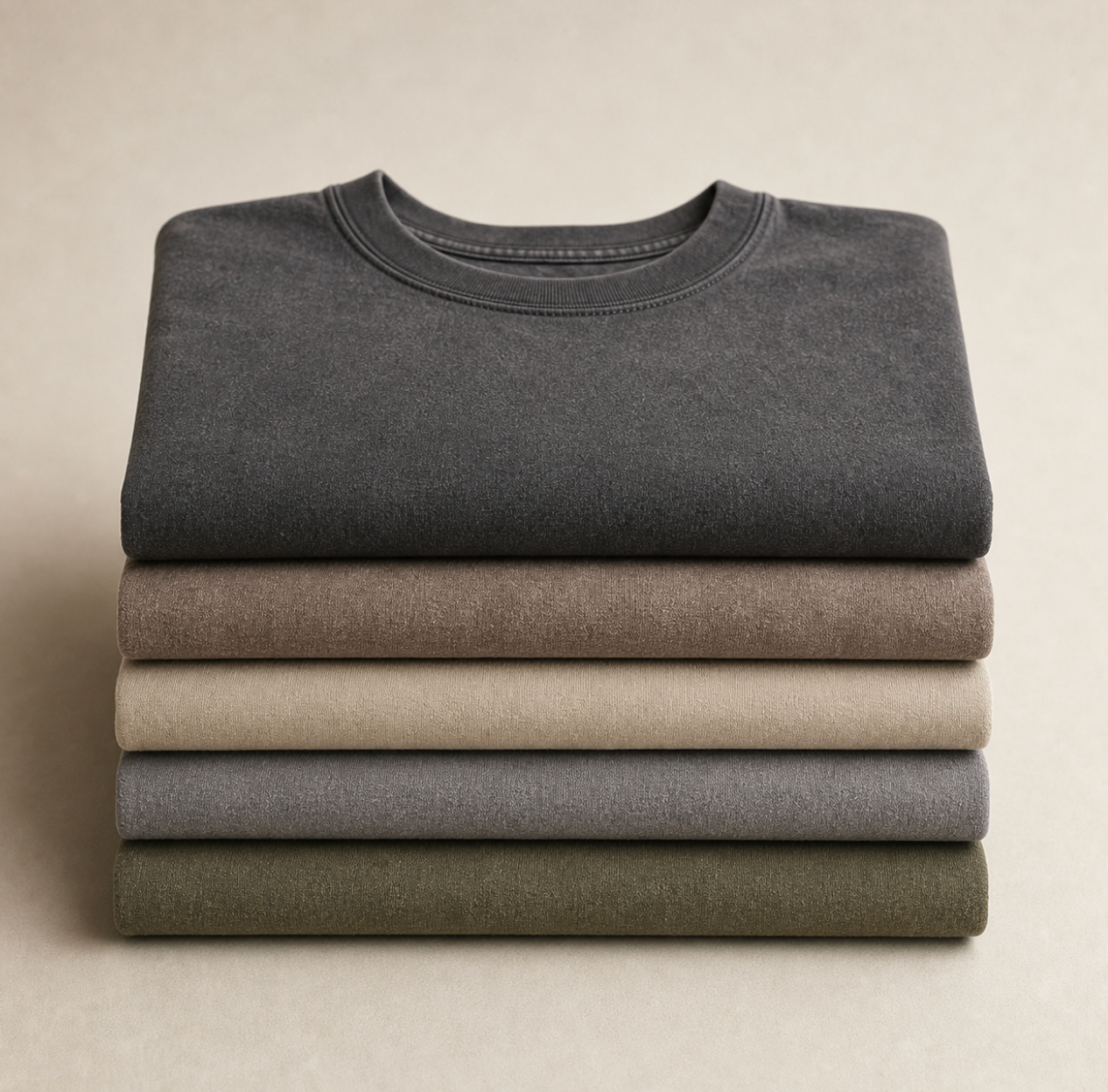
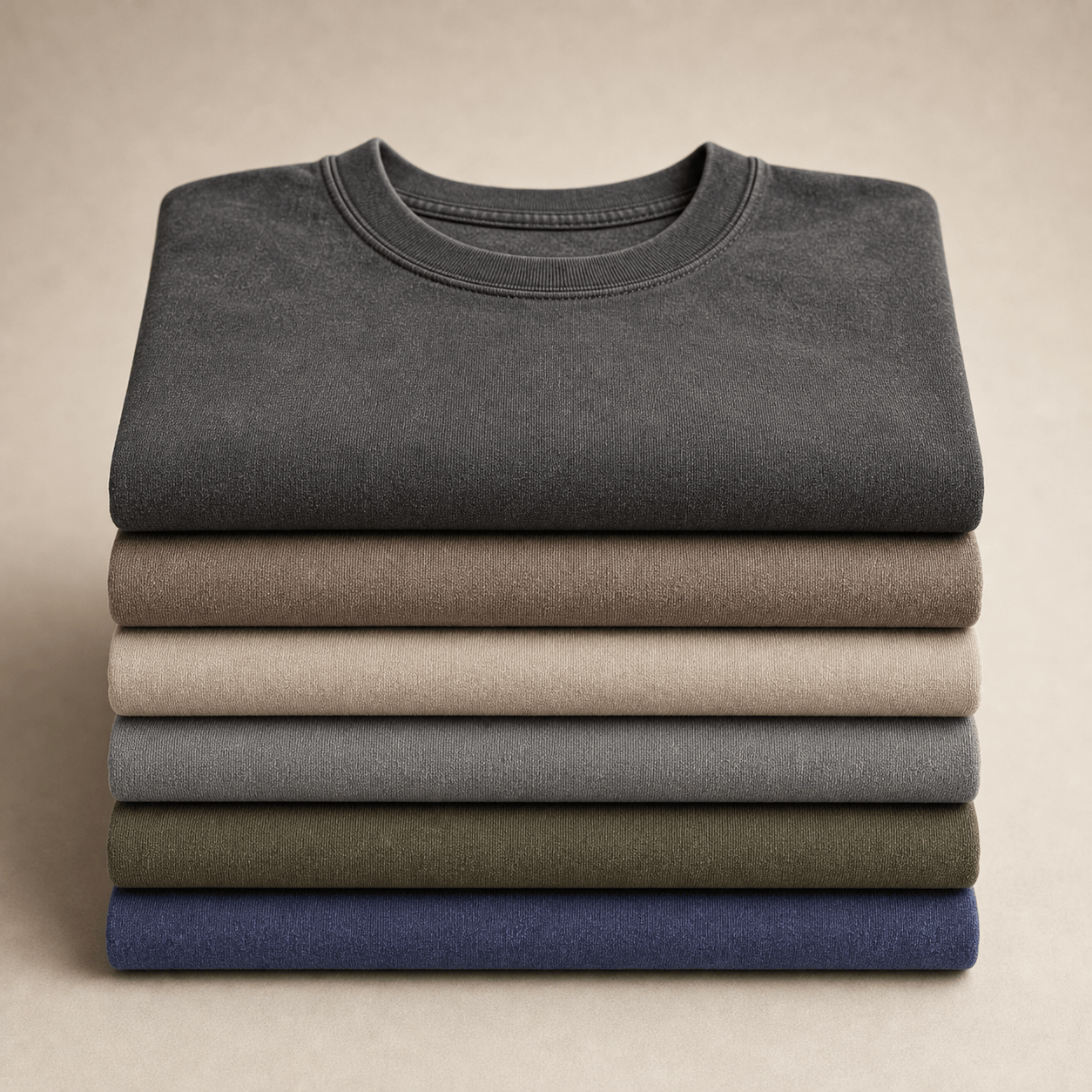
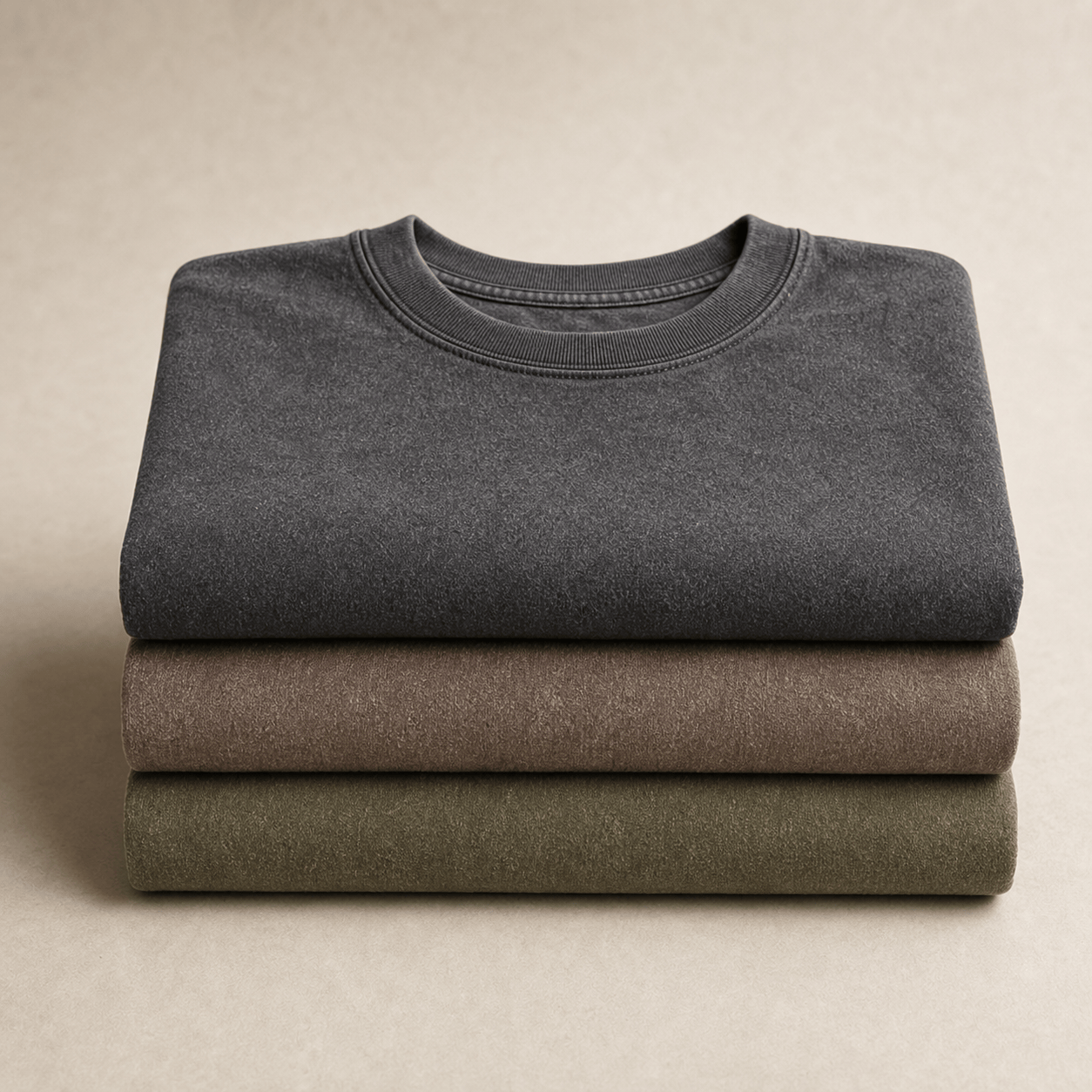
A lot of men want softness immediately. That’s reasonable. No one wants a shirt that feels rigid until the tenth wash. For this reason, stonewashing can make sense when it’s done with care. The goal is a broken-in hand-feel from the first wear, while keeping the structure that makes a premium tee look polished.
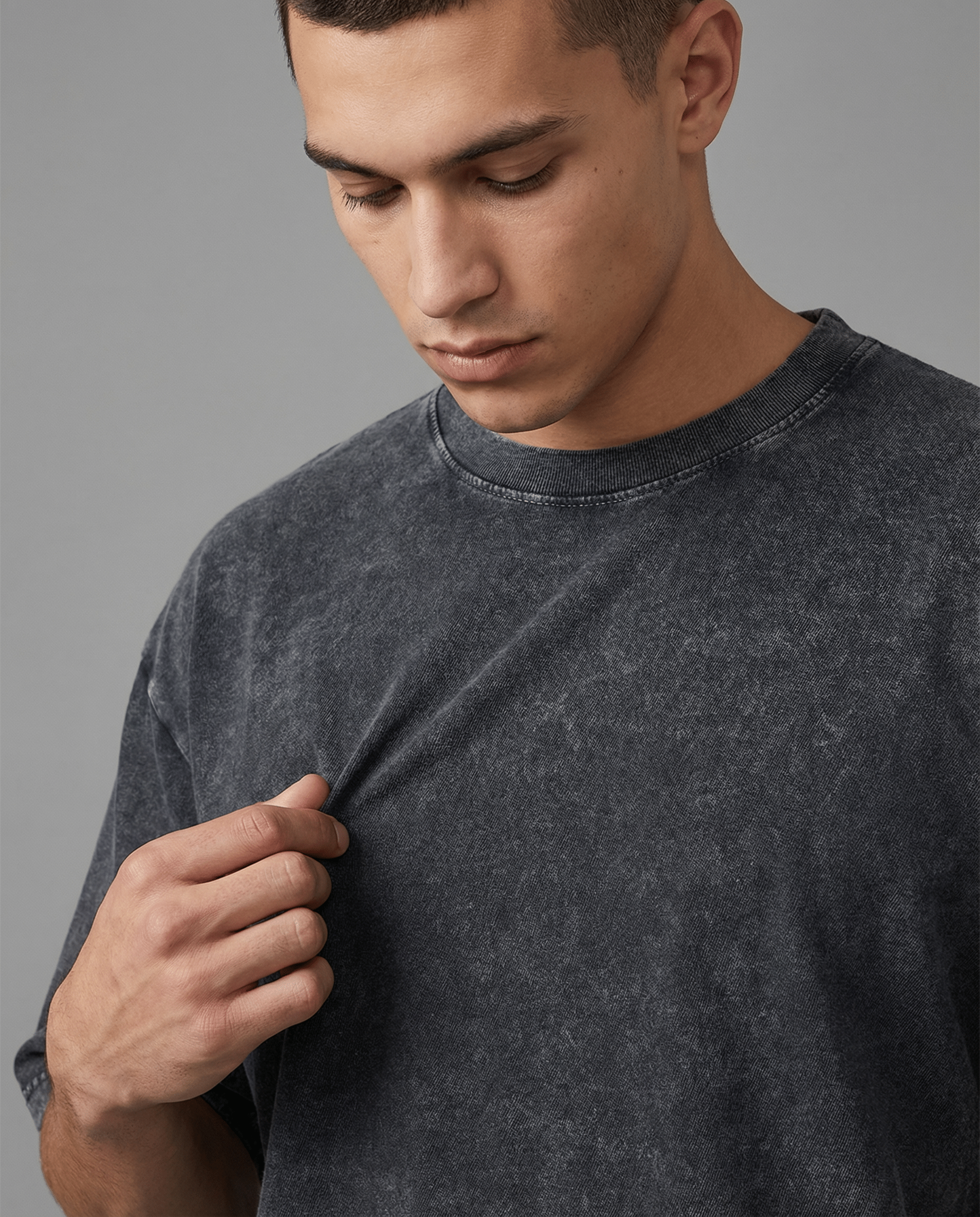
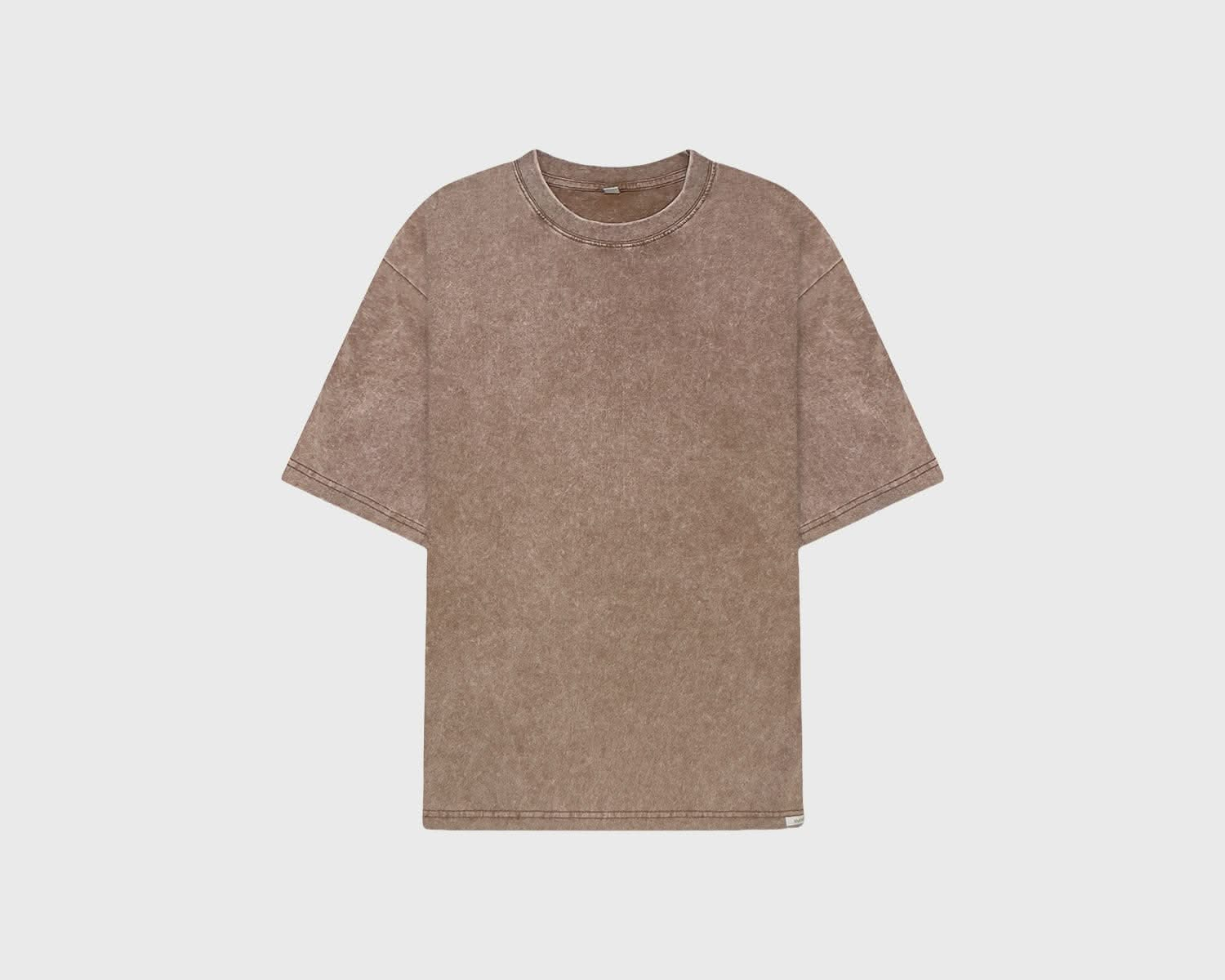
A good stonewashed finish softens the surface and reduces that raw, crisp feel some denser cottons have when new. It can also give the shirt a more lived-in character without making it look worn out. The key is balance. Too much processing can weaken fabric. A thoughtful finish should make the tee more inviting while preserving its integrity.
What to choose if you’re deciding between fabric types
If your priority is timeless daily wear, choose based on this simple framework:
- Pick heavyweight organic cotton if you want structure, longevity, and a lower-impact material choice.
- Pick standard cotton if you want a lighter casual feel and don’t mind a shorter-looking lifecycle.
- Be careful with very thin jerseys if you plan to layer often or want the shirt to stand on its own.
For a conscious Canadian buyer, the most sensible choice is often the fabric that asks to be replaced less often.
A Guide to Finding Your Perfect V-Neck Fit
Fit decides whether a V-neck looks refined or accidental. You can buy excellent fabric and still end up with a shirt that feels off if the shoulder line, torso shape, or V depth aren’t right.
The easiest way to assess fit is to stop looking at the shirt as one piece. Break it into parts. Shoulder, body, and neckline. If all three are balanced, the shirt will look natural.

Start with the shoulder
The shoulder seam should sit close to the edge of your shoulder bone. If it falls too far down the arm, the tee will look borrowed. If it pulls inward toward the neck, the whole upper body can look strained.
This is the first place to check because it affects everything below it. A bad shoulder fit often makes the torso and sleeves look wrong even when the size is technically close.
Then check the torso
A good V-neck should skim, not squeeze. You want room to move, sit, and layer without the shirt ballooning at the waist. The fabric should follow the line of your body without mapping every contour.
Use this quick guide:
- Slim fit: Best if you prefer a sharper outline and often wear the tee under structured layers.
- Classic fit: The safest option for most men. Clean, comfortable, and adaptable.
- Relaxed fit: Useful for a more casual silhouette, especially with heavier fabrics and informal styling.
Finally judge the V itself
The bottom of the V should usually sit high enough to keep the chest covered while still creating a clear opening. If the point drops too low, the shirt starts announcing itself too loudly. If it sits too high, the style benefit disappears.
Fit check: When you look in the mirror, the V should frame the collarbones, not expose the sternum.
If sizing online feels uncertain, a clear reference helps. This shirt size chart guide can help you compare chest, shoulder, and length measurements before buying.
A short checklist before you keep the shirt
| Area | Good fit looks like | Warning sign |
|---|---|---|
| Shoulders | Seam meets shoulder edge | Seam drops down the arm |
| Chest and torso | Clean line with light ease | Pulling, clinging, or excess billow |
| V depth | Open, modest, balanced | Too deep, too high, or curling |
A well-fitted V-neck shouldn’t feel like a statement piece. It should feel like the version of a T-shirt you wear when details matter.
Styling and Layering Your V-Neck for Any Occasion
The strength of a V-neck shows up once you start building outfits around it. It’s one of the few basics that can move from a slow Saturday morning to a dinner reservation without needing much help.

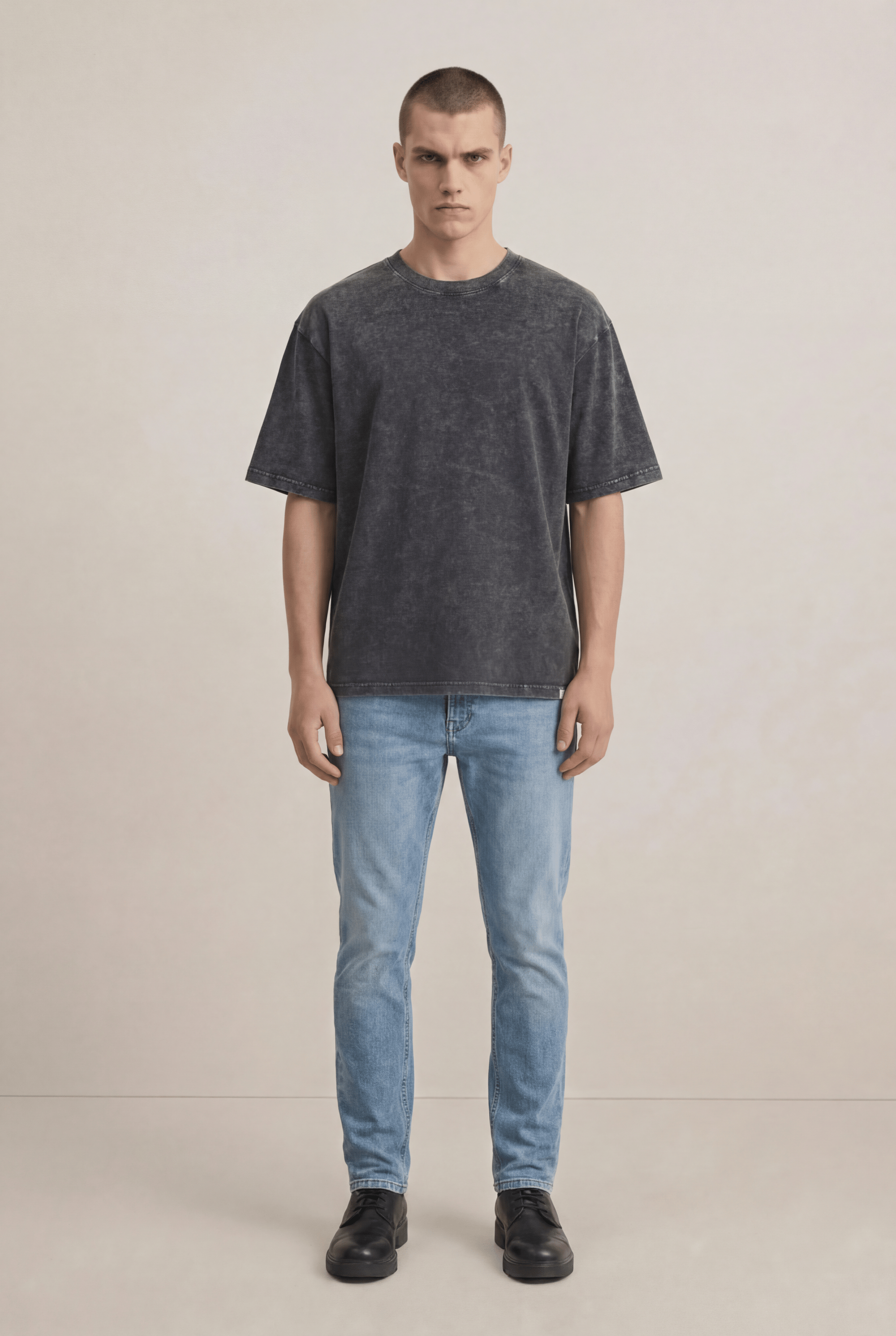
A stonewashed V-neck in a neutral shade works especially well because it already has some character. It doesn’t look too crisp or too sporty. That makes it easy to pair with denim, chinos, wool trousers, or unstructured tailoring.
Weekend and off-duty looks
Start with the simplest version. A well-fitted V-neck, straight-leg jeans, and clean trainers. This works because the neckline adds shape without asking for attention. If the shirt has enough weight, it won’t look unfinished even without a jacket.
For a slightly more considered version, switch the jeans for chinos and add a textured overshirt. The V-neck creates visual space at the top of the outfit, which helps the outer layer sit more naturally when left open.
- Relaxed errand outfit: Mid-tone V-neck, washed denim, suede trainers
- Coffee or lunch look: Off-white V-neck, olive chinos, overshirt, simple watch
- Travel day option: Dark V-neck, drawstring trousers, lightweight zip layer
Smart-casual combinations
Many men often underestimate the V-neck. When worn correctly, it’s one of the easiest ways to soften dressier clothing. A crew neck can work under a blazer, but it often feels more closed and compact. A V-neck gives the jacket line a little breathing room.
Choose a smooth, structured tee in a restrained colour. Then add an unstructured blazer, tapered trousers, and loafers or minimal leather trainers. The effect should be approachable rather than corporate.
A good V-neck under a blazer says you chose comfort on purpose, not by compromise.
Here’s a quick visual reference for layering ideas:
Cooler weather layering
In autumn or early spring, the V-neck becomes a useful middle layer. Wear it under a denim shirt, flannel, or cardigan. Because the neckline opens the chest area slightly, the outfit avoids that crowded feeling that can happen when several collars compete.
A few pairings work especially well:
| Occasion | V-neck pairing | Why it works |
|---|---|---|
| Casual office | Charcoal V-neck, navy blazer, wool trousers | Clean neckline and soft structure |
| Weekend layering | Stonewashed tee, open denim shirt, chinos | Texture without bulk |
| Dinner out | Black V-neck, dark jeans, lightweight jacket | Sharp but not formal |
Small styling habits that improve the result
- Keep colours quiet: Grey, navy, black, off-white, and muted earth tones age well.
- Let the V stay modest: You want refinement, not exposure.
- Match fabric to formality: A denser cotton reads more polished than a slubby gym-style jersey.
The reason a v neck tee men's wardrobe staple lasts is simple. It gives you range without asking you to reinvent your style every time you wear it.
Extending the Life of Your T-Shirts Care and Longevity
A premium tee lasts longer when you care for it in a way that respects the fabric. That isn’t complicated, but it does require consistency. Most early wear comes from harsh washing, high heat, and careless storage, not from normal use.
Start with a gentle wash routine. Cold water is usually the safest choice for preserving colour and reducing stress on fibres. Use a mild detergent and skip bleach or aggressive stain treatments unless the care label specifically allows them.
Simple habits that protect shape
The dryer is where many T-shirts lose their future. High heat can tighten fibres, distort collars, and make a once-balanced fit feel unpredictable. If possible, hang dry or lay the shirt flat. If you use a machine dryer, keep it on low.
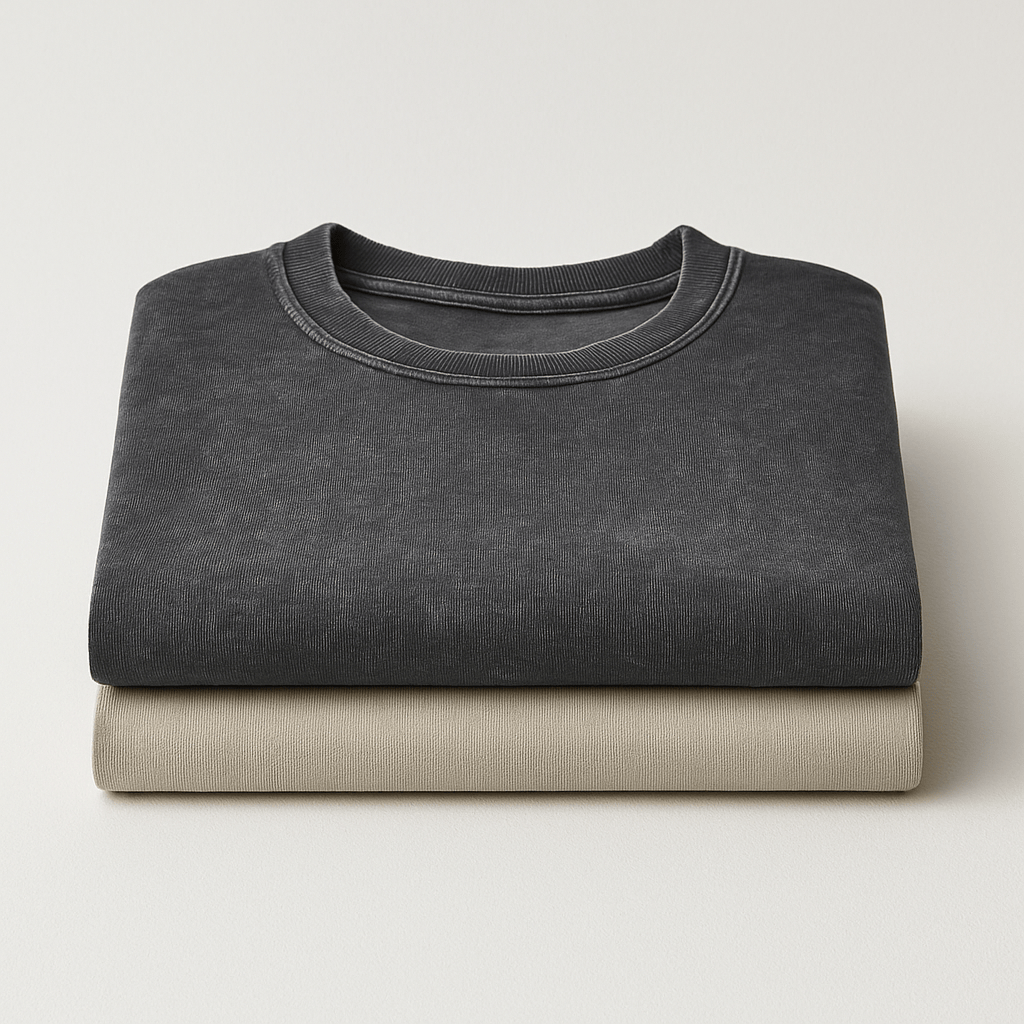
Storage matters too, especially for V-necks. Hanging a soft tee for long periods can pull at the neckline. Folding the shirt keeps the collar from stretching under its own weight.
- Wash with similar garments: Heavy items like denim can create friction that roughens the surface.
- Turn it inside out: This helps protect the outer face of the fabric during washing.
- Avoid over-washing: If the shirt isn’t dirty, airing it out can be better than sending it through another cycle.
Caring for a T-shirt well is part of buying less often. Maintenance is one of the most practical forms of sustainability.
Think in years, not weekends
When men say a shirt “didn’t last,” they’re often describing a care problem as much as a quality problem. A strong fabric gives you a head start. Good habits finish the job. If you wash gently, dry carefully, and store properly, the tee keeps its fit, surface, and neckline much longer.
The Sustainable Choice Why Your T-Shirt Matters
A T-shirt seems small until you multiply it by habit. Buy several cheap ones each year, wear them hard, replace them quickly, and the impact adds up across water use, waste, packaging, and manufacturing pressure. Choose fewer, better shirts, and the whole cycle changes.
That’s why sustainability in clothing isn’t just about swapping one fibre for another. It’s about deciding whether a garment was designed to live in your wardrobe or pass through it.
The Canadian context
In Canada, apparel contributes 5% of national greenhouse gas emissions, and only 15% of V-neck tees at major retailers use certified organic materials, according to this Canadian market reference. The same source notes that 62% of Toronto-area men prioritise sustainable fabrics but report limited options, especially when brands ignore low-impact stonewashing and compostable packaging.
That gap matters because shoppers often want to buy better, but the market still pushes disposable basics. Most of the time, the cheapest shirt is cheap because someone cut corners on fibre quality, finishing, construction, or environmental standards.
What a better choice includes
A sustainable tee should be judged as a whole system:
- Material: Certified organic cotton is a stronger place to start than conventional fibre.
- Construction: A tee that keeps its shape avoids early replacement.
- Finishing: Lower-impact washing methods are better than harsh processes that chase softness at any cost.
- Packaging: Compostable or recycled shipping materials reduce waste after purchase.
If you want a closer look at that broader approach, this article on organic cotton T-shirts in Canada offers useful background.
Sustainability becomes real when the shirt in your hand is one you still want to wear next year.
Longevity is part of ethics
A durable V-neck is often the more responsible purchase because it lowers the need for repeat buying. It also improves your daily experience. Better drape, a more stable collar, and a fabric that ages gracefully aren’t separate from sustainability. They’re part of it.
Conscious buying isn’t about perfection. It’s about refusing the idea that basics should be disposable.
Your V-Neck Buying Guide and FAQs
When you’re ready to buy, keep the decision simple. Look for fabric, fit, and finish. Fabric tells you how the shirt will feel and age. Fit decides whether it flatters. Finish reveals whether the maker cared about details like neckline stability, softness, and seam quality.
A quick buying checklist
- Fabric first: Choose a cotton with enough body to hold shape.
- Check the V depth: It should look clean and modest, not theatrical.
- Inspect the collar: A wavering neckline rarely improves with wear.
- Think about use: If you’ll layer often, pick a more structured tee.
Common questions
How do I prevent the V-neck from sagging over time?
Wash gently, avoid high heat, and store the shirt folded rather than hanging for long stretches. A well-constructed collar also matters from the start.
Can I wear an undershirt with a V-neck?
Yes, but keep the undershirt lower than the outer V so it stays hidden. If the undershirt shows, the neckline loses its clean line.
Is a V-neck appropriate for business casual?
Yes, if the cut is modest, the fabric is substantial, and the styling is restrained. Under an unstructured blazer or refined overshirt, it can look polished and modern.
Should I choose slim or classic fit?
Choose slim if you want a sharper silhouette and usually wear jackets. Choose classic if comfort and versatility matter more.
If you’re buying from a premium brand, customer policies matter too. Free shipping over a threshold, a fair return window, and flexible payment options reduce the risk of trying a better-quality basic for the first time.
If you’re looking for a thoughtfully made V-neck that reflects the principles in this guide, explore IdyllVie. Their Canada-based approach centres on durable organic fabrics, timeless design, 100% compostable packaging, free shipping on orders over $150 CAD, hassle-free 30-day returns, and flexible payment options.












0 comments